
If a band is going to be successful over the span of several decades, it will typically change up its style and image at some point. Even The Beatles—a band that existed for one mere decade—reinvented their image with the psychedelic Sgt. Pepper’s Lonely Hearts Club Band.
Few bands have had the longevity of U2, which formed in 1976 and first charted in the U.S. in 1981. Over that span, they have released 15 studio albums, all with the same lineup consisting of Bono (vocals), The Edge (guitar), Adam Clayton (bass), and Larry Mullen Jr. (drums). While the band’s personnel hasn’t changed (aside from Bram van den Berg substituting for Muller for their 2023-24 Las Vegas residency at Sphere), their sound has gone through multiple notable changes. The shifts have been sufficiently dramatic that it’s fair to say that U2 has reinvented its sound and image four different times. The quartet’s first three albums—Boy, October, and War—were so sonically consistent that it was hard to foresee the shifts in identity that were in their future.
Videos by American Songwriter
[RELATED: Top 6 U2 Albums Ranked]
1. The First Reinvention: The Move Towards Ambient Music
In 1984, U2 went to work on their first album with the production team of Brian Eno and Daniel Lanois after having their first three albums produced by Steve Lillywhite. Eno had built a reputation for creating soft, layered, ambient music, and in applying elements of that sound to The Unforgettable Fire, U2 left the fiery, riffy sound of their previous work far behind. Fans’ introduction to this new direction—the album’s leadoff track, “A Sort of Homecoming”—finds everything about the band sounding more muted and atmospheric and less immediate. Yet in comparison with dreamy tracks like “4th of July,” “Promenade,” and “Elvis Presley & America,” “Homecoming” and the lead single “Pride (In the Name of Love)” feel like fireballs of energy.
U2 would work with Eno and Lanois again for their follow-up, The Joshua Tree. Though the songs still had the understated and ambient flavor of those on The Unforgettable Fire, this album was a commercial juggernaut, hitting No. 1 in the U.S., U.K., Germany, France, Canada, and more than a dozen other countries. U2’s only No. 1 hits on the Billboard Hot 100, “With or Without You” and “I Still Haven’t Found What I’m Looking For,” came from The Joshua Tree, and both would have sounded completely out of place on any of their first three albums.
2. The Second Reinvention: European Electronica
After The Joshua Tree, U2 made a brief detour with the 1988 release of the Rattle and Hum album and companion film. After creating a coherent and identifiable sound on their previous two albums, Rattle and Hum’s mixture of live tracks and odes to musical heroes left fans wondering what direction U2 would take next. That question would be answered definitively on their next album, Achtung Baby.
U2 returned to working with Eno and Lanois after having Jimmy Iovine produce Rattle and Hum, and while there were hints of their previous ambient sound, Achtung Baby was heavily influenced by electronica, as they were aiming for more of a European dance music vibe. U2’s biggest departures from their previous sound are especially notable on Achtung Baby tracks like “Zoo Station,” “The Fly,” and “Mysterious Ways,” and they dive even deeper into electronica on “Numb” and “Lemon” from Zooropa and “Mofo” from Pop. Even though U2 had moved on from Eno and Lanois for Pop, which was co-produced by Flood (who also co-produced Zooropa), Howie B, and Steve Osborne, the 1997 release contained many of the sonic elements of the prior two albums.
[AS OF THIS WRITING: U2 Tickets Are Available! – Get ‘Em Right Here]
Accompanying U2’s change in sound was a change in Bono’s stage persona. For the 1992-93 Zoo TV tour, Bono adopted several alter egos for U2’s live performances, including his devil-in-gold-lamé character, MacPhisto. U2’s less self-serious attitude was also reflected in their 1997 video for “Discothèque,” which includes the band performing choreographed moves in Village People-esque costumes. Watch the video (see below) closely, though, as not every member is performing the dance moves with the same level of enthusiasm.
3. The Third Reinvention: A More Mainstream Identity
U2’s 10th album, All That You Can’t Leave Behind, which was released in 2000, was hailed by some as a return to the band’s pre-electronic sound. With this album, U2 achieved a sound that was far less idiosyncratic, but they didn’t exactly pick up where they left off with The Joshua Tree, even though it was produced by Eno and Lanois. Songs like “Beautiful Day” and “Elevation” contain just a hint of techno but none of the ambient touches that permeated their earliest Eno/Lanois albums. “Stuck in a Moment You Can’t Get Out Of” and “Walk On” are straight-ahead pop-rock tunes that are a foreshadowing of U2’s future direction. Their 2004 follow-up, How to Dismantle an Atomic Bomb, proceeded in a similar vein, though their subsequent album, No Line on the Horizon (2009), did take the band closer to the ambience of The Unforgettable Fire and The Joshua Tree.
4. The Fourth Reinvention: Softening the Hard Edges
From the 2010s forward, the thing U2 is probably most associated with has nothing to do with their actual music. Their first album after No Line on the Horizon, Songs of Innocence (2014), was automatically downloaded in iTunes customers’ libraries, much to the dismay of many of the app’s users. This album, and its successor, Songs of Experience (2017), were notable, however, for taking U2 in yet another sonic direction. On both albums, the band worked with a variety of producers, and they collectively made Bono’s vocal melodies the focal point. The Edge’s guitar riffs were less noticeable and keyboards had a more prominent place in the mix. The end result was a sound that was U2’s most streamlined to date, and the furthest departure from the rough edges of their early albums.
Photo by Takashi Aoyama/Getty Images
More Features
-
Photo by Rick Diamond/WireImage for BMI Nashville -
IN CONCERT – From London – Shoot Date: June 13, 1974. (Photo by ABC Photo Archives/ABC via Getty Images) BLUE SWEDE -
30th January 1969: British rock group the Beatles performing their last live public concert on the rooftop of the Apple Organization building for director Michael Lindsey-Hogg's film documentary, 'Let It Be,' on Savile Row, London, England. Drummer Ringo Starr sits behind his kit. Singer/songwriters Paul McCartney and John Lennon perform at their microphones, and guitarist George Harrison (1943 – 2001) stands behind them. Lennon's wife Yoko Ono sits at right. (Photo by Express/Express/Getty Images) -
MELBOURNE, AUSTRALIA – Keith Urban performs during "The Songs Of John Farnham, The Celebration Concert" at Rod Laver Arena on September 20, 2026 in Melbourne, Australia. (Photo by Graham Denholm/Getty Images) -
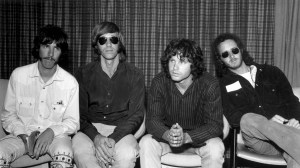
3rd September 1968: American psychedelic rock band, The Doors during a press conference at Heathrow Airport, London (left to right); drummer John Densmore, keyboard player Ray Mansarek, vocalist Jim Morrison (1943 – 1971) and guitarist Robby Krieger. (Photo by Central Press/Getty Images) -
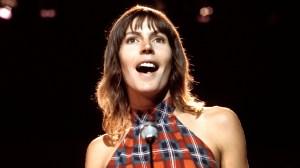
Australian-American singer, songwriter, author, actress, and activist Helen Reddy (1941 – 2020), 1975. (Photo by Tony Russell/Redferns) -
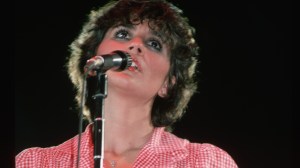
Original Caption) : 1980-Pop singer Linda Ronstadt is shown singing on stage, holding the microphone stand. She wears a gingham shirt with a tie front and askirt with flowers on it in this waist-up portrait. (Photo by Lynn Goldsmith/Corbis/VCG via Getty Images) -
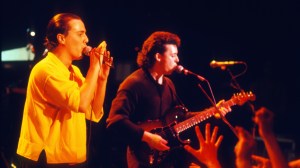
Tears for Fears – Koninklijk Circus – Brussel – Belgium – 21/04/1985 Roland Orzabal, Curt Smith Photo gie Knaeps