
In their short tenure as the biggest rock band in the entire world, The Beatles seemed to live multiple artistic lives, from their teeny-bopper, suit-clad days to their marijuana-smoking, peace-sign-waving psychedelia of the late 1960s. This duality was as much a testament to the musicians’ creativity as to the stark difference between the first and second halves of the decade. In any case, the latter half is the one we most often associate with The Beatles’ “drug phase.”
However, post-1965 albums like Rubber Soul and Revolver were hardly the first times the Fab Four hinted at reefer. They had been slyly referencing Mary Jane since the 1964 release of “She’s A Woman”.
Videos by American Songwriter
The Beatles Hid Their Drug References in “She’s A Woman”
The Beatles’ recording session for “She’s A Woman” came shortly after the band’s famous encounter with Bob Dylan and his funky cigarettes in a New York City hotel room. From that point on, the Fab Four was a marijuana band, not a pills band. (Psychedelics, like LSD, would come in the years ahead.) As one would expect, this new recreational activity made its way into The Beatles’ music.
In “She’s A Woman”, McCartney sings, “Turn me on when I get lonely / People tell me that she’s only / Fooling, I know she isn’t.” In the early-to-mid 1960s, “turn me on” was a euphemism for getting high. As John Lennon would later recall, “We were so excited to say ‘turn me on,’ you know, about marijuana and all that, using it as an expression,” per Mark Hertsgaard’s A Day In The Life: The Music And Artistry Of The Beatles. Elsewhere in the song, McCartney says “she” will “never make me jealous” and gives him “all her time as well as lovin.’”
At face value, The Beatles’ track could easily be yet another love song in their early-60s catalogue. Only those invited to the smoke sesh would pick up on slang like that, allowing the Fab Four to send out a covert signal that, yeah, they were cool now.
Their Official Pot Album Showed Up One Year Later
From “She’s A Woman”, The Beatles’ marijuana use as a recreational drug and literary device only got more frequent. John Lennon dubbed the band’s 1965 release, Rubber Soul, as the “pot album” in Anthology. “It was like pills influenced us in Hamburg, drink influenced us in so and so. We weren’t all stoned making Rubber Soul, because in those days, we couldn’t work on pot.”
Instead, the band used marijuana outside the studio and documented their experience. Ringo Starr explained, “Grass was really influential in a lot of our changes, especially with the writers. Because they were writing different material, we were playing differently. We were expanding in all areas of our lives, opening up to a lot of different attitudes. I feel that we made it on love songs. Now, we get to Rubber Soul and begin stretching the writing and the playing a lot more.”
Photo by Barham/Tony Eyles/Mirrorpix/Getty Images
More Behind The Song
-
Patty Smyth of Scandal at the Poplar Creek Music Theater in Hoffman Estates, Illinois, June 3, 1983. (Photo by Paul Natkin/Getty Images) -
Photo by Michael Ochs Archives/Getty Images -
Photo by Larry Hulst/Michael Ochs Archives/Getty Images -
NASHVILLE, TENNESSEE – MARCH 20: Dolly Parton attends Dolly Parton's Threads: My Songs In Symphony World Premiere at Schermerhorn Symphony Center on March 20, 2025 in Nashville, Tennessee. (Photo by Jason Kempin/Getty Images) -
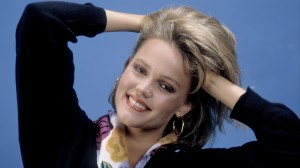
Studio portrait of Go-Gos lead singer Belinda Carlisle, Chicago, Illinois, June 25, 1986. (Photo by Paul Natkin/Getty Images) -
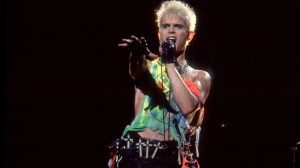
Billy Idol performing at the Poplar Creek Music Theater in Hoffman Estates, Illinois, June 1, 1984. (Photo by Paul Natkin/Getty Images) -
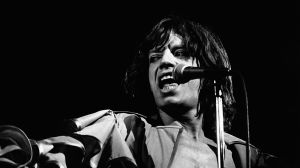
Photo by © Hulton-Deutsch Collection/CORBIS/Corbis via Getty Images -

LOS ANGELES – CIRCA 1975: Country singer Dolly Parton performs onstage wearing a yellow dress in circa 1975 in Los Angeles, California. (Photo by Michael Ochs Archives/Getty Images)