
The Beatles’ extensive discography allowed Paul McCartney’s prowess on the guitar, bass, piano, and vocals to truly shine, but one track in particular allowed him to revisit his first musical instrument: the trumpet.
Years before he would ever pick up his violin-shaped Hofner bass, McCartney was an aspiring trumpeter trying to emulate what he would later call “gimmicky trumpet” records of his youth.
Videos by American Songwriter
Paul McCartney’s First Introduction To Music Was Via Brass
While we most commonly associate the former Beatles and Wings musician as a guitarist, Paul McCartney’s first foray into the musical realm was in the world of brass. In The Beatles Anthology, McCartney described his father buying him his first trumpet at a local music store called Rushworth & Draper’s. “I loved it,” McCartney recalled.
“There was a big hero-thing at the time. There had been Harry James—The Man With The Golden Trumpet. And now, in the fifties, it was Eddie Calvert, a big British star who played ‘Cherry Pink And Apple Blossom White’—all those gimmicky trumpet records. There were a lot of them around back then, so we all wanted to be trumpeters.”
McCartney said he learned his C major scale and how to play “The Saints” (in C major, naturally). But otherwise, his attraction to the instrument wore off after he realized he wanted to be a singer, too. “I wasn’t going to be able to sing with this thing stuck in my mouth,” McCartney said. “So, I asked my dad if he’d mind if I swapped it for a guitar, which also fascinated me. He didn’t, and I traded my trumpet in for an acoustic guitar, a Zenith, which I still have.” (As fate would have it, McCartney used that Zenith to compose early songs like “Michelle” and “I Saw Her Standing There.”)
This Beatles Track Let Paul McCartney Revisit His First Instrument
While Paul McCartney’s rudimentary trumpet skills never made their way into the spotlight in the Beatles’ discography, he never lost his love of the instrument. One day, while watching television, McCartney happened upon a trumpet player named David Mason performing Bach’s Brandenburg Concerto No. 2, and the performance was so riveting that McCartney immediately employed producer George Martin to connect him with Mason.
“I did not even know who the Beatles were when I was asked to do a recording session with them,” Mason later told The Bath Chronicle. “For me, it was just another job. I took nine trumpets along, and we tried various things, by a process of elimination, settling on the B flat piccolo trumpet.”
Mason was helping McCartney and the rest of the Beatles flesh out the final parts of “Penny Lane,” an ode to the Fab Four’s native Liverpool. The trumpeter said that Martin transcribed McCartney’s compositional ideas as the Beatle sang them out loud, then Mason performed them on tape. “They were jolly high notes, quite taxing,” he recalled (via Classic FM).
Mason’s piccolo trumpet solo was so ornate and unusually high that many believed the band sped up the tape in post (much like they did for other solos, like Martin’s “In My Life” piano feature), but Mason insists that was never true. Still, the job was strenuous. After finishing one take, McCartney asked Mason to try one more, but Martin put his foot down, knowing how physically demanding the part truly was. Of course, if McCartney had made it past the C major scale, he might’ve been able to appreciate that, too.
Photo by Michael Ochs Archives/Getty Images
More Behind The Song
-
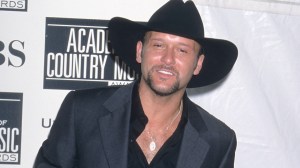
UNIVERSAL CITY, CA – MAY 3: Singer Tim McGrawl attends the 35th Annual Academy of Country Music Awards on May 3, 2000 at the Universal Amphitheatre in Universal City, California. (Photo by Ron Galella, Ltd./Ron Galella Collection via Getty Images) -
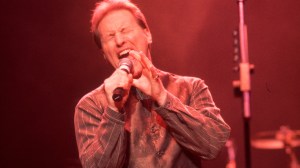
American country and western music singer Collin Raye performs at the Rialto Theater in Joliet, Illinois, November 25, 1996. (Photo by Paul Natkin/Getty Images) -
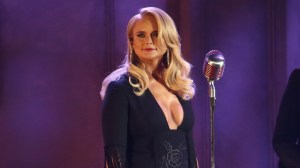
NASHVILLE, TN – NOVEMBER 08: (FOR EDITORIAL USE ONLY) Miranda Lambert performs onstage during the 51st annual CMA Awards at the Bridgestone Arena on November 8, 2017 in Nashville, Tennessee. (Photo by Terry Wyatt/FilmMagic) -
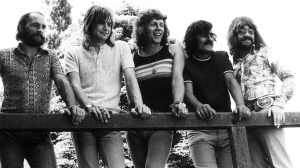
English pop group The Moody Blues, group portrait, 1972, (L-R) Mike Pinder, Justin Hayward, John Lodge, Ray Thomas and Graeme Edge. (Photo by Michael Putland/Getty Images) -
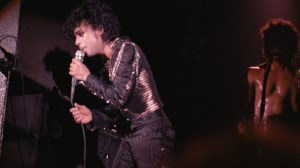
MINNEAPOLIS – AUGUST 3: Prince performs a benefit concert for the Minnesota Dance Theatre at First Avenue nightclub in Minneapolis, Minnesota on August 3, 1983. (Photo by Jim Steinfeldt/Michael Ochs Archives/Getty Images) -
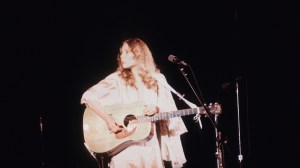
LOS ANGELES – 1974: Singer Joni Mitchell performs in 1974 in Los Angeles, California. (Photo by Donaldson Collection/Michael Ochs Archives/Getty Images) -
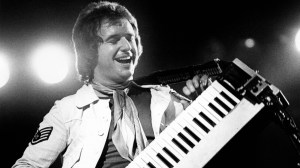
DETROIT, USA – 1st FEBRUARY: Gary Wright performs live on stage in Detroit, Michigan in February 1976. (Photo by Fin Costello/Redferns) -
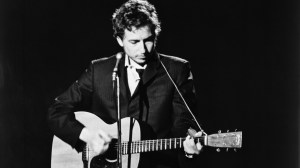
ASHVILLE, TN – JUNE 07: Bob Dylan appearing on "The Johnny Cash Show" for ABC/TV taped at Ryman Auditorium on June 7, 1969 in Tennessee, Nashville. (Photo by Michael Ochs Archives/Getty Images)