Career-defining hits can come in the unlikeliest of places, and the Blondie song that was actually meant for Stevie Nicks is certainly no exception. Stevie Nicks and Blondie frontwoman Debbie Harry were two strong female leads in separate (but similar) genres. Whereas Nicks excelled in laidback, West Coast soft rock, Harry was the queen of new wave.
But for one brief moment in the late 1970s, Nicks and Harry’s musical paths had never been closer, thanks to famed disco producer Giorgio Moroder.
Videos by American Songwriter
The Blondie Song Actually Meant for Stevie Nicks
Legendary “Father of Disco” Giorgio Moroder composed what would later become “Call Me” as the main theme for the 1980 film American Gigolo. True to the theme of the Richard Gere vehicle about a male escort, Moroder originally titled the song “Man Machine.” After arranging the instrumentation, Moroder set out to find a female musician who could compose the lyrics and melody. His first choice was Stevie Nicks.
However, the Fleetwood Mac frontwoman had just entered a contract with the label she founded with Danny Goldberg and Paul Fishkin, Modern Records. The trio started the label for Nicks to release her solo material, which she did with her 1981 album ‘Bella Donna.’ Given that “Call Me” came out one year earlier, in 1980, it’s safe to say that Nicks was in the middle of writing, recording, and touring when Moroder offered the song.
Moroder then took the song to Blondie frontwoman Debbie Harry, who agreed to take on “Man Machine” if she could have creative control over the lyrics. Interestingly, there are traces—even subconscious ones—of Nicks in the tune, as Harry’s verse melody closely resembles the iconic Fleetwood Mac track “Rhiannon,” which came out five years earlier.
Giorgio Moroder Was Sure He Made The Right (Second) Choice
Despite not getting the original artist he wanted on his track, Giorgio Moroder was incredibly happy with his second choice. “As soon as I heard Deborah singing a rough version of “Call Me,” I knew we had a hit,” Moroder later said (via Far Out Magazine). He wanted to continue collaborating with Harry and her band, but fights among Blondie members proved to be too much for Moroder, who soon quit.
Nevertheless, “Call Me” had cemented its place as one of the defining tracks of Blondie’s career and the entire 1980s. “We didn’t expect it. But it legitimized us in this country and made people realize that we were adventurous and had a vision that could transcend the styles of the day,” Harry later said. “We embraced the punk attitude. We were happy but belligerent at the same time.”
And while one could reasonably argue that there are differences between Nicks’ earlier work and Harry’s melody, the Blondie frontwoman believed her song served as inspiration for others. “I hear bits and pieces of “Call Me” in other people’s songs even today, not direct copies of it, but similarities. Music either works or it doesn’t work. It was the right place, right time, right sound. It all just sort of fell into place. What could be better? What more could you ask for, really?”
Photo by MediaPunch/Shutterstock
More Behind The Song
-

LONDON, UNITED KINGDOM – JANUARY 11: Debbie Harry of Blondie performs on stage at Hammersmith Odeon on January 11th, 1980 in London United Kingdom. (Photo by Pete Still/Redferns) -
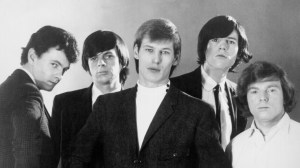
LONDON – 1965: Rock band "Them" featuring Van Morrison (right) and an ever changing line up of session musicians pose for a portrait in 1965 in London, England. (Photo by Michael Ochs Archives/Getty Images) -
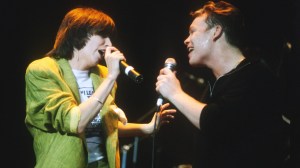
Pretenders, Chrissie Hynde and UB40, T/W, Torhout/Werchter, Belgium, 5th July 1986. (Photo by Goedefroit Music/Getty Images) -

American musician Stevie Nicks performs onstage at the Rosemont Horizon, Rosemont, Illinois, July 18, 1983. (Photo by Paul Natkin/Getty Images) -
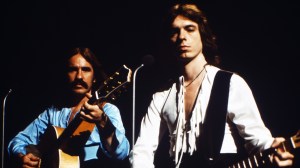
Bellamy Brothers, amerikanisches Country Duo, bestehend aus den Brüdern Howard und David Bellamy, singen ihren Song 'Let Your Love Flow' bei einem Auftritt, Deutschland 1976. (Photo by Arthur Grimm/United Archives via Getty Images) -
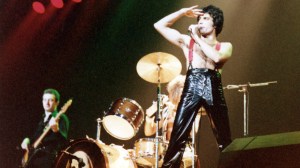
DETROIT – NOVEMBER 18: British singer-songwriter and lead vocalist for the rock band Queen, Freddie Mercury (1946-1991), alongside bassist John Deacon, onstage at Cobo Arena, on November 18, 1979, in Detroit, Michigan. (Photo by Ross Marino/Getty Images) -

Tina Turner performing, Chicago, Illinois, June 12, 1984. (Photo by Paul Natkin/Getty Images)