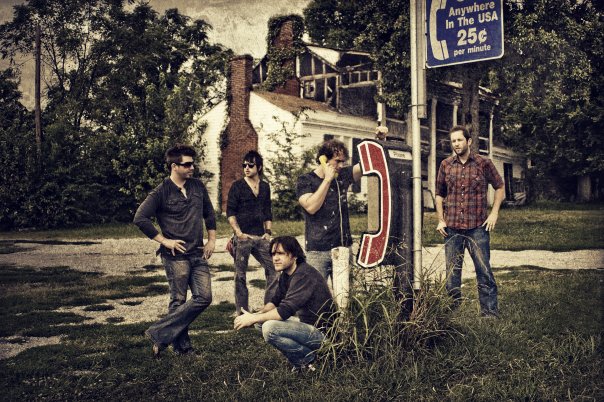
After almost five years of drifting dirty and adamantly maintaining creative control, Nashville-based country on-the-risers The Dirt Drifters finally released their debut, This Is My Blood. The title is aptly chosen with the years of sweat poured into the country record, which melds classic rock, blue-collar sentiment and the influences that come from having band members from all over the country. Lead vocalist Matt Fleener and guitarist Jeff Middleton recently spoke with American Songwriter about those influences, working with Willie Nelson and the importance of radio play.
You all came to Nashville from different corners of the U.S. How did you all meet?
Matt Fleener: Church and bars. I met Nick at church and Jeremy through Nick via church. And we met Jeff at French Quarter Café in Nashville at a – what was it, Jeff, we were switching gear onstage?
Jeff Middleton: Yeah, we were doing weekly shows. I was playing guitar for another artist. Matt and Ryan [Fleener] were doing a duo at the time, and so we opened for them. In stage changeovers, it started at a “hey!” and turned into a writing relationship.
You’ve been a band about four and a half years. What kept a debut record from coming sooner?
MF: We got signed with Warner Brothers four years ago and there was a big A&R change. There was a label head change, and in that process, there were a lot of artists that were let go. Somehow, we survived the restructuring and somehow made a record in the middle of it.
JM: I think some of it was the way we wanted to make the record. For a new artist on the label, we were very insistent in having our say on the record, which is different than how most new artists’ records are made. We had to prove to the label that it was going to work, so we spent some time in the studio making sure that that was cool with everybody, and in the end, we came out with a better product for all the time that it took to make.
How did you celebrate the release?
JM: We had a show! At 3rd & Lindsley, which was the first place we ever had a showcase, so it was kind of a full-circle moment.
What was the inspiration behind your first single, “Something Better?”
MF: My own personal inspiration was spending 11 years in Nashville trying to make headway in the music industry. You find yourself eight of those 11 years doing construction work or driving a forklift, you know, anything you can do to get by. And that song is that period in my life just literally showing up to work hating your job and having a different picture in your mind of how your life should go, but you’re kind of stuck in that spot where you feel like, “I’m just doing this til something better comes along.”
What about “Married Men and Motel Rooms?”
JM: [laughs] “Married Men and Motel Rooms” was inspired by a hotel that we didn’t actually stay at in Mount Perry, North Carolina. We slept out in the RV – it was that bad. We played a show in the restaurant or the bar nearby, and as we were leaving…bad things happened at that hotel.
“I’ll Shut Up Now” features Willie Nelson. What was it like working with him?
MF: Really cool. It was very surreal. When I was younger, my father and his brothers played country music from the Oklahoma and Texas region, so obviously a name like Willie Nelson is one of the holy trinities and what have you. When I was younger, my older sister dropped me and Ryan off at my grandma’s house – I was probably five, six, seven years old. She used to make breakfast for us in the morning, play a lot of records and being a Texas girl, she played a lot of Willie Nelson. Stardust and Red Headed Stranger were two albums she loved a lot, and if you’d have told me then, just a kid listening to this guy, “Later on in your life, you’re going to make a record, and that guy’s going to be singing on it,” I would have called you a liar [laughs]. So it was kind of that full-circle thing, again.
The recording process was brief. We had a pretty tight schedule, and we showed up to the studio. Willie was there, Kris Kristofferson was there and Randy Travis – there was some collaboration going on for someone else’s record, and Willie had heard “I’ll Shut Up Now” and said he dug the tune and that he’d be more than happy to make a cameo on it. So Willie comes in, he sings and talked for a little bit. We took this picture with Willie, and our faces – we look like a bunch of nine-year-olds at Christmas [laughs]. It’s almost embarrassing, but that’s what it was like. He walked out, and we all looked at each other, and somebody said, “Let’s go grab a beer.” We went to have a couple beers and soak it all in. We made a record, and one of the greatest artists in the history of country ever was on it for a brief moment.
JM: He’s the man!
MF: He breaks every rule, and people love him for it, and he doesn’t do it just to be a rule-breaker – he’s creative. You can’t tie him down.
You implemented a unique business model in distributing your record. Why did you give 30,000 copies away for free?
JM: I think for as long as we’ve been at the label, and all the touring that we’ve done over the past four and a half years, one of the biggest things for us was we really just want to get our music out to people, because that’s what’s going to be our voice, and that’s what people are going to love or not love. That’s what builds fans and that’s what builds lifetime bands – hearing music and the songs. When we sat down with the label, we said we just want to get our music out to people so they can hear it. That has always been the end-all, be-all about making this project. It became one of those things where we said, “We don’t want to break it up into a sampler, so let’s talk about giving away a record,” and it kind of evolved into, “Why don’t we give away two copies?” If we think people will love this music and share it, let’s facilitate that.
MF: I think it’s a big part of our sound, and our influences are all over the map. You get in a room with five, six guys and everybody plugs their guitars in and turns their amps on, and you’re creating music with guys you’ve traveled with, shared hotel rooms, shared food with for years. There’s a lot of different things that come into the sound of the band, and for us, it’s the time together and also the fact that we’re from different places.
Why country music? Do you think that’s a location or background-based genre?
MF: Yes and no. For me, I was pretty much born and raised on country music until I probably hit 15 or 16 and really didn’t like it that much anymore. My dad and his brothers had a band in my garage growing up. They played a lot of old Gatlin Brothers stuff. It’s the sounds you hear growing up. Growing up in Oklahoma in the ’80s, you couldn’t get away from the whole urban cowboy movement, it seems like. Even the bankers and businessmen were wearing boots and jeans everywhere, and I think that’s my favorite era of country music. When I sit down and write a song, that’s why my influence is country music.
JM: I heard Kenny Rogers back in the day, but I grew up outside of country music, and for me – why country music – is because it’s about songs. I’ve listened to all different genres of music, and country songs that strike me the most are the ones that feel real and tell great stories. I moved to Nashville to write songs. I didn’t move to get a record deal or be in a band. It was because songs are, to me, the dearest form of music. I think that’s why our band bases everything around the song. It’s interesting that we’re all from different areas. I think that’s a strength, because the song has to reach each of us. And that’s the commonality. What I think a great song does and what I think country music is to a lot of people is just real life experience that we all go through, whether you grow up in a city or a rural town.
How important is radio play to you?
MF: In the genre of country music, radio is the biggest tool out there. There are a few country artists who can go out there and reach a number of people, but it’s very important that radio gets on board and plays your music, because that gives the person working every day an opportunity to listen to your song. The majority of country music listeners don’t go online, maybe aren’t in the same resource land, to find independent music and rock ‘n’ roll. So where we’re at right now, radio is still a big tool in the country music genre.
JM: I think it’s really important for where we’re at now, from a marketing side, in getting our music out. I think from a creative side, it’s not. I think we all write songs and they lean toward commercial, but the songs we’ve written that probably wouldn’t get played on the radio, we still play live. You need it to get your music out there, but you want to stay true to who you are as a writer and an artist.
MF: You don’t want to get caught up in playing mad libs with music just so you can get in a certain place. You want to stay true with what your initial emotions were and try to make those work on both sides of the fence.
As a country band in Nashville, is it difficult finding places to play, or being heard as a country band, because there are so many?
MF: That’s one of those things we decided early on when we started this band. There’s so much going on in Nashville, there’s so many shows you can go to. Literally, sometimes you have to pay to rent the time at a venue and hope someone from the industry will come catch you live, so we’ve been in the system for a while in Nashville. Some of us had publishing jobs or were playing music for other people, but our initial plan with this band was take the music we want to write and throw four wheels underneath it, print up some t-shirts and kind of do it the old-fashioned way.
Some people think commercialism and inauthenticity when they think about modern country music. What’s your take on that?
JM: I look at it the way you look at the food industry. McDonald’s, Burger King – you’ve got an audience for that, and you’ve also got your niche restaurants that serve one neighborhood. It depends on what you want to make. Some people live in one world, some people live in another world. There’s pros and cons to both sides of it.
MF: I think it’s both sides. There are genres that country radio may not play that are moving or lend themselves to be more artistic. The possibility of the creative arts coming out of radio is there. But at the same time, I love country music and I’ve listened to it forever, but you can go back and look at artists like Steve Earle, even Dwight Yoakam – even though that took off a little bit before – Mary Chapin Carpenter, Lyle Lovett, Willie and Merle – radio may or may not be playing them, but the music is out there. We’re just in a place right now where we’re looking at all different avenues to get our music to people. So you could be negative about it, or just say I’m just going to keep writing and playing songs, and hopefully it will come out in the wash.
More Interviews
-
Photo by Kevin Mazur/Getty Images for CMA -
NASHVILLE, TN – OCTOBER 29: Eagles, Timothy B. Schmit, Vince Gill, Don Henley, Decon Frey and Joe Walsh perform during the Eagles in Concert at The Grand Ole Opry on October 29, 2017 in Nashville, Tennessee. (Photo by Rick Diamond/Getty Images) -
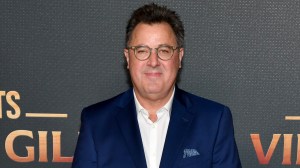
NASHVILLE, TENNESSEE – SEPTEMBER 12: Honoree Vince Gill attends CMT Giants: Vince Gill at The Fisher Center for the Performing Arts on September 12, 2022 in Nashville, Tennessee. (Photo by Jason Davis/Getty Images for CMT) -
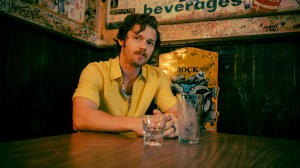
Photo by Ingrid Fortenberry