The legacy of protest songs is rich, deep, and musically diverse. There are tunes in almost any genre that, over the decades, carry the socio-political messages of the times and, often frustratingly, remain relevant today. From Woody Guthrie and Bob Dylan to Bob Marley, the Staple Singers, and even Beyonce, these typically transcend the era in which they were initially popular.
That’s certainly the case with “Strange Fruit.” The haunting ballad, part jazz/part offbeat folk, was penned in the late ‘30s. Its spellbinding, sometimes brutally evocative lyrics describe lynchings in the American South. Perhaps most astonishing is that a white Jewish communist teacher from New York City created it.
Videos by American Songwriter
What’s the story behind that?
The author of “Strange Fruit” was a Jewish high school instructor with socialist connections named Abel Meeropol. In 1921, he graduated from and taught English at DeWitt Clinton High School in The Bronx, New York. During his time there, one of his students was James Baldwin, later a key advocate and scholar in the civil rights movement.
In the mid-’30s, Meeropol was stricken by a newspaper picture taken in 1930 of a lynching of two Black men, shown hanging from trees in Marion, Indiana. So moved and horrified by that photograph, which itself is now iconic, Meeropol wrote a poem expressing his feelings about the shocking events caused by racial unrest in the United States. He named it “Bitter Fruit.”
His riveting words, which never directly mention the word “lynching,” remain intense and disturbing despite, or more likely because of, their implied imagery.
“Southern trees bear a strange fruit / Blood on the leaves and blood at the root / Black body swinging in the Southern breeze / Strange fruit hanging from the poplar trees...”
The poem was published in a 1937 issue of a regional periodical for New York City teachers. But it soon became a song, with its melancholy music, also by Meeropol under the pseudonym of Lewis Allan. Changed to “Strange Fruit,” the melody, first performed by Meeropol’s wife, Anne, was delivered at union rallies and eventually at Madison Square Garden, where it was sung by a Black vocalist named Laura Duncan.
How did “Strange Fruit” get popular?
Exactly how and who initially presented the song to Billie Holiday is the subject of some dispute. Regardless, “Strange Fruit” quickly became a controversial feature of her sets. The singer was only 23 when she introduced the song in March 1939 at the New York club Café Society. She closed her show with it, requiring all waiters and the bar to stop serving, and the room completely dark with just a spotlight on her face.
There are only three verses and no chorus.
After the final words, Here is fruit for the crows to plug / For the rain to gather, for the wind to suck / For the sun to rot, for the trees to drop / Here is a strange and bitter crop,the light was turned off, she left the stage and did not return for an encore.
What was the reaction?
Predictably, the song’s divisive nature had various, usually extreme, responses. Some audiences loved it, but others were shocked and even revolted since the mournful lament was like nothing else in the singer’s repertoire. Columbia, her label at the time, refused to record it, although they approved a one-session release from her contract to allow her to do so for another company. Even her producer, the legendary John Hammond, declined to be involved. “Strange Fruit” was finally waxed on April 20, 1939, for the indie Commodore on its Vocalion imprint.
David Margolick, author of Strange Fruit: Billie Holiday and the Biography of a Song, wrote, “For mainstream institutions—record labels, radio stations —the song was too hot to touch. Beyond a group of left-wing progressives, largely white, most people wouldn’t have known the song. The Black press barely mentioned it: It was too radioactive even for them.” Nevertheless, “Strange Fruit” eventually moved a million copies and became Holiday’s biggest-selling record. That was partly due to Nina Simone resurrecting it in 1965 for the civil rights movement.
Who else sang it?
For a song so closely tied to Billie Holiday’s penetrating vocals and the opposite of a feel-good pop tune, “Strange Fruit” has a remarkably extensive, vibrant, and varied history of covers.
In addition to Simone’s equally transfixing approach, it has been recorded by Annie Lennox, in a blues version by Beth Hart with Joe Bonamassa, and by reggae band UB40. Soul singer Andra Day revived it for her turn as Holiday in the 2021 movie The United States vs. Billie Holiday. And there was the Oscar-nominated Diana Ross, who famously played Holiday in Lady Sings the Blues.
Regardless of the source, “Strange Fruit”’s staying power has weathered decades. It remains an entrancing, unsettling listen and a compelling lesson about America’s history, compacted into just 90 extraordinary words.
Photo by Gilles Petard_Redferns_GettyImages
More Features
-
NASHVILLE – NOVEMBER 26: Hee Haw cast from left; Lulu Roman, Don Rich, Jeannine Riley, Buck Owens, John and Jim Hagar and Susan Raye. Image dated November 26, 1969. (Photo by CBS via Getty Images) -

Photo by Tibrina Hobson/Getty Images -
NEW YEAR'S ROCKIN' EVE 1974 — Pictured: (l-r) Linda Ronstadt — Photo by: NBCU Photo Bank -
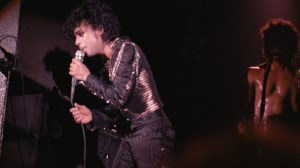
MINNEAPOLIS – AUGUST 3: Prince performs a benefit concert for the Minnesota Dance Theatre at First Avenue nightclub in Minneapolis, Minnesota on August 3, 1983. (Photo by Jim Steinfeldt/Michael Ochs Archives/Getty Images) -
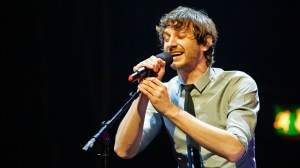
MANCHESTER, UNITED KINGDOM – NOVEMBER 15: Gotye performs on stage at Manchester Apollo on November 15, 2012 in Manchester, United Kingdom. (Photo by Gary Wolstenholme/Redferns via Getty Images) -
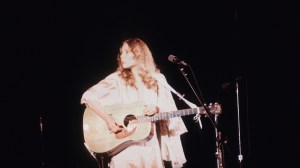
LOS ANGELES – 1974: Singer Joni Mitchell performs in 1974 in Los Angeles, California. (Photo by Donaldson Collection/Michael Ochs Archives/Getty Images) -
Photo by Mark and Colleen Hayward/Redferns