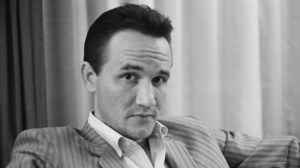
Throughout the late 1960s and 70s, The Who developed a reputation for high-energy performances that often ended with the musicians destroying their instruments—all except the band’s bassist, John Entwistle. His explanation for not joining in the general destruction that punctuated most of The Who’s live concerts is hilarious (and spoken like a true bass player).
“I always thought we’d look like lunatics if we all jumped around,” he later said. “And besides, someone has to play.”
Videos by American Songwriter
Still, it didn’t take long for Entwistle to notice that his amp-smashing bandmates were getting more screams from the crowd than he was. “I once got very paranoid because the kids weren’t screaming my name,” he admitted. “One night, I had a few drinks and came onstage moving, and they started screaming my name. So, I thought, ‘Okay, I’ll go back to standing still. They scream at anything that moves.’”
Satisfied that the audience’s lack of screams had less to do with his talent and more with his lack of movement, Entwistle carried on as he was, holding down the bass lines while his bandmates went wild.
Why Did Everyone in the Who but John Entwistle Destroy Gear?
As rock ‘n’ roll started to get louder, grittier, and more abrasive in the second half of the 1960s, onstage antics like smashing instruments were an easy way to grab the audience’s attention. Even flamboyant rock ‘n’ rollers like Elvis Presley and Chuck Berry took care of their instruments. To willingly smash a guitar into bits or shove a headstock through a speaker cab was a new level of defiance and rebellion. It was an act of rebellion against the idea of rebellion itself.
The Who helped usher in this new performative movement. Keith Moon, already an incredibly physical and aggressive drummer, would go so far as to blow up his drums with explosives. Roger Daltrey, not to be outdone by his bandmates, swung his microphone like a lasso. He duct taped the XLR junction on the microphone to prevent it from becoming a projectile missile (except for the one time he wanted it to be). Pete Townshend turned countless guitars into splinters and shoved just as many instruments through his amp.
According to Townshend, he likely started smashing his guitar for an emotional reason, not a performative one. “My father, a brilliant musician, didn’t believe in me and allowed my grandmother to buy me a [expletive] old guitar that I couldn’t play. Some of my guitar-smashing antics probably started because it had become a symbol for me of the way my father had not considered me worthy of a decent instrument.”
Perhaps Entwistle simply had fewer emotional issues to work through on stage. We think it’s even more likely that he was embodying the true definition of a good bass player: steady, reliable, and even-keeled.
Photo by Ivan Keeman/Redferns
More Features
-

ara Evans performs "Suds In The Bucket" during 39th Annual Academy of Country Music Awards – Show at Mandalay Bay Resort and Casino in Las Vegas, Nevada, United States. (Photo by M. Caulfield/WireImage for Bragman Nyman Cafarelli) -
Photo by David Warner Ellis/Redferns -
UNSPECIFIED – CIRCA 1970: Photo of Biff Rose Photo by Michael Ochs Archives/Getty Images -
MINNEAPOLIS, MN – AUGUST 29: Elvis Costello performs at the Orpheum Theatre in Minneapolis, Minnesota on August 29, 1984. (Photo by Jim Steinfeldt/Michael Ochs Archives/Getty Images) -
Photo by Jason Kempin/Getty Images for Country Music Hall of Fame and Museum -
UNITED KINGDOM – JANUARY 01: WEMBLEY ARENA Photo of Johnny DUNCAN and Janie FRICKE, w/Johnny Duncan (Photo by David Redfern/Redferns) -
LONDON, UNITED KINGDOM – JANUARY 11: Debbie Harry of Blondie performs on stage at Hammersmith Odeon on January 11th, 1980 in London United Kingdom. (Photo by Pete Still/Redferns)