“Seven Nation Army” by The White Stripes is a truly incredible track. Jack White’s wailing guitar and Meg White’s stellar percussion just can’t be matched. It’s a catchy, well-aged piece of work. And surprisingly, the song was also a bit of an accidental hit.
“Seven Nation Army” is a study in simplicity. There’s nothing particularly groundbreaking about it. The song boasts a fun melody and simple instrumentation. Sometimes, keeping things simple is good enough to produce an internationally charting hit. Even if that wasn’t necessarily the intention.
Videos by American Songwriter
The Story Behind The White Stripes’ “Seven Nation Army”
So, what’s the story behind this happy accident? Allegedly, “Seven Nation Army” was conceived when the band was touring in Australia. It was originally recorded quite a while before it was released on Elephant in 2003.
When working on the song’s iconic riff, Jack White admitted that he wanted to create a theme for James Bond.
“I played the riff again, and it sounded interesting,” said White, noting that he used an octave pedal and a low-tuned guitar to put the song together. “I thought if I ever got asked to write the next ‘James Bond’ theme, that would be the riff for it.”
It became pretty clear that White would never be asked to create a Bond theme, though he eventually did write one with Alicia Keys in 2008. White ended up straying away into a song about someone who finds out that his friends are talking smack about him behind his back. White said that the song was “about gossip, it’s about me, Meg and the people we’re dating.”
With his Bond dreams more or less dampened, White was left with a song that was more of a playful experiment in penning a song without a chorus. There were no real expectations for the song to become as legendary as it is today; it basically, depending on how you look at it, became a hit by accident.
“Seven Nation Army” also evolved from one meaning to another for White as well.
“‘Seven Nation Army’ started out about two specific people I knew in Detroit,” said White. “It was about gossip, the spreading of lies and the other person’s reaction to it. It came from a frustration of watching my friends do this to each other. In the end, it started to become a metaphor for things I was going through. But I never set out to write an expose on myself. To me, the song was a blues at the beginning of the twenty-first century. The third verse could be something from a hundred years ago. It won a Grammy for Best Rock Song. [Laughs] Maybe it should have won for Best Paranoid Blues Song.”
Photo by Stephen Lovekin/WireImage
When you purchase through links on our site, we may earn an affiliate commission.
More Features
-

UNITED KINGDOM – JANUARY 01: WEMBLEY ARENA Photo of Johnny DUNCAN and Janie FRICKE, w/Johnny Duncan (Photo by David Redfern/Redferns) -

LONDON, UNITED KINGDOM – JANUARY 11: Debbie Harry of Blondie performs on stage at Hammersmith Odeon on January 11th, 1980 in London United Kingdom. (Photo by Pete Still/Redferns) -
lake Shelton, presenter Video Director of the Year (Photo by Frank Mullen/WireImage) -
Photo by Robert Kern/Getty Images -
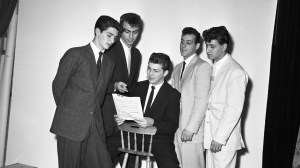
NEW YORK – SEPTEMBER 1958: Pianist Bob Gaudio, drummer Tom Austin, tenor sax Larry Qualiano, singer Dianne Costello and guitarist Billy Dalton of the rock and roll band "The Royal Teens" pose for a portrait in September or October of 1958 at the Brooklyn Paramount in New York, New York. (Photo by PoPsie Randolph/Michael Ochs Archives/Getty Images) -
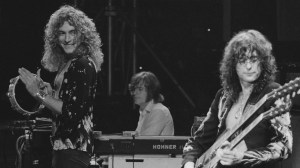
Left to right: Robert Plant, John Paul Jones and Jimmy Page, of British heavy rock group Led Zeppelin, performing at Earl's Court, London, May 1975. The band were initially booked to play three nights at the venue, from 23rd to 25th May, but due to public demand, two more concerts were later added, for 17th and 18th May. Total ticket sales were 85,000. (Photo by Michael Putland/Getty Images)