For their hardcore fans, Judas Priest is known for thunderous metal tracks like “Painkiller,” “Electric Eye,” and “The Sentinel.” But mainstream rock fans are more familiar with the band’s super-accessible, fist-pumping anthems, including two from their 1980 breakthrough album, British Steel: “Living After Midnight” and “Breaking the Law.” These offerings are more commercial in nature, with the latter offering social commentary focused on the frustrations of ordinary working-class people feeling oppressed by the system.
A little context here: Judas Priest recorded their sixth album, British Steel, at Beatles drummer Ringo Starr’s house outside of London in early1980. At the time, 17,000 steel workers had been actively striking for better pay, which led to the rise of conservative Prime Minister Margaret Thatcher. (Other public sector strikes, which started in 1979, would continue throughout the ‘80s.)
Videos by American Songwriter
The album was named after an actual corporation that was active at the time. The social strife going on in England was so potent that the intense vibes seeped into the posh surroundings that Priest ensconced themselves in with producer Tom Allom. Songs like “Steeler,” “Grinder,” and “United” tapped into that insurgent spirit.
The Meaning Behind “Breaking the Law“
Singer Rob Halford has said that the title came out of thin air, and soon enough he was immersed in a character who felt a sense of desperation as he drifted around looking for work, feeling he was invisible to the world at large as he got into trouble with authority.
So much for the golden future, I can’t even start
I’ve had every promise broken, there’s anger in my heart
You don’t know what it’s like, you don’t have a clue
If you did you’d find yourselves doing the same thing too
Halford has mentioned that, to write the lyrics, he placed himself in the shoes of someone who was downtrodden, like so many of those striking. But the song was not about promoting crime, despite the song’s cheeky video where the members of Priest subdued a bank’s employees and customers with their loud music so they could break into a vault…and steal a gold record. (Funnily enough, British Steel became their first gold album in America two years later, and was certified platinum a few years after that.)
The members of Priest understood the strikers. They grew up in the Birmingham area where steel works, coal mines, and other industrial workplaces dominated the landscape—a region called the Black Country. Guitarist Glenn Tipton once remarked that he could taste the metal on his tongue as he passed a steel mill on the way to school.
A Songwriting Triumvirate Is Cemented
While songwriting credits had emerged in different configurations on the five previous Priest albums between 1974 and 1979, Halford, Tipton, and guitarist K.K. Downing formed a solid three-way foundation on British Steel that would stick for all of their subsequent work together.
[RELATED: Dolly Parton Releases New Singles, One Featuring Judas Priest Frontman Rob Halford]
The album featured a couple particularly pioneering traits: its directness elevated the approach of their previous release, Hell Bent for Leather, which had already begun to shift from the longer, more progressive songs of their earlier work. Plus, British Steel helped sow the seeds of thrash metal. “Breaking the Law,” in particular, tapped into the punk spirit of the ‘70s and included the sounds of smashed bottles and a police siren. It was short, snappy, and had no guitar solo.
However, while the song sounded tight and catchy, the lyrics followed those of some of the darker themes of previous Priest albums. They had written about cultural subjugation (“Savage”), oppression (“Tyrant”), and war (“Genocide”). But the difference here is that, while those tracks could act as emotional exorcisms, the upbeat, energized feel to “Law” offered a stronger undercurrent of hope within its expression of frustration.
A Lasting Cultural Impact
While “Breaking the Law” did not chart in the States, it reached No. 12 in the U.K. and gradually became a mainstream rock radio staple during the 1980s and beyond. There probably hasn’t been a Priest show where the band have not played the song over the last many decades, and it was one of the three tunes they played for their induction into the Rock & Roll Hall Of Fame.
The famed song has been covered by peers like Motorhead, Saxon, and Doro, and has received interpretations on harp guitar, grand piano, and by a Buddhist monk playing percussion and a stringed instrument. It was also used in a U.K. commercial for KFC, a U.S. spot for State Farm, and was covered in 2023 for a Super Bowl ad for Liquid Death. And when they got their Simpsons moment, the band slyly performed “Respecting the Law.” (Copyright law!)
An added interesting fact: Halford performed “Breaking the Law” with queercore band Pansy Division in July 1997 during a Pride event in San Diego. At the start of the following February, he publicly came out. It makes sense that it took him a while; when the singer was growing up in England, homosexuality was outlawed until 1967.
Conclusion: Catchy and Influential
“Breaking the Law” is more commercial than a lot of other Priest fare, but it put them on the map. Further, British Steel directly influenced the likes of thrash titans Metallica and Slayer. The song is one of the set closers of current Priest shows, and its singalong nature never fails to get the crowd going.
Last fun fact: The only time Priest fans collectively broke the law at a show was during the band’s incendiary performance at Madison Square Garden in 1984. Inexplicably, many in the unruly crowd ripped up their foam seats and tossed them in the air and onto the stage, generating $250,000 in damages. The silver lining? The venue finally got some much-needed new seats. But the band was still banned for life.
Witness the legends in action! Judas Priest Tour 2024 is coming your way. Hurry, grab your tickets and let the metal madness begin!
Photo by Pete Cronin/Redferns
More Features
-
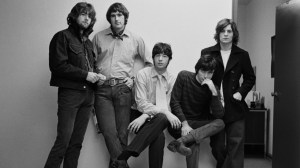
American rock band The Box Tops in New York City, 18th December 1968. From left to right they are keyboard player Rick Allen, drummer Thomas Boggs, bassist Bill Cunningham, guitarist Gary Talley and singer Alex Chilton. (Photo by Don Paulsen/Michael Ochs Archives/Getty Images) -
Photo by Michael Ochs Archives/Getty Images -
the Rolling Stones -
American country musician Buck Owens plays guitar in a promotion portrait for his 'All American Show,' mid 1960s. (Photo by Archive Photos/Hulton Archive/Getty Images) -
Richard Thompson at Tuts in Chicago Illinois , October 10, 1982. (Photo by Paul Natkin/Getty Images) -

Smashing Pumpkins at the World Music Theater in Tinley Park, Illinois, July 27, 1994. (Photo by Paul Natkin/Getty Images)