
Knowing your artistic ethos deep down is one thing. Putting it into words is another. And for Neil Young, he never heard his creative credence put in such plain English as when he was working on the live album that would become Rust Never Sleeps.
The three-word phrase originated in an advertisement for a rust-proofing product called Rust-Oleum, which was then picked up by the members of Devo. The new wave band behind tracks like “Whip It” lifted the phrase themselves, calling it the “corruption of innocence” and “de-evolution of the planet.”
Videos by American Songwriter
Mark Mothersbaugh included it in a lyric while collaborating with Neil Young in the late 1970s, which put the phrase on the Canadian singer-songwriter’s radar.
“I thought, ‘Wow, right off they wrote better lyrics than I did,’” Young said. “I can relate to ‘rust never sleeps.’ It relates to my career. The longer I keep going, the longer I have to fight this corrosion.”
Neil Young Said It Was Better to Burn out Than to Rust
Mark Mothersbaugh from Devo inadvertently gifted Neil Young the album title Rust Never Sleeps while they were jamming on “My, My, Hey, Hey”. This song famously includes the line, “It’s better to burn out than to rust.” In 1988, Young elaborated on this idea in an interview with Spin magazine.
“Rust implies you’re not using anything, that you’re sitting there and letting the elements eat you. Burning up means you’re cruising through the elements so f***ing fast that you’re actually burning, and your circuits, instead of corroding, are f***ing disintegrating. You’re going so fast you’re actually f***ing the elements, becoming one with the elements, turning to gas. That’s why it’s better to burn out.”
While this phrase helped summarize Young’s prolific, tireless, and private work ethic, there were some regrets that revealed themselves to him in hindsight. When Nirvana frontman Kurt Cobain included this sentiment in his suicide note, it was incredibly distressing for Young. “I, coincidentally, had been trying to reach him through our offices to tell him that I thought he was great,” Young recalled in his memoir, Waging Heavy Peace. “When he died and left that note, it struck a deep chord inside of me. It f***ed with me.”
Young wanted to cut the song from all future live performances after Cobain’s death. But after Cobain’s surviving bandmates asked him not to, he changed his mind. With the knowledge that Cobain’s method of carrying out this ethos wasn’t the correct way and begets more tragedy than Young ever intended, there is truth in Young’s interpretation of “rust never sleeps.” To be endlessly creating is to be endlessly moving, and the real “burning out” is hopping from one artistic endeavor to the next.
Photo by Michael Ochs Archives/Getty Images
More Behind the Album
-
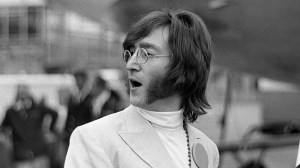
Photo by Murphy/Daily Herald/Mirrorpix via Getty Images -
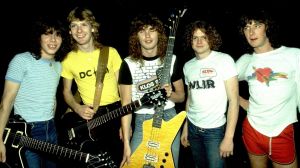
Def Leppard on 8/23/81 in East Troy, Wi. (Photo by Paul Natkin/WireImage) -
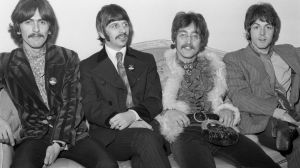
LONDON – MAY 19: (L-R) English musician, singer, songwriter and guitarist George Harrison (1943-2001), English musician, singer and drummer Ringo Starr, English singer, songwriter and guitarist John Lennon (1940-1980), and English singer, songwriter and bassist Paul McCartney of the Beatles attend a press party at the home of manager Brian Epstein supporting the release of Sgt. Pepper's Lonely Hearts Club Band, May 19, 1967 in London, United Kingdom. (Photo by Jeff Hochberg/Getty Images) -
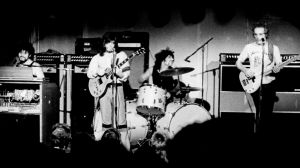
UNITED KINGDOM – JANUARY 01: MARQUEE Photo of VANILLA FUDGE, performing live onstage – L-R: Mark Stein, Vince Martell, Carmine Appice, Tim Bogert (Photo by Estate Of Keith Morris/Redferns) -
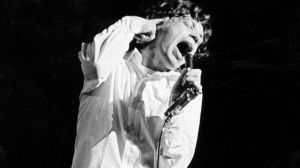
CIRCA 1966: Singer Mick Jagger of the rock and roll band "The Rolling Stones" performs onstage in circa 1966. (Photo by Michael Ochs Archives/Getty Images) -
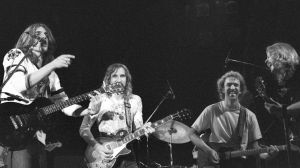
The Eagles perform on stage in Amsterdam, Netherlands, 1975. (L-R) Glenn Frey, Joe Walsh, Bernie Leadon, Don Felder. (Photo by Gijsbert Hanekroot/Redferns) -

English rock group the Beatles hold a press conference at the Capitol Records Tower in Los Angeles before their live performance at the Dodger Stadium, California, 28th August 1966. From left to right, George Harrison, John Lennon, Paul McCartney and Ringo Starr. (Photo by Archive Photos/Getty Images) -
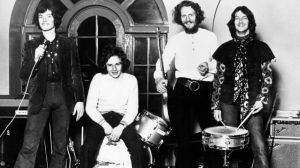
1969: Rock band "Blind Faith" pose for a portrait in 1969. (L-R): Steve Winwood, Ric Grech, Ginger Baker, Eric Clapton. Photo by Bob Seidemann. (Photo by Michael Ochs Archives/Getty Images)