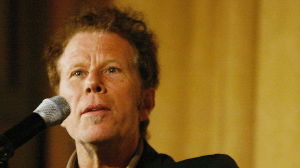
You can always count on Randy Newman to call them as he sees them. Along the path of his fantastic career, that forthrightness has occasionally ruffled some feathers. But you could never criticize Newman for backing away from tough subjects or searing insights.
Newman didn’t paint a pretty picture of Maryland’s biggest city in the 1977 song “Baltimore”. Whether or not you agree with the message, it’s hard to fault his skill in delivering it.
Videos by American Songwriter
Urban Jungle
Randy Newman’s gallows humor and willingness to expose unsavory characters, sometimes by embodying them, made it tough for him to gain mainstream traction in his 70s heyday. And then, lo and behold, Newman found himself in the Top 5 of the US pop charts in 1977 with “Short People”.
That the song was misunderstood by many who took it literally instead of as the satire of bigotry it was meant to be was somehow apropos to Newman’s brand. The song brought more folks to his 1977 album Little Criminals than any of his previous LPs. Those people found “Baltimore”, a pitch-black assessment of the city’s crumbling glory, at least as Newman saw it.
Many folks have come forth to defend the city against Newman’s withering depiction in all the years since its release. As he told The Onion in an interview, the songwriter had only seen the city out a train window when he wrote the song. He instead relied on a National Geographic story about it for his inspiration.
In that same interview, he defended the artistic license he might have taken. “Sometimes, the places you haven’t been evoke some kind of romantic response, and turn out to be more interesting than they would be from a purely journalistic angle,” Newman explained.
Examining the Lyrics of “Baltimore”
“Beat-up little seagull,” Newman sings at the beginning of “Baltimore”. “On a marble stair/Tryin’ to find the ocean/Lookin’ everywhere.” It’s a clever gambit, using this tiny, defenseless creature to signify the struggles of the entire city. That allows Newman to then put his focus on the citizens who are enduring their own issues.
“Ain’t nowhere to run to,” he moans. “There ain’t nothin’ here for free.” In the second verse, prostitutes and drunkards eke their way through their daily routine. “And they hide their faces,” Newman poignantly sings. “And they hide their eyes/’Cause the city’s dyin’/And they don’t know why.”
In the final verse, the narrator, up to this point just an observer, enters the story. He mentions some family members and makes plans to escape: “Buy a big old wagon/Gonna haul us all away.” We have no way of knowing if he’ll fulfill his closing promise. “Live out in the country,” Newman sings. “Where the mountain’s high/Never comin’ back here/’Til the day I die.”
In the chorus, backing singers including Glenn Frey and JD Souther sing out the city’s name before Newman punctuates it: “Man, it’s hard just to live.” The accuracy of his portrait might have been debatable. But the potency and poignance of the case made by Newman in “Baltimore” is such that you’d better have rock-solid arguments in place to contradict it.
(Photo by Michael Ochs Archives/Getty Images)
More Behind The Lyrics
-
(MANDATORY CREDIT Ebet Roberts/Getty Images) American singer-songwriter and guitarist Chrissie Hynde performing with rock group The Pretenders, USA, 1994. (Photo by Ebet Roberts/Redferns/Getty Images) -
UNITED KINGDOM – JANUARY 01: Photo of Nick LOWE; Posed head and shoulders, holding cigarette (Photo by Estate Of Keith Morris/Redferns) -
0000120354-PC-Vue22A-Korody 001 -

LONDON – SEPTEMBER 18: The Who perform live on stage at Oval Cricket Ground in London on September 18 1971 L-R Pete townshend, Roger Daltrey (Photo by Gijsbert Hanekroot/Redferns) -
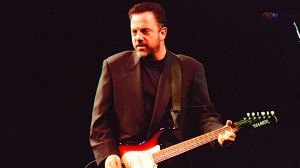
Atlanta – Circa 1987: Billy Joel performs at The Omni Coliseum in Atlanta, Georgia Circa 1987 (Photo By Rick Diamond/Getty Images) -
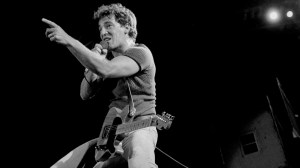
Bruce Springsteen and E Street Band perform in concert during the last show of the Born in the U.S.A. Tour, October 2, 1985 in Los Angeles, California. (Photo by Bob Riha, Jr./Getty Images) -

(L-R) Rick Danko, Robbie Robertson, Levon Helm, Richard Manuel and Garth Hudson of The Band pose for a group portrait in London in 1971. (Photo by Gijsbert Hanekroot/Redferns)