
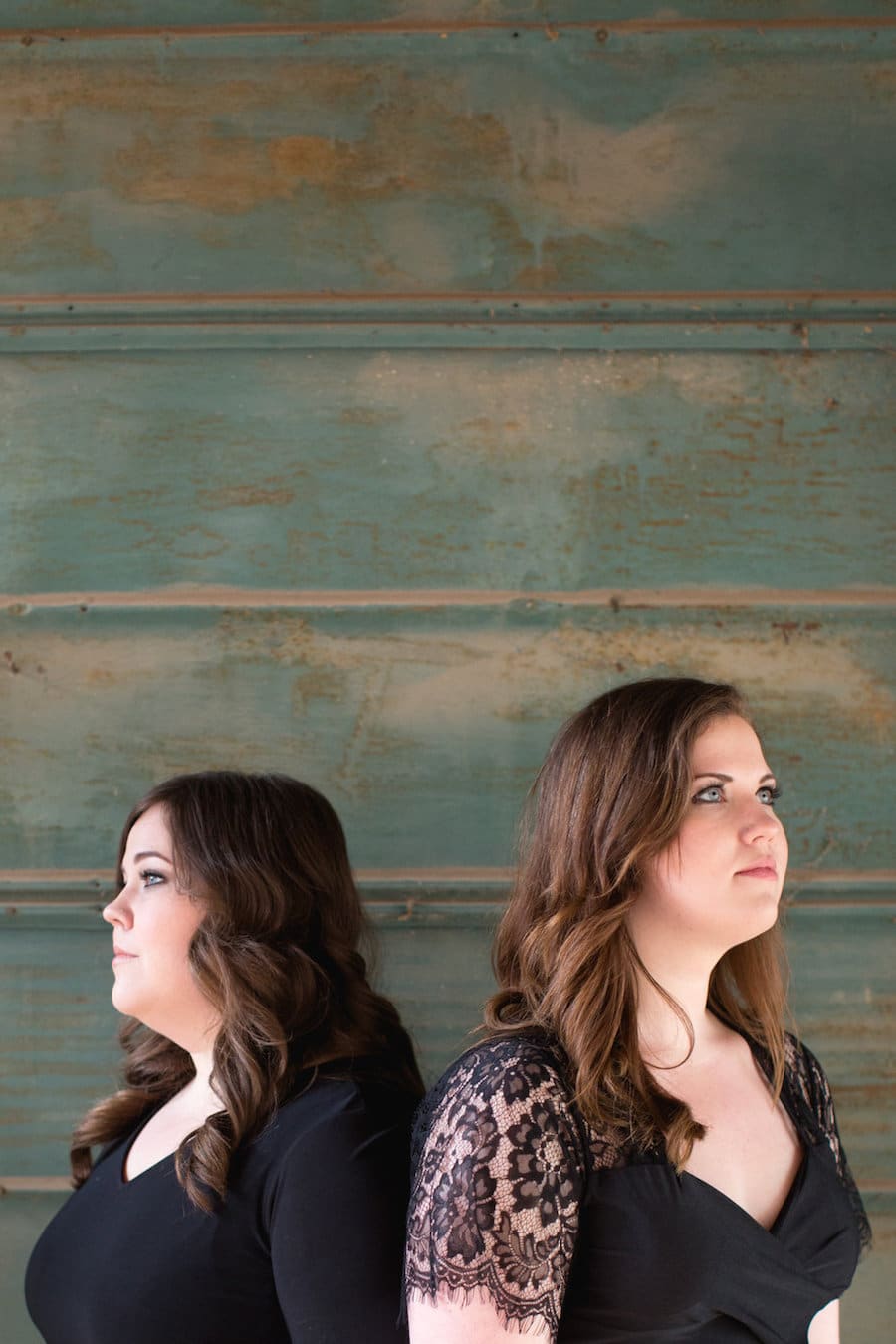
When the Secret Sisters played their official showcase at South by Southwest in March, they unveiled the songs from their third album, You Don’t Own Me Anymore, not due till the summer. “We don’t like happy songs,” Laura Rogers announced from the stage of Cooper’s Barbecue; her sister Lydia nodded in agreement. And they proved it with one song after another: lovely but depressing tales of faithless lovers and abusive fathers.
Each sister wore bright-red lipstick and allowed dark-red coils of hair to fall over the shoulders of their black dresses. You could tell them apart only if you knew that Lydia, 28, was the taller one with the guitar and Laura, 31, was the shorter one without any instrument. They sang the album’s title track, which has a woman bitterly advising her ex-lover to be less possessive and manipulative with his new girlfriend.
They also sang “Mississippi,” a ghostly murder ballad about a domineering, alcoholic father who shoots his daughter’s intended groom rather than let them elope. And they sang the song from the album’s first video, “Tennessee River Runs Low,” imagining that they had become the Tennessee River as it flows sluggishly by their hometown of Florence, Alabama, burbling a mournful song and burying their heartaches in the mud with the catfish.
“Sadness is a tough emotion to face,” Lydia said later, “and it also makes one of the strongest imprints on a person’s memory, right next to love. When we hear those melancholy tunes, we immediately relate to them and think of the hard things we’re battling ourselves. Those songs make you miss home, a life you never lived or a person you lost. These are things people are discouraged from talking about, especially in the South. When we sing these songs, it’s giving people permission to just be sad for a little while.”
Most of these songs are about doomed romances, but in May, as the Secret Sisters prepared for a show at Eddie’s Attic in Atlanta, they confessed that it wasn’t always an actual romance that inspired each song. When they’re singing about a lying lover or a tyrannical father, they’re not necessarily talking about an actual boyfriend or parent. Sometimes they’re singing about a business partner or authority figure.
Both sisters are happily married now, and they’re actually quite fond of their father, as another song on the new album, “Carry On,” testifies. “He’s Fine” is about a romantic betrayal in Laura’s past, but many of the songs are really talking about a different kind of dysfunctional relationship.
“When we started writing these songs,” reveals Laura, the duo’s principal lyricist, “we knew we couldn’t write songs that went, ‘I almost went bankrupt because my label dropped me and my manager was mean to me.’ Fans don’t want to hear about your problems being on the road and missing home because they think you’re living the dream. That’s not their fault; they’ve never experienced this. They don’t understand what it’s like to be signed to a major label, have lots of money spent on you and then be unable to pay your bills.
“But that happened to us and we needed to write about it, but we wanted to write about these trials in a way that wasn’t calling people out. In ‘Mississippi,’ the murder ballad, the father figure thinks he has good intentions and the daughter is unsure of herself. That story isn’t based on our father, but on two young women working in a business dominated by powerful older men.”
This kind of songwriting disguise isn’t as uncommon as you might think. If a songwriter is having problems with a record company, a bandmate, a sibling, a stalker-fan or society-at-large, it’s often easier to recast the situation as a romantic relationship. After all, the vast majority of pop songs rely on a handful of templates: new love, true love, love betrayed and love gone dead. When a writer uses one of those templates, the listener knows exactly what’s going on; little exposition is required, and the song can focus on the emotions — even if those emotions happened in a very different context in real life.
“We tried to veil what we were going through,” confesses Lydia, the duo’s principal melodicist, “by personifying the hardships of our life as ex-lovers who did us wrong. Part of it was personal heartache that my sister went through, but a lot of it was our career problems camouflaged as relationship problems.”
“There’s a puritanical early American sensibility that the two of them are still reconciling,” says their new album’s producer Brandi Carlile. “They need to live in a world where power, money and opportunity don’t begin and end only with men. The music we grew up on cast men and women in roles and power dynamics that can’t continue to define us as artists (even the men don’t want that pressure) and the Secret Sisters are an important part of that movement. It’s accidental feminism and a lesson in strength through humility.”
The Secret Sisters had an unusually rapid rise in the music business — and a just as rapid fall. Now they are ascending again but on a gentler, more sustainable slope.
Laura had never performed in public — neither alone nor with her sister — when she decided on a whim to attend an open audition in Nashville in 2009. Lydia had been performing at local 4-H Clubs and the like around Florence, but Laura was pursuing a business career and went to the audition as a lark. On the panel, though, was an obscure-at-the-time producer named Dave Cobb, and he had someone call Laura to ask her to come back for a second audition.
She tried to explain that they really wanted her sister Lydia, who has the “real singer” in the family. But both of them drove to Nashville for the second audition and a few days later they were cutting demos in Los Angeles. Cobb, who would later go on to produce breakthrough records for Sturgill Simpson, Chris Stapleton and Jason Isbell, recorded the debut album, called The Secret Sisters, a collection of mostly trad-country numbers by Hank Williams, Bill Monroe, George Jones and the like.
“Dave wasn’t as famous as he is now when he produced that first record,” Lydia says. “He’s from Georgia, so he understood where we were coming from; he liked that we were a little green as performers, and he tried to capture that innocence.”
When T-Bone Burnett heard the results, he volunteered to embellish the tracks with overdubs and signed the duo to his Beladroit label, under the Universal Records umbrella. Burnett pulled some strings, and the Secret Sisters’ first tour was with Levon Helm and Ray LaMontagne; the second tour was with Willie Nelson. Subsequent tours were with Carlile and Bob Dylan.
“At our first show with Levon,” Laura remembers, “we walked backstage, and there was this huge spread of food and nice dressing rooms. Out front was a large audience that bought our merch. We thought, ‘This music business isn’t so hard after all.’ Only later, when we started headlining our own shows, did we learn that, no, when you’re starting out as a headliner, you don’t get the big food spread or the nice dressing room you did when you opened for Levon or Willie. No, you need to build your own audience.”
When it came time to make the second album, Laura was in favor of making another traditional country record to build on all the buzz of the first. But Lydia and T-Bone argued that would put an unnecessary ceiling on their musical growth. So the sisters did some co-writing with Carlile, Dan Wilson and Gordie Sampson, and recorded the mostly new songs with T-Bone’s Twilight Zone approach to Americana. The covers did include an obscure Everly Brothers number (“Lonely Island”) but also tunes by P.J. Harvey (“The Pocket Knife”) and Bob Dylan (“Dirty Lie”).
“Our first record was accurately described as a throwback record,” Laura explains. “That’s what we wanted to do and what we felt comfortable with, but we soon felt boxed in and we wanted to get out of that box. We wanted to grow and do more writing on a personal level. We were going through a tumultuous period; we were in our 20s and undergoing break-ups. T Bone understood where we needed to go. He’s so good at that swampy rock sound, and he knew that could get us out of that box.
“One day he walked into the studio with his laptop, saying Bob Dylan had some unfinished tunes we should take a look at. There were about eight or nine in that list, and “Dirty Lie” was the one that stood out the most. The melody was there, plus the line, “Whosoever told you told a dirty lie.” The rest of the words were him playing around with phrases, so we took the track back to the hotel that night and wrote the rest of it. We recorded it the next day. It’s actually the only song we’ve ever recorded with zero harmony, which was kind of liberating.”
Despite all these interesting twists, the second album died a quick and ugly death. The label quickly lost faith in it and soon after so did the duo’s support team. The split with manager Andrew Brightman was especially rancorous, and the two sisters found themselves back in Alabama without a manager, a booking agent, a publicist or a band. They resorted to cleaning houses part-time, and had to declare bankruptcy when they were no longer able to pay their bills.
“It got pretty bad,” Lydia said on the duo’s PledgeMusic project page in 2016. “I don’t want to sugarcoat it at all … We decided to make some business changes and let some people go. People didn’t take it well and it just went downhill from there … We were let go from our label at the same time as the business changes, so it was everything at once. Everything was going south. Last year was pretty tough. We suffered from a lot of personal distress as a result of the business decisions. We didn’t have many shows. We couldn’t afford to bring a band out on the road. It was a pretty tough time and, as a result, we didn’t have any creativity whatsoever.”
Things turned around gradually, but the breakthrough event was a call from Carlile who offered to produce the next Secret Sisters’ album with her studio partners, the multi-instrumental twins Tim and Phil Honsereth. The trio had never worked on anyone’s albums but Carlile’s, but they had previously talked about doing the second Secret Sisters recording. That hadn’t worked out, though Carlile had co-written two songs for it, but now the duo was in desperate straits, and Carlile threw them a lifeline.
“When I first toured with The Secret Sisters,” says Carlile, “I was totally stunned by their vocal timing and pitch. I attributed it to some kind of swarm intelligence or ESP. They also had seemingly stepped out of a time capsule of idyllic early Southern American history that I still don’t think they’re fully aware of, which is why it’s so authentic.”
“Ever since we spent a whole summer touring with Brandi,” Laura says, “she’s been our buddy. She’s such a rock star, but she was raised on the same music we were, so I think she saw a lot of herself in us. Before the second album, our label sent us to Nashville to write with anyone who wanted to write with us. Brandi had been through the same thing, and she said, ‘No, you need to come up to Seattle so you can write with someone you know and you’re comfortable with.’
“We stayed with her for several days, wrote some songs and recorded some demos. She recognized that we were good at what we did, and we needed a female guide. We were surrounded by a lot of powerful men but we didn’t have a female voice to advise us. For this record, we wanted to show that we have come of age and don’t sound like our earlier records. Brandi is such a supporter of us, but she understood where we had to go with this record.”
The main attraction of the new album, though, is the sisters’ astonishing vocal blend. Their close-interval harmonies are so tight that the usual distinction between lead and backing vocal becomes irrelevant. The two voices become one, but that new voice is the sound of collaboration rather than individualism, of mutual support rather than loneliness.
“Attending church and listening to bluegrass music made us sing like this,” Laura says. “And because we’re sisters, we have the same timbre. We pronounce words the same way, so our voices naturally blend together. We have the same moral outlook on life; we care about the same things, so we’re always on the same page. People ask us how we sing harmony, and I couldn’t sit down and teach someone how to do it, because it just happens naturally after a life growing up together.”
“Most of our favorite artists are already dead,” Laura joked at South by Southwest back in March. She got serious, though, when she talked about “our favorite harmonizing siblings, the Everly Brothers,” explaining that “we love them more than food.” Phil Everly died in 2014, but Don is still alive, and their sound is in good hands with the Secret Sisters.
When Laura and Lydia sang “Let It Be Me,” it was hard to tell not only where the lead vocal left off and the harmony vocal began, but also where the past left off and the future began. Having survived a crash-and-burn interruption of their career, the Secret Sisters have crawled out of the wreckage to rebuild their career. Channeling Phil and Don, Laura and Lydia were hoping the world would once again let it be them.
This article appears in the July/August 2017 edition, now available on newsstands. You can read the July/August digital edition on editorial.americansongwriter.com with a membership log-in here. You can purchase the iPad version in iTunes, and the Android-compatible version through Google play. Subscribe to the bi-monthly print edition here.
More Features
-

Photo by Rick Diamond/WireImage for BMI Nashville -
IN CONCERT – From London – Shoot Date: June 13, 1974. (Photo by ABC Photo Archives/ABC via Getty Images) BLUE SWEDE -
30th January 1969: British rock group the Beatles performing their last live public concert on the rooftop of the Apple Organization building for director Michael Lindsey-Hogg's film documentary, 'Let It Be,' on Savile Row, London, England. Drummer Ringo Starr sits behind his kit. Singer/songwriters Paul McCartney and John Lennon perform at their microphones, and guitarist George Harrison (1943 – 2001) stands behind them. Lennon's wife Yoko Ono sits at right. (Photo by Express/Express/Getty Images) -
MELBOURNE, AUSTRALIA – Keith Urban performs during "The Songs Of John Farnham, The Celebration Concert" at Rod Laver Arena on September 20, 2026 in Melbourne, Australia. (Photo by Graham Denholm/Getty Images) -
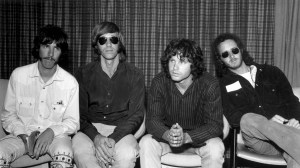
3rd September 1968: American psychedelic rock band, The Doors during a press conference at Heathrow Airport, London (left to right); drummer John Densmore, keyboard player Ray Mansarek, vocalist Jim Morrison (1943 – 1971) and guitarist Robby Krieger. (Photo by Central Press/Getty Images) -
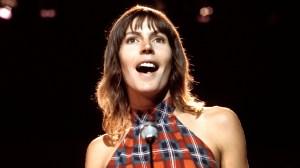
Australian-American singer, songwriter, author, actress, and activist Helen Reddy (1941 – 2020), 1975. (Photo by Tony Russell/Redferns) -
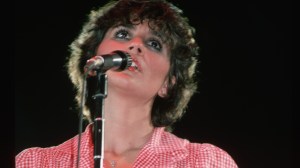
Original Caption) : 1980-Pop singer Linda Ronstadt is shown singing on stage, holding the microphone stand. She wears a gingham shirt with a tie front and askirt with flowers on it in this waist-up portrait. (Photo by Lynn Goldsmith/Corbis/VCG via Getty Images) -
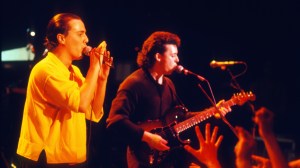
Tears for Fears – Koninklijk Circus – Brussel – Belgium – 21/04/1985 Roland Orzabal, Curt Smith Photo gie Knaeps