
There was no one quite like the late great Neil Peart. He was an incredible songwriter and drummer, and he was part of one of the greatest prog-rock bands of all time: Rush. The band produced a pretty hefty discography in the decades they were together, and Peart was once kind enough the talk about the stories behind some of Rush’s greatest songs. Let’s take a look at just a few!
1. “La Villa Strangiato (An Exercise In Self-Indulgence)”
This Hemispheres track from 1978 is a unique and long one, and apparently that is due to the fact that it was inspired by guitarist Alex Lifeson’s own mind. Specifically, the song was inspired by dreams he had, and the composition was written around the dream as a concept-turned-arrangement.
Videos by American Songwriter
“This is Alex’s brain, and every section of that song is different dreams that Alex would tell us about,” Peart told CBC Music back in 2014. “[…] It was these bizarre dreams that he would insist on telling you every detail about, so it became a joke between Geddy and me. ‘La Villa Strangiato’ means strange city, and there was so much going on in that.”
2. “Xanadu”
Even if you’re a novice Rush fan, you probably know “Xanadu” from Rush’s 1977 record A Farewell To Kings. There aren’t many known stories behind this Rush album, but Neil Peart did describe the background of “Xanadu” specifically.
“Let’s call that our experimental phase,” said Peart. “Those subsequent albums are us learning to use all that, having fun, experimenting, as genuine as can be. When I look back on that it’s an indulgent smile. We would later do better but there was nothing wrong with it. I described it [“Xanadu”] once as young, foolish and brave.”
3. “YYZ”
This Moving Pictures track is one of the most well-know Rush songs of all time. Of the 1981 song “YYZ”, Peart said that the inspiration for the song came from some ominous morse code he and the rest of the band heard while flying years ago.
“We were flying into Toronto on a private plane and heard the morse code beep, and that became the founding rhythm of the song,” said Peart. “It was a soundtrack about airports, the bustling part, the very emotional part of it, you know, re-greeting each other, and all the laments. That was a conscious thing, to try to weave in some of the moods of airports into the song ‘YYZ’.”
4. “Limelight”
Another standout track from Moving Pictures, Neil Peart once revealed that this song didn’t boast one of Rush’s wilder stories. Rather, “Limelight” was an introspective song about how he had grown as a person and musician.
“An attempt to clarify for myself and hopefully others a thing that I learned: never complain, never explain,” said Peart. “I try not to complain, but I can’t help but to explain. That [“Limelight”] was an attempt on my part to explain myself as an introvert, feeling totally alienated by the ‘guilded cage’ of it all, and it’s been remarkable over time how many young musicians have come up to me and told me what that song means to them when they faced the same transition in their life.”
Peart went on to say that as a young musician, you’re expected to supply without much demand. He also said that other musicians related to “Limelight” quite a bit after it was released.
Photo by Fin Costello/Redferns/Getty Images
When you purchase through links on our site, we may earn an affiliate commission.
More The List
-

English singer and guitarist Peter Frampton, New York, 1977. (Photo by Michael Putland/Getty Images) -
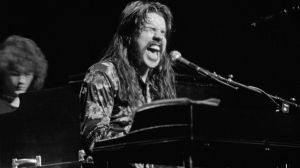
Photo by Fin Costello/Redferns -

(Original Caption) Candid photo of American singer/actor Bobby Darin (1936-1973) sitting pensively as he plays with his hands. -
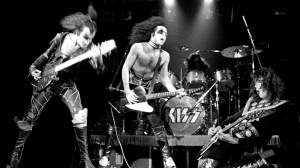
KISS performing at The Orpheum Theater, Boston, MA on May 11, 1975. (L-R, Gene Simmons, Paul Stanley, Peter Criss, Ace Frehley) -
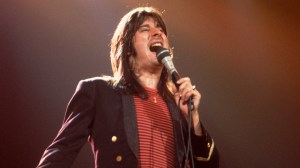
Steve Perry of Journey performing at the Rosemont Horizon in Rosemont, Illinois, May 21, 1982. (Photo by Paul Natkin/Getty Images) -

Rage Against The Machine singer Zack De La Rocha performs on stage at Brixton Academy, London, United Kingdom, 1993. (Photo by Martyn Goodacre/Getty Images) -

Photo by Keith Bernstein/Redferns