
There is a reason that nursery rhymes and lullabies have existed and subsisted for decades or even hundreds of years. Their classic messages, catchy lyrics, and indelible characters bring joy to our faces as young people and stick with us throughout our lives.
But sometimes it can be hard to cut through the clutter. We wanted to share ten of the best nursery rhymes and lullabies for kids—those dazzling works that bring about smiles and recitations. So, without further ado, here are the Top 10 nursery rhymes for kids.
Videos by American Songwriter
1. “Baa, Baa, Black Sheep”
When you’re a little kid singing in nursery school, there is one question that is more important than any other: Have YOU any wool? The idea, of course, comes from the traditional nursery rhyme, “Baa, Baa, Black Sheep,” which is one of the most beloved and fun kids’ songs to sing of the past century.
Read more about the meaning of “Baa, Baa, Black Sheep,” HERE.
2. “John Jacob Jingleheimer Schmidt”
It’s a ragtime-inspired song that’s funny, and goofy and creates community. That’s right, it’s “John Jacob Jingleheimer Schmidt.”
Read more about the meaning behind “John Jacob Jingleheimer Schmidt,” HERE.
3. “Humpty Dumpty”
The main character of the little song, or nursery rhyme, is an egg named Humpty Dumpty. The song, which has origins in England, most likely began as a riddle. The first recorded version of the rhyme dates back to 1797 and the song was written in 1870 in James William Elliot’s book, National Nursery Rhymes and Nursery Songs.
Read more about the meaning behind “Humpty Dumpty,” HERE.
4. “Jack and Jill”
“Jack and Jill” is a traditional English-language nursery rhyme that dates back to the 1700s. To date, there are over a dozen verses known, which include Jack and Jill falling, Jack getting run over by a goat, Jack and Jill’s mother getting run over by a cow, and several other fates. These verses were added to the work some 50 years after the first-known record of the rhyme.
Read more about the meaning behind “Jack and Jill,” HERE.
5. “Twinkle, Twinkle, Little Star”
When discussing the meaning of the traditional lullaby and nursery rhyme, “Twinkle, Twinkle, Little Star,” there is a sense that you’re highlighting several lullabies.
Read more about “Twinkle, Twinkle, Little Star,” HERE.
6. “Alouette”
The rhyme has a sing-song-like quality, bright and light, which is appropriate because the subject of the tune is a lark or a songbird. More specifically, it’s about the singer’s desire to kill, pluck and eat the bird.
Read more about the meaning of “Alouette,” HERE.
7. “When You Wish Upon a Star”
If you ask Cinderella, “A dream is a wish your heart makes.” Similarly, if you ask Jiminy Cricket, he’ll tell you that when you wish upon a star, it “makes no difference who you are.” Indeed, wishing is one of the most wonderful, hopeful things a person can do and it almost always comes at the most dire or most necessary moments. To wit, Disney’s classic song, “When You Wish Upon a Star” has become the anthem for this human sense of hope.
Read more about the story of “When You Wish Upon a Star,” HERE.
8. “Little Bo-Peep”
As with the best of these memorable, often adorable nursery rhymes and lullabies, they can be read on several levels. On the one hand, you have Little Bo Peep and her sheep. There is a conundrum, it’s solved and everyone is happy and rhyming the day away. On the other hand, you have a life lessons: don’t obsess.
Read more about the story behind “Little Bo-Peep,” HERE.
9. “Hush, Little Baby”
New parents: what would you do to get your child from crying? You’d likely do just about anything—get them a diamond ring, a mockingbird as a pet—anything for a moment’s peace. Well, then, if you understand that plight, you understand the root of the lullaby “Hush, Little Baby.”
Read more about the story of “Hush, Little Baby,” HERE.
10. “Little Miss Muffet”
Rarely do classic nursery rhymes use words that most readers don’t know and have never heard before. But “Little Miss Muffet” is one of those rare exceptions. The short verse, about a young girl and a scary spider, includes words like “tuffet” and “curds and whey.” So, what the heck are those? Let’s dive into the history and meaning of the rhyme.
Read more to go behind the story of “Little Miss Muffet,” HERE.
Photo by Gettyimages.com
More Features
-

Photo by Michael Ochs Archives/Getty Images -

AMSTERDAM, NETHERLANDS – JULY 18: Eddie Vedder of Pearl Jam performs live on stage at Paradiso on July 18, 1993 in Amsterdam, Netherlands. -
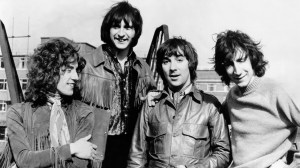
CIRCA 1975: Roger Daltrey, John Entwistle, Keith Moon and Pete Townshend of the rock and roll band "The Who" pose for a portrait in circa 1975. (Photo by Michael Ochs Archives/Getty Images) -

MOUNTAIN VIEW, CA – JUNE 13: Third Eye Blind backstage at Live 105's BFD 1997 at Shoreline Amphitheatre on June 13, 1997 in Mountain View California. (Photo by Tim Mosenfelder/Getty Images) -

Janis Joplin and Kris Kristofferson at Landmark Hotel Los Angeles Summer 1970. (Photo by John Byrne Cooke Estate/Getty Images) -

NEW YORK, NEW YORK – JULY 28: Kelsea Ballerini seen in West Village on July 28, 2026 in New York City. (Photo by Aeon/GC Images) -

George Strait (Photo by Paul Natkin/WireImage)