The best songwriters can create lyrics that work in many different ways. These songs can act as Rorschach tests. In other words, they reveal as much about the person on the other end of the song as they do the writer. Bruce Springsteen pulled off that kind of sleight of hand with the song “Your Own Worst Enemy”. The 2007 deep cut can support a myriad of interpretations. But it doesn’t commit to a single one. Instead, it puts the onus on the listener to decide,
“Enemy” Territory
In many ways, Magic, the album Bruce Springsteen released in 2007, represented a type of album he hadn’t made in a couple of decades. Springsteen disbanded the E Street Band in the late 80s, meaning that the last full-band effort that he released prior to that decision was Born In The U.S.A. in 1984.
Videos by American Songwriter
After a few solo efforts, he reunited the band in the late 90s. The first album he made with the group following that was The Rising in 2002. But that record was so dominated by songs about 9/11 that it felt like a one-off of sorts. Five years later, Springsteen and the band returned with a much more multifaceted effort.
Many of the songs contained an updated rock sound that wasn’t too far out of place for the time in which they were recorded. But Springsteen used a couple of tracks to flash back to the music of his youth. “Your Own Worst Enemy”, for example, hearkened back to the work of baroque pop bands from the 60s like The Left Banke or The Zombies.
In the middle of that chiming, string-laden production, Springsteen dropped some sour lyrics. He put them in the second person, a tactic that put the onus on the audience to determine what it was he meant. Was it a song about depression, adultery, politics, or all of the above? Let’s dive into the lyrics of “Your Own Worst Enemy” to find the answer.
Exploring the Lyrics of “Your Own Worst Enemy”
If you ask us, “Your Own Worst Enemy” reflects on the impulses inside each one of us that pull us away from the safe, sure things in our lives toward danger and ruin. “Your own worst enemy has come to town,” he intones in the refrain, suggesting that this is a temporary visitor. But it’s one who can do a ton of damage as long as they’re around.
The first verse immediately puts the protagonist in tumult. Unable to sleep or dream, this poor sap hasn’t covered his tracks well enough to get away with his offense: “Your fingerprints on file/Left clumsily at the scene.” With the phrase “on file”, Springsteen suggests that this isn’t the first time this has happened.
He contrasts that with the calm in this person’s life when the enemy is held at bay. Once, this person could rest easily in a comfortable environment with their love by their side. “You knew who you were,” Bruce Springsteen assures. But that’s all changed. “There’s a face you know,” he sings. “Staring back from the shop window.” More ominous than a reflection, this is a destructive doppelganger.
In the final verse, the protagonist takes drastic measures, clearly in denial: “The times they got too clear/So you removed all the mirrors.” The crime being perpetrated has many victims: “Once the family felt secure/Now, no one’s very sure.”
Springsteen’s reference to a flag in the epilogue seems to support the interpretation that he’s talking about a country and not a person. But we believe “Your Own Worst Enemy” makes the most sense as a dissection of someone sabotaging all that’s pure and true in their life, unable to put a finger on the urge that causes them to do it.
(Photo by Kevin Mazur/WireImage)
More Behind The Lyrics
-

HARD RAIN — Pictured: Bob Dylan performing, circa 1975. — Photo by: NBCU Photo Bank -

Portrait of folk singer Judee Sill in London in 1972 on tour to promote her second album, 'Heart Food'. (Photo by Gijsbert Hanekroot/Redferns) -

Elvis Costello Top of the Pops London 1982 -

IN CONCERT – Airdate: March 1, 1974. (Photo by ABC Photo Archives/Disney General Entertainment Content via Getty Images) LINDA RONSTADT -
0000120354-PC-Vue22A-Korody 001 -
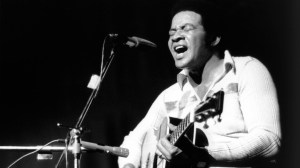
UNITED KINGDOM – JANUARY 01: HAMMERSMITH ODEON Photo of Bill WITHERS, 231-233 (Photo by Fin Costello/Redferns) -
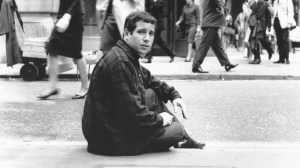
Paul Simon 1965 in London..© Chris Walter..