If musicians have the adage, “if you’re not playing, you’re paying,” then the producer equivalent might be, “if you’re not producing, you’re losing.” At least, that’s how things appeared to shake out for Quincy Jones and Phil Spector, two iconic producers who were in an unofficial race against one another to release their version of “It’s My Party”.
The battle began in the early spring of 1963. Jones had shopped a demo of the song to Lesley Gore, who agreed to cut a version of it. Meanwhile, Spector was trying to do the same thing, except he was pitching it to The Crystals. Jones technically beat Spector to the punch, but that didn’t deter the latter producer. He believed he could make a better version and followed through with his plans.
Videos by American Songwriter
Spector disclosed this plan to Jones at a concert both producers were attending in late March. So, when Spector entered the venue to watch the performance, Jones changed his mind, heading to the studio. Ultimately, that made all the difference.
How Quincy Jones Beat Phil Spector to “It’s My Party”
Phil Spector might have been confident enough to share his plans to release “It’s My Party” with Quincy Jones. But history would show he wasn’t quick enough. According to Jones, Spector told him about his in-progress demo at a Charles Aznavour concert. Knowing that Spector was hot on his tail, Jones rushed to the studio that weekend to press one hundred copies of Lesley Gore’s version so that he could start sending it out to radio stations and promoters by Monday.
The formulaic approach Jones took with “It’s My Party” might have caused Spector to turn up his nose, but it caused the public to turn up their radios. Lesley Gore’s single off her debut album became an instant hit, topping the charts in the United States, Canada, and Australia. The song even produced a Grammy nomination for Best Rock & Roll Recording in 1964. Even today, the song remains one of Gore’s best-known and most beloved.
According to one of the song’s co-writers, Wally Gold, Spector was incredibly upset that Jones beat him to the punch. Per Gold, “I don’t think Phil ever came to the office again.” As disappointing as it must have been for Spector to see a potential hit slip through his fingers, it just goes to show: you snooze, you lose.
Photo by Hulton Archive/Getty Images
More Behind The Song
-
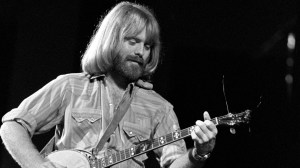
ATLANTA – NOVEMBER 12: Singer-songwriter Michael Martin Murphey (FKA Michael Murphey) performs at Symphony Hall on November 12, 1975 in Atlanta, Georgia. (Photo by Tom Hill/WireImage) -
Photo by Michael Ochs Archives/Getty Images -

Photo by Harry Langdon/Getty Images -
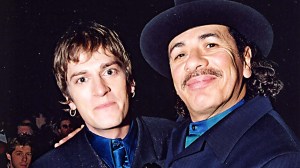
2000 GRAMMY Awards Rob Thomas & Carlos Santana (Photo by Jeff Kravitz/FilmMagic) -
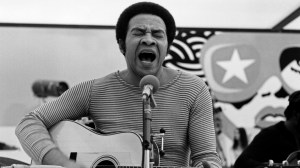
Der amerikanische Sänger und Songschreiber Bill Withers, Deutschland 1970er Jahre. (Photo by Schweigmann/United Archives via Getty Images) -
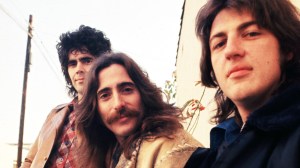
Three Dog Night 1971 Danny Hutton, Chuck Negron and Cory Wells (Photo by Chris Walter/WireImage) *** Local Caption ** -
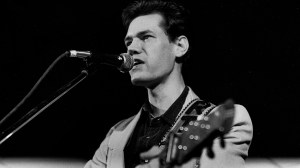
American Country musician Randy Travis plays guitar as he performs onstage at an unspecified nightclub, Dallas, Texas, December 13, 1986. (Photo by Paul Natkin/Getty Images)