Ah, those artistic differences. They can run rampant through the very best of bands and do some serious damage. Even successful songs can cause a lot of friction if someone isn’t completely on board with it.
On the surface, all seemed well as Foreigner hit the Top 5 in 1988 with the song “I Don’t Want To Love Without You”. Listen closely, however, and you might be able to hear a lead singer subtly trying to undermine the outcome.
Videos by American Songwriter
Slow Stuff
Foreigner’s first five studio albums lodged in the Top 5 of the album charts in America. Few other rock bands of the 70s and 80s could match their consistent hold on the audience. And for much of that time, the dynamic duo of Mick Jones and Lou Gramm set the artistic tone for the band.
Jones, the band’s lead guitarist, founded the group in 1976 and served as its chief songwriter. But he received plenty of help in that department from Gramm, whose thrilling vocals also gave Foreigner a leg up on their rock competition.
Indelible songwriting, dynamic productions, and potent performances combined to create Foreigner’s unbeatable formula. On top of all that, they eventually figured out that they could court an even wider range of listeners with slow ballads. But the guy who was tasked with singing them eventually started to question the necessity of those songs.
Gramm’s Growing Agitation
To Lou Gramm, Foreigner was at its peak when it delivered bruising, blues-based, hooky rock and roll, à la hits like “Head Games” or “Feels Like The First Time”. But with “Waiting For A Girl Like You”, from the 1981 album 4, Foreigner soared with a slow one. It convinced Jones that there was a market for just such an approach.
When “I Want To Know What Love Is”, a gospel-tinged number from Agent Provocateur in 1984, went all the way to No. 1, Foreigner’s first such hit, Jones was vindicated. But that song drove a wedge between him and Gramm. Not only was Gramm wary about another ballad, but he felt that he had been denied proper songwriting credit.
Gramm’s efforts to build a solo career outside Foreigner rankled Jones in that it held up the making of Inside Information, released in late 1987. When he finally came back to the Foreigner fold, Gramm found another Jones-penned ballad waiting for him. And he couldn’t quite hide his disdain.
The Last Straw
“I Don’t Want To Live Without Your Love” was much more in the easy-listening vein than the other slow songs that Foreigner had turned into hits. Perhaps that’s why Gramm, who admitted after the fact that his heart wasn’t in the making of Inside Information, initially balked at singing it.
When he finally agreed to it, he purposely steered clear of some of the dramatic crescendos and vocal pyrotechnics emblematic of his work. Instead, he sang the melody without much flourish whatsoever. Still, Jones’ commercial instincts carried the day, and the song became a Top 5 hit.
It turned out to be a Pyrrhic victory, however. Jones’ distaste for the band’s reliance on ballads contributed to him eventually leaving the group. And Foreigner’s run of chart dominance ended with that polarizing song.
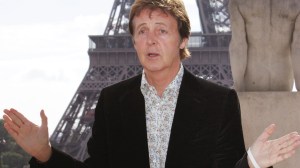
(Photo by Paul Natkin/Getty Images)
More Features
-
Photo by Lynn Goldsmith/Corbis/VCG via Getty Images -

Photo by Ian Dickson/Redferns -

ATLANTA – AUGUST 22: Bruce Springsteen performs with The E-Street Band at Alex Cooley's Electric Ballroom on August 22, 1975 in Atlanta, Georgia. (Photo by Tom Hill/WireImage) -

Roy Orbison. (Photo by © Hulton-Deutsch Collection/CORBIS/Corbis via Getty Images) -
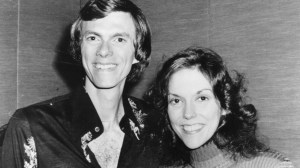
1st November 1976: American brother and sister pop duo Richard and Karen Carpenter (1950 – 1983), back stage at the London Palladium. The Carpenters' first hit, 'Close To You' in 1970, was followed by a string of others, including 'We've Only Just Begun', 1970, 'For All We Know', 1971, and 'Top Of The World', 1973. (Photo by Evening Standard/Getty Images) -
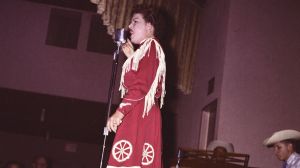
Country Singer Patsy Cline performs on stage at the Riverside Ball Room in Phoenix, Arizona, circa 1960. (Photo by Johnny Franklin/andmorebears/Getty Images)