This article appears in our Nov/Dec issue. Download it here.
Various Artists
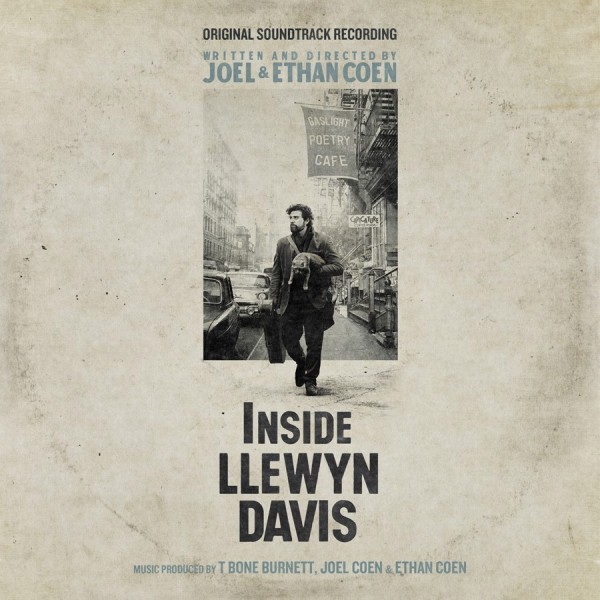
Inside Llewyn Davis
(Nonesuch)
3.5 out of 5 stars
(Stream the album)
T Bone Burnett and filmmakers Joel and Ethan Coen found the zeitgeist at the turn of the millennium with the O Brother Where Art Thou? soundtrack, which featured (mostly) contemporary musicians interpreting the traditionalist folk ballads, bluesy hollers, gospel and country hymns, and bluegrass playing of a lost, long-ago time.
The songs, as well as the Depression-Era-Mississippi setting of the film, allowed for discovery of the same music that author Greil Marcus was championing to intellectuals as “old weird America.” It was a moment when high and pop culture met in consensus, resulting in a Grammy-winning album that sold some 8 million copies and turned Ralph Stanley’s haunting “O Death” into an alternative national anthem.
Burnett and the Coens have reunited with similar intent (with help from associate music producer Marcus Mumford) for the Inside Llewyn Davis soundtrack, which also explores the roots of Americana. In the Coens’ film, set in the Greenwich Village of 1961, the actor Oscar Isaac plays Davis, loosely based on the now-deceased, hard-living bohemian Dave Van Ronk.
The soundtrack doesn’t have the same sense of revelation as O Brother’s, enjoyable as it is, because the music it focuses on – the acoustic balladry, mostly traditional, of the pre-Dylan folk movement – lacks the same degree of historical sweep and variety.
The songs featured here were brought to the Village from elsewhere – they didn’t arise from the land and culture of Manhattan (the way Velvet Underground’s rock arose from Andy Warhol’s druggy, sexy urban New York of the mid-1960s). Also, it can be argued that this music – often carefully enunciated and sung with a mournful gentleness – was eclipsed by the rough-hewn, grittier and often-political songs that Dylan and others brought forth from the Village just a bit later.
This first wave was trying to sound romantic; the others were trying to sound real. Still, this music is memorable on its own terms.
The film’s narrative is very much about the music, so quite few of the tracks are done in character – not just by Isaac but also by Justin Timberlake and Carey Mulligan, who play the Jim and Jean-modeled duo whose folk songs were smoothly delivered with careful sweetness (“Five Hundred Miles”).
Isaac did his own singing live on the set, and the soundtrack presents four solo songs – “Green, Green Rocky Road,” “Fare Thee Well (Dink’s Song),” “The Death of Queen Jane” and “Hang Me, Oh Hang Me” – straightforwardly. He also went into the studio to record some additional material with Mumford (another version of “Fare Thee Well”) and the Punch Brothers (Ewan MacColl’s “The Shoals of Herring”).
Isaac has a softly forlorn voice that projects honesty and introspection, capable of plaintive urgency when roused. He’s best on the purely solo numbers – Mumford has to hold something back to let Isaac be forcefully heard on their “Fair Thee Well” version, which does have a lovely mandolin/fiddle interplay courtesy of Chris Thile and Gabe Witcher.
Another actor in the film, Stark Sands, takes a brighter and airier vocal approach, one that doesn’t quite rise above self-consciousness, for a version of Tom Paxton’s enduring “The Last Thing On My Mind.” It features invigorating accompaniment from the Punch Brothers.
Recorded just for the soundtrack, and sounding like it belongs on O Brother, is Nancy Blake’s deep-country version of A.P. Carter’s poetically imagistic “The Storms Are On The Ocean,” with husband Norman Blake on guitar and dobro, David Rawlings on guitar and Gillian Welch contributing harmonies.
All but three of the 14 songs are newly recorded – the archival selections being John Cohen with the Downhill Strugglers’ “The Roving Gambler,” a rare take of Bob Dylan singing “Farewell,” and Van Ronk’s own live version of Len Chandler and Robert Kaufman’s “Green, Green Rocky Road.”
Van Ronk’s track – a song he first recorded in 1963 – just might be the best thing here. You can hear what a masterful interpreter he was just from this one selection. He is as gruff and ruggedly vernacular as Dylan but also reassuringly, romantically confident and intimate. And he also, at the right moment, becomes dramatically, ebulliently expressive and alive to the joy of his performance.
It’s a wake-up call for those who never knew, or have long forgotten, how fine a singer he was. There is nothing, absolutely nothing, dated (or “in character”) about his performance.
Enjoy this soundtrack, to be sure, but hopefully it – and the film – will inspire you to explore Van Ronk’s catalogue so you can find more songs this good.
More Reviews
-

John Oates performs with The Good Road Band on March 15, 2026, at The Cabaret Theatre at Mohegan Sun in Uncasville, Connecticut (Photo by Khoi Ton/Courtesy of Mohegan Sun) -

Boy George and members of Culture Club perform at Mohegan Sun Arena in Uncasville, CT, on March 1, 2026 (Photo by Khoi Ton/Courtesy of Mohegan Sun)