
People say comparison is the thief of joy. But when you’re trying to accomplish anything right beside someone doing the exact same thing, it’s nearly impossible not to compare your progress to theirs. At least, that’s the predicament Heartland rocker John Mellencamp found himself in while recording his 1978 single, “I Need A Lover”.
While Mellencamp and his band were in Criteria studio in Miami, Eagles were next door, recording their fifth album, Hotel California. To make the situation even more intimidating for Mellencamp, he was recording his debut single (still billed as Johnny Cougar). He was, quite literally, tracking alongside his direct competition.
Videos by American Songwriter
Hotel California wasn’t out yet. But even through the audio he heard seeping from Eagles’ studio, Mellencamp could tell that the band was working on a hit album. He also knew that their hit album would inevitably take up radio airplay and chart positions that he wanted for his single.
John Mellencamp Was Quickly Humbled in the Late 1970s
Speaking to Howard Stern in 2017, John Mellencamp recalled recording at Criteria at the same time as Eagles. “I would come out of my studio, and I’d walk by their studio. And I’d hear ‘life in the fast lane.’ I’d go, ‘Oh, f***.’ I’m not even in the game.”
In some ways, Mellencamp was right. The Eagles’ Hotel California utterly dominated the rock ‘n’ roll world in the late 1970s. Escaping its gargantuan shadow was virtually impossible, especially for a rising artist like Mellencamp. Still, Mellencamp found a way to carve out a space for himself. “I Need A Lover” peaked at No. 28 on the Billboard Hot 100, which isn’t bad for a rock ‘n’ roller’s debut single. It performed even better in Australia, peaking at No. 10.
Mellencamp’s biggest career successes would come five years later on American Fool with hits like “Hurts So Good” and “Jack & Diane”. In 1983, Uh-Huh brought career-defining tracks like “Crumblin’ Down” and “Pink Houses”. By the end of the decade, Mellencamp was a defining figure for the style of American rock ‘n’ roll dubbed Heartland rock (even if he doesn’t approve of the term).
Meanwhile, Eagles officially broke up—for the first time—in 1980. It’s impossible to say with certainty whether their departure from the market played a key role in Mellencamp’s success later in the decade. In any case, it serves as a valuable lesson to never judge someone else’s triumphs too carefully.
Photo by Bob Sacha/Corbis via Getty Images
More Behind The Song
-
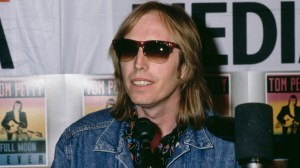
American singer, songwriter and musician Tom Petty (1950-2017) attends a press conference for his debut solo album 'Full Moon Fever', 1989. (Photo by Vinnie Zuffante/Getty Images) -
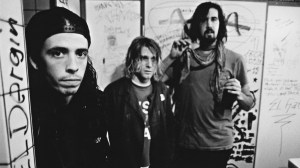
American rock group Nirvana, backstage in Frankfurt, Germany, 12th November 1991. Left to right: drummer Dave Grohl, singer and guitarist Kurt Cobain (1967 – 1994) and bassist Krist Novoselic. (Photo by Paul Bergen/Redferns/Getty Images) -
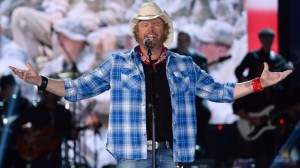
LAS VEGAS, NV – APRIL 07: Recording artist Toby Keith accepts USO award onstage during ACM Presents: An All-Star Salute To The Troops at the MGM Grand Garden Arena on April 7, 2014 in Las Vegas, Nevada. (Photo by Ethan Miller/Getty Images for ACM) -
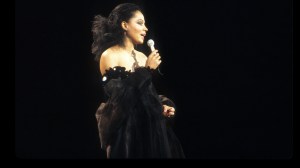
1985 AMERICAN MUSIC AWARDS – Show Coverage – Airdate: January 28, 1985. (Photo by ABC Photo Archives/Disney General Entertainment Content via Getty Images) DIANA ROSS -
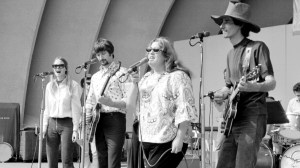
The Mamas And The Papas At The Hollywood Bowl The folk group "The Mamas And The Papas" including John Phillips, Mama Cass, Michelle Phillips, and Denny Doherty pose for portraits and rehearse for their performance on April 2, 1966 in Los Angeles. (Photo by Michael Ochs Archives/Getty Images) -
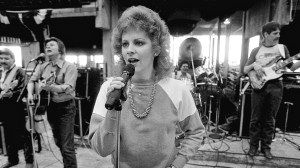
Singer/Actor and television star Reba McEntire reverses with her first touring band, which tragically died in a 1991 plane crash, at the The Star of Texas Fair & Rodeo (now known as Rodeo Austin) on March 12, 1983 in Austin, Texas. (Photo by Ed Lallo/Getty Images) -
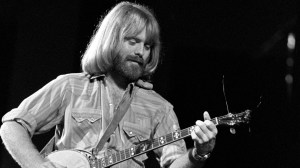
ATLANTA – NOVEMBER 12: Singer-songwriter Michael Martin Murphey (FKA Michael Murphey) performs at Symphony Hall on November 12, 1975 in Atlanta, Georgia. (Photo by Tom Hill/WireImage) -
Photo by Michael Ochs Archives/Getty Images