
Marc Platt, songwriter & author of How The Beatles Did It weighs in with some persuasive answers.
By MARC PLATT
John Lennon, Paul McCartney and George Harrison, while writing songs for The Beatles, all were able to brilliantly synthesize what was happening in their culture and the musical currency of the day with their own ingenious new directions in songwriting.
But what songs then had the most impact on them, and directly influenced their songwriting to shape their miraculous catalog? Let’s take a look, beginning at the very start of their ascent to what they called the “toppermost of the toppermost,” the summit of songwriting success.
“Please Please Me.”
Lennon wrote it soon after hanging out with Roy Orbison, when the band was touring the United Kingdom with the great Texas singer. The song started out as an Orbison-like ballad before George Martin suggested speeding it up. Lennon wrote the lyrics with the word play he knew from childhood when his mother Julia would sing him Bing Crosby’s version of “Please.” We have not one, but two influences on their first UK #1 hit song.
Much has been written and discussed regarding Paul McCartney’s youth and love for music hall and Broadway songs. The Beatles’ Hamburg and early Liverpool sets were plastered with songs like “Til There Was You,” “Love Me Tender,” “Sheik of Araby” and “Ain’t She Sweet.” These obvious influences would show up on McCartney songs like “When I’m Sixty-Four,” “Honey Pie” and “Golden Slumbers.” Sir Paul’s father was a musician and played in jazz bands in the 1940’s and 1950’s and always had music in the home that Paul would draw on.
Videos by American Songwriter
“Love Me Do.”
It was the first official Parlophone 45rpm release for the band. Reaching #17 on the charts, its blues style is reminiscent of Ray Charles, who was a big influence on the Mersey Beat bands of Liverpool. His “What’d I Say” was covered by everyone in the pubs and The Beatles covered it themselves on the BBC Recordings. The marriage of Ray Charles and The Everly Brothers on this track is great, especially coupled with the simplicity of Buddy Holly, who both Paul and John said influenced the first 40 Beatles songs.
“P.S. I Love You.”
Written by Paul, it was inspired by the Shirelles’ “Soldier Boy,” by Luther Dixon and Florence Greenberg, according to John in his Playboy interview with David Scheff. “That’s Paul’s song, said John. “He was trying to write a “Soldier Boy” like the Shirelles. He wrote that in Germany, or when we were going to and from Hamburg.
“All I’ve Got To Do” is another Lennon-driven song that has a lot of Smokey Robinson traits throughout. John and Paul were truly starting to come into their own. You can easily hear Smokey covering this song himself.
“Don’t Bother Me” is the first-credited George Harrison composition to appear on a Beatles record. With a Cliff Richards-esque feel to it, it has distinctively biting lyrics like those George would later perfect in songs like “Taxman.”
“I Saw Her Standing There”: “Here’s one example of a bit I pinched from someone,” said McCartney. “I used the bass riff from ‘Talkin’ About You’ by Chuck Berry. I played exactly the same notes as he did and it fit our number perfectly. Even now, when I tell people, I find few of them believe me; therefore, I maintain that a bass riff hasn’t got to be original.” (From Bill Harry’s The Ultimate Beatles Encyclopedia.)
“There’s a Place” was inspired by Leonard Bernstein & Stephen Sondheim’s classic “Somewhere” from ‘West Side Story.’ McCartney acknowledged that he lifted the title directly from the show tune, which famously begins, “There’s a place for us, somewhere a place for us.” Though never officially confirmed, it’s often been suggested that “Somewhere” was inspired by “Over The Rainbow,” by Arlen & Harburg from The Wizard of Oz.
“This Boy” has direct ties to Smokey Robinson’s “I’ve Been Good To You.” The middle-eight is almost identical musically (not lyrically) in its form and emotional bite.
“Baby’s in Black” has Everly Brothers’-type harmonies coupled with those Beatles pop sensibilities. The song was recorded as a waltz in 6/8 time. McCartney admitted often that he and Lennon would fantasize about being Phil and Don Everly. Most of their early songs were singalongs in the Everly Brothers tradition with similar harmony patterns.
“I Don’t Want To Spoil the Party,” “No Reply” and “I’m a Loser” are all Beatles For Sale John Lennon-driven tracks inspired by The Beatles’ hero and friend Bob Dylan. All three songs are introspective and represent Lennon in his domestic married father role. Lennon called this his “Fat John” period, when he was home a lot, watching a lot of daytime television and combing the newspapers and magazines for inspiration. He was obsessed with 1963’s The Freewheelin’ Bob Dylan, which colors several songs from late 1964 throughout his 1965 output, transforming his idea of what songs could contain. “Before hearing Dylan,” Lennon said, “I never thought you could put your real feelings into a pop song.”
“I Feel Fine” is famous for being the first Beatles song to use feedback. Lennon and Harrison both credited the guitar riff to a 1961 Bobby Parker song called “Watch Your Step,” traces of which can be heard also in “Day Tripper.” The Beatles always said they could nick ideas from other recording artists with the best of them. [James Taylor admitted, in this magazine, that his song “Something In The Way She Moves,” which inspired George Harrison’s “Something,” was itself inspired in part by The Beatles, and by this song specifically; its chorus ends with the words “and I feel fine.” ]
“Good Day Sunshine.” McCartney credits John Sebastian and his band the Lovin’ Spoonful for happy song. If you listen to their song “Daydream” and “Good Day Sunshine” side-by-side, you can feel the vibe of similarity, though the songs are nothing alike musically or lyrically.
“Day Tripper,” referenced earlier with Bobby Parker’s “Watch Your Step,” seems to be another one inspired by Roy Orbison, with whom the band toured in 1963. It’s said that he was working on his huge megahit “Pretty Woman” on the tour bus. That song seems like an obvious influence, with its bluesy hook, on “Day Tripper.” Listen to both songs back to back. You will hear it.
“Helter Skelter.” McCartney has mentioned The Who’s “I Can See For Miles” as an impetus for the writing of this 1968 classic rocker. Paul and the other Beatles also were huge Jimi Hendrix fans, and it seems unlikely that his classic “Purple Haze” was not also an influence on this sound and spirit of this song; listen to both side-by-side and see if you agree. There are musical sections that are identical.
Hendrix also greatly loved The Beatles and kept that no secret, famously delighting the band at London’s Savile Theater in 1967 when he performed the title track from Sgt. Pepper three days after its release.
This article is not intended to be the definitive word on The Beatles’ influences. It is more like a starter. Listen to all these songs and the ones suggested as possible influencers. Then do your own sleuthing, and see if we got it right.
For How The Beatles Did It by Marc Platt, go to Beatles book.
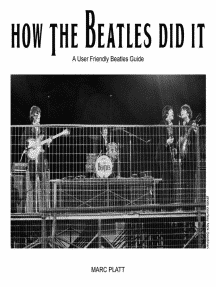
Marc Platt is the author of the eBook, How The Beatles Did It. A songwriter and recording artist, he also manages the California rock band The Tearaways, featuring the legendary Clem Burke, drummer for Blondie.
More Features
-
Photo by David Redfern/Redferns -
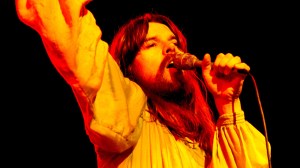
Musician Bob Seger performs at the Alpine Valley Music Theater, East Troy, Wisconsin, July 13, 1977. (Photo by Paul Natkin/Getty Images) -
Photo by Steve Woods/Mirrorpix via Getty Images -
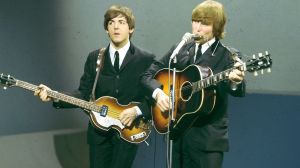
From left, Paul McCartney (playing a Hofner 500/1 violin bass guitar) and John Lennon (playing a Gibson J-160E acoustic guitar) of English rock and pop group The Beatles perform on stage for the American Broadcasting Company (ABC) music television show 'Shindig!' at Granville Studios in Fulham, London on 3rd October 1964. The band would play three songs on the show, Kansas City/hey-Hey-Hey!, I'm a Loser and Boys. (Photo by David Redfern/Redferns) -
English singers, musicians, and songwriters Mick Jagger (at microphone), Keith Richards and Bill Wyman (far right) of the rock band 'The Rolling Stones,' perform on stage at Madison Square Garden, November 28, 1969. Jagger stands with his hands on his hips, eyes closed, and lips pursed together as he sings. (Photo by David Fenton/Getty Images) -
LONDON, UNITED KINGDOM – APRIL 01: Rex Allen, Jr. performs on stage at the Country Music Festival held at Wembley Arena, London in April 1986. (Photo by David Redfern/Redferns) -
Don Henley on 7/3/85 in Chicago, Il. (Photo by Paul Natkin/WireImage) -
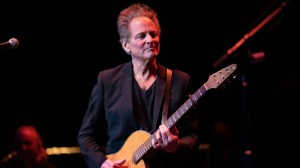
SANTA BARBARA, CALIFORNIA – APRIL 15: Rock and Roll Hall of Fame musician Lindsey Buckingham, former member of Fleetwood Mac, performs onstage at the Lobero Theatre on April 15, 2022 in Santa Barbara, California. (Photo by Scott Dudelson/Getty Images)