
They underwent a slew of massive changes in their time together, both in terms of sound and personnel. But Thompson Twins nonetheless turned into consistent hitmakers on both sides of the Atlantic.
Their commercial success started to wane as the 80s drew to a close. Thompson Twins enjoyed one more huge single in the US in 1989 on an album that gave them a new start.
Videos by American Songwriter
From Seven to Three
Thompson Twins began their career by trying many of the same post-punk moves that other British bands were making in the early 80s. They quickly realized that they probably weren’t going anywhere in that vein. As a result, they made a decision to focus on synthesizers starting with their third album in 1983.
Along with that decision came huge turnover. They axed four of the seven band members. All that was left behind were Tom Bailey, Alannah Currie, and Joe Leeway. As soon as they made this move, the hits started coming fast in both the UK and the US.
As a matter of fact, the band hit the pop Top 10 in America three times between 1983 and 1985. Albums like Into The Gap and Here’s To Future Days featured deep rosters of singles. The band’s approach, which featured bold production swings alongside sturdy melodic hooks, seemed unstoppable. Until it wasn’t.
New Label, Big Budget
Perhaps the first sign that the status quo for the band wasn’t holding up was the departure of Joe Leeway. His differences with Bailey and Currie proved too much. He left before the making of the 1987 album Close To The Bone.
That album dropped off dramatically in terms of sales. Single “Get That Love” barely cracked the Top 40 in America. After such a hot stretch not long before, Thompson Twins lost their record deal with Arista in a hurry.
But they didn’t stay down very long. Warner Bros. picked them up and provided them with a beefy budget for the 1989 album Big Trash. Thompson and Currie went back to their go-for-broke production aesthetic and aimed for the dance floor with their rhythms. Lead single “Sugar Daddy” put them right back on US radio.
Sure as “Sugar”
“Sugar Daddy”, much like many of Thompson Twins, hides deeper lyrical meaning away in those monster hooks. The words are somewhat dark in their description of relationships, far from what you’d expect from a typical hit single. But the catchiness of the music rode roughshod over such concerns.
Alas, album sales for Big Trash didn’t match the success of the single, which topped out at No. 28 in America. Still, Bailey and Currie thought they had some artistic momentum heading into their follow-up album, Queer, in 1991. As it turned out, that didn’t translate into artistic success.
And that was the last of Thompson Twins, at least from an album-recording standpoint. Thompson and Currie, by then a married couple, started up the band Babble. They released a pair of albums, none of which came anywhere near the commercial peaks of the former incarnation.
(Photo by Fryderyk Gabowicz/picture alliance via Getty Images)
More Behind The Song
-
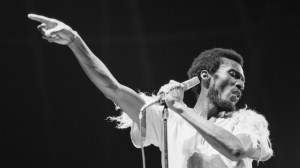
Jamaican singer Jimmy Cliff performs on stage at Porte de Pantin, in Paris. (Photo by John van Hasselt/Sygma via Getty Images) -
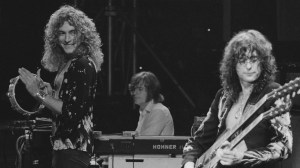
Left to right: Robert Plant, John Paul Jones and Jimmy Page, of British heavy rock group Led Zeppelin, performing at Earl's Court, London, May 1975. The band were initially booked to play three nights at the venue, from 23rd to 25th May, but due to public demand, two more concerts were later added, for 17th and 18th May. Total ticket sales were 85,000. (Photo by Michael Putland/Getty Images) -

Portrait of country singer Eddie Rabbitt in Memphis, Tennessee, May 31, 1981. (Photo by Paul Natkin/Getty Images) -
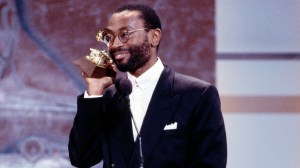
LOS ANGELES – FEBRUARY 22: 31st Annual Grammy Awards. Broadcast February 22, 1989. Shrine Auditorium, Los Angeles, California. Pictured accepting award is Bobby McFerrin. His song "Don't Worry, Be Happy" won Record of the Year, Song of the Year, and Best Pop Vocal Performance, Male. Also Best Jazz Vocal Performance, Male. (Photo by CBS via Getty Images) -
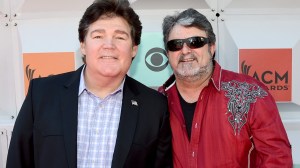
LAS VEGAS, NEVADA – APRIL 03: Singers Mike McGuire (L) and Marty Raybon of Shenandoah attend the 51st Academy of Country Music Awards at MGM Grand Garden Arena on April 3, 2016 in Las Vegas, Nevada. (Photo by Rick Diamond/ACM2016/Getty Images for dcp) -
Photo by Tim Mosenfelder/Getty Images -
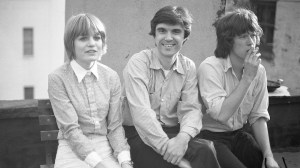
The three founding members of Talking Heads on a Manhattan rooftop, US, 1976. (Jerry Harrison would join the group at the beginning of 1977.) (L-R) Bassist Tina Weymouth, singer-guitarist David Byrne and drummer Chris Frantz. (Photo by Linda D. Robbins/Getty Images) -

Patty Smyth of Scandal at the Poplar Creek Music Theater in Hoffman Estates, Illinois, June 3, 1983. (Photo by Paul Natkin/Getty Images)