
The attack that occurred on September 11, 2001 is single-handedly the most harrowing tragedy in the history of the United States. The fallout of the day is unexplainable, and no amount of words can truly do it justice. To prevent another incident of this nature, the United States government bolstered homeland security, waged a worldwide war on terrorism, and passed legislation allowing further domestic and international surveillance shortly after the fact. This, of course, came with a price, and one figure who paid that price was Yusuf Islam, formerly known as Cat Stevens.
When Islam went under the name Cat Stevens, he was one of the biggest folk singers of the 70s. In 1978, a year after his religious conversion, Yusuf Islam officially changed his name and left the persona of Cat Stevens in the rear-view mirror. With all that in mind, after 9/11 transpired, the United States banned Yusuf Islam and put him on a no-fly list in 2004.
Videos by American Songwriter
The Ambiguous Reason Behind Yusuf Islam’s U.S. Ban
While on his way to Nashville in 2004, Islam’s plane was diverted to Maine, and he was then sent back to London after U.S. officials discovered he was on the flight.
“Everybody knows who I am,” Islam said at the time, per CBS. “I am no secret figure. Everybody knows my campaigning for charity, for peace. There’s got to be a whole lot of explanation.”
Understandably angry, both the singer/songwriter and the world desired answers. Well, both parties received an answer. However, the answer did not necessarily entail specific and robust details. Surrounding Islam’s ban and placement on the no-fly list, U.S. Department of Homeland Security’s spokesman Brian Doyle stated that “Yusuf Islam has been placed on the watch lists because of activities that could potentially be related to terrorism. It’s a serious matter.”
Concerning his treatment, Islam humorously stated that “the one positive thing I can say is that a lot of security officers are pleased because they got my autograph.”
“People make mistakes,” Islam continued. “I just hope they made a big mistake. We’ll see.”
Now, no formal explanation on the matter was ever revealed. However, Yusuf Islam was able to return to the United States in 2006 with no issue.
This story is, in fact, a wild one, and goes to show just how much of an impact a musical figure can have on the world, purposeful or not. Despite this accusation and ban, Yusuf Islam has remained a figure of peace in the world.
Photo by Kai Schwoerer/Getty Images
More Features
-
Billy Ray Cyrus on 6/28/92 in Chicago,Il. (Photo by Paul Natkin/WireImage) -
LOS ANGELES – APRIL 1980: Bruce Springsteen poses for a portrait in New York, N.Y., 1980.(Photo by Aaron Rapoport/Corbis/Getty Images) -

Photo by Michael Putland/Getty Images -
Photo by Christian Rose/Roger Viollet via Getty Images -
Photo by Rick Diamond/WireImage -
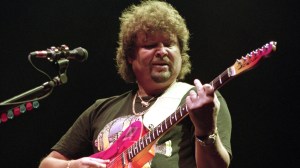
Jeff Cook performing with Alabama -
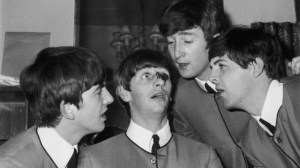
14th October 1963: The other Beatles, from left to right: George Harrison (1943 – 2001), John Lennon (1940 – 1980) and Paul McCartney, stare in disbelief at the plastic spider perched on drummer Ringo Starr's nose, backstage after their Sunday Night at the London Palladium show. (Photo by Peter Hall/Keystone/Getty Images) -
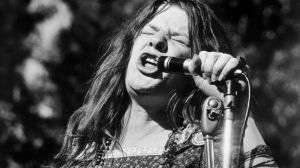
Rock music legend Janis Joplin performs at the free Woodstock Music and Art Fair. The festival took place on Max Yasgur's dairy farm, which he rented to event organizers for $75,000. About 450,000 people attended the three day concert, which turned into chaos due to the crowds, heavy rains, and traffic jams. It is nonetheless romantically remembered as a symbol of the liberal spirit of the hippie generation. (Photo by Henry Diltz/Corbis via Getty Images)