It’s January 27, the first day of Wild Rivers’ tour in support of their sophomore album Sidelines (out today, Feb. 4 via Nettwerk), and band members Khalid Yassein, Devan Glover, and Andrew Oliver are crammed into a single Zoom frame, speaking to American Songwriter from a beige-on-beige-on-beige hotel room in Pittsburgh. But no amount of beige could dull their enthusiasm. The Toronto-based folk-pop trio is buzzing with excitement about finally releasing their first album since their self-titled debut in 2016, and they’re even more excited about connecting with fans in person over the coming weeks.
One of the main themes of Sidelines, they explain, is presence—that elusive quality of being fully in the moment, rather than dreaming about the past or fretting about the future. Fortunately for Wild Rivers, nothing promises presence like a locked-in performance. They intentionally built the album like a setlist with a flow of emotional highs and lows, but another analogy for the album might be a road trip. Take the first verse of the wistful, synth-washed “Weatherman”: Rolling down the window of the driver’s seat / looking for a place to breathe, Glover sings, Knowing where I’m at and where I’m meant to be / Trying to close the space between. Wild Rivers don’t claim to have the answers to their heady questions, but they’re not after answers. They’re along for the ride, trying to figure out who they are and how to get there.
Videos by American Songwriter
Wild Rivers spoke with American Songwriter about their pre-pandemic songwriting boot camp in California, the “heartbreaking” process of choosing which songs to include on Sidelines, and how they stay present on tour. Check out the interview and watch Wild Rivers’ latest music videos below.
American Songwriter: I read that you had a Wild Rivers writing retreat in Los Angeles. Can you tell me a little bit about that? When was that?
Devan Glover: [That was from] November 2019 to January 2020. At the time there were four of us in the band, and we all rented a place in Echo Park, this old big house where we all lived. We set up all our instruments in a studio in the living room and the goal was just kind of to write songs for the album, but we also had always wanted to spend time in LA. It was a really great time and a bunch of songs came out of it.
Khalid Yassein: We went right from Nashville, where we recorded our last EP, Songs to Break Up To [2020]—we drove down there from Toronto—and then we drove west all the way to LA. So we went right from one project to the next one, and we kind of had a new life and a new inspiration for the next record. It was a pretty big whirlwind.
DG: I think just being in a new place always brings new sources of inspiration. And especially in the fall and winter months, we’re always super keen to get out of freezing cold Toronto, so just being able to be in the sun and spending time outside… It was [also] the first time we had all lived together outside of the tour, so I think all of those experiences brought a bunch of inspiration for the songs.
AS: What are some of the songs that came out of that period?
Andrew Oliver: A lot of them. The first song on the record, “More or Less,” we made in the living room one day.
DG: “Better While We’re Falling Apart.”
AO [to KY]: I think you wrote “Bedrock” while we were there?
KY: Yep. We basically wanted to set up all of our gear and all of our instruments to be able to record and write, so we had the full set up in the living room and a lot of them kind of started out as jams, which is not the way we usually write songs, which was really fun.
Sometimes we’d sit down and plan to write a song, and sometimes it’d be late in the evening and somebody would be playing something and everybody would hop on different instruments and we’d start recording. The conception of the songs started from a musical vibes place as opposed to sitting around a room, like traditional Nashville-style songwriting… We were also able to start to make the record then. Some stuff from those early sessions ended up on the final record, so it was a pretty holistic, all-encompassing songwriting experience.
DG: I feel like “Stubborn Heart” is kind of our fun ’60s / ’70s California jam-y song that just came about from what Khal was saying. I think Andrew was on the drums and we had all come home from doing different things throughout the day and that’s the song that feels the sunniest to me. So I think that’s the one that was most directly influenced by being there.
AO: There were some that didn’t make the record that were even more distinctly…
KY: Laurel Canyon.
AS: Next record, maybe?
KY: Yeah. We wrote a bunch. We wrote probably 50 songs in that time period. It was like a full-on Bootcamp and then we could just do fun things in LA and live a whole life and come back and be inspired.
AS: You were here at the perfect time, because that was right before Covid, right?
KY: Yeah. The timeline of everything was crazy between the last EP, writing this next record, coming back to record this record in Connecticut, and having that get cut short because it was March of 2020. Everything that happened in that four-month period was crazy because everything was changing all the time. That probably informed a lot of the sound of the record, too—our lives were very transient and we didn’t really know what was next. We were kind of flying by the seat of our pants and that comes with all the good emotions of that and all the bad emotions of that.

AS: Where in Connecticut?
AO: We were in Bridgeport. There’s a producer there named Peter Katis who produced this record, and he had done [records with] the National and Kurt Vile and a band called Paper Kites that we went on tour with. We just loved the sound of his records. He has a big old Victorian mansion house that he’s turned into a studio and the plan was to go there for a month and record the record, but halfway through it was when the pandemic [escalated], so we got in the van.
AS: You said you wrote nearly 50 songs. How did you go about whittling it down?
KY: It’s hard, it’s heartbreaking. I think a lot of aspects of this record-making process were about decision-making and making things polished and making things cleaner—even the song choices. For example, at the end of the process, we had like fifteen mixed revisions on songs. We were so in the process that it was very much a learned skill to be able to lean back and try to feel what the message and the energy of the song was as a whole as opposed to the minutiae. We tried to see what songs spoke to us emotionally and even if we loved some aspect of the song, if it didn’t really hit us on a human level, we chopped it.
DG: I feel like we also were trying to build the tracklist kind of like a setlist. We were keeping in mind the listener’s journey of going through the record, so we tried to fill certain spots that we wanted to be more emotional or more upbeat. And a bunch of the songs that live in a similar world, that’s kind of when it comes down to the chopping block and you have to be like, okay, what song resonates more or what do we think is a better fit thematically? And that’s when it’s hard because you’re comparing songs to each other even though they all feel special and different.
AS: How would you describe the journey that you ultimately landed on?
KY: This idea of presence is something we talked about a lot when we were writing these songs. I think as a function of our lives—always looking forward or looking back in our careers and in our personal lives—all of us are ambitious and have maybe a tendency to… you want to work towards something, you want to look forward to something, and plan your life out. And a lot of these songs are kind of an exercise in how futile that is, and how it’s easy to lose presence and perspective of where you are when you’re looking in the future or in the past.
This idea was about a distance between where you are and where you want to be, who you think you are versus who you actually are. We were thinking about these big questions of self and our journey. The record is called Sidelines—and that idea mostly comes from the idea of watching your life from the sidelines and not feeling like you’re in it. Or feeling like you want to be somewhere, but you’re not quite there.
AS: What are some things y’all do to stay present?
DG: I feel like we’ve all gotten more into self-care rituals like meditation and journaling. Andrew’s really good at [journaling], just keeping a diary of what we’ve done every day because otherwise, you’re just so focused on what city are we going to next that you don’t even remember the shows or the drives or the hotels, just the little things that make up the experience. So journaling is definitely a big one.
KY: This record-making process taught us exactly the lessons that we were trying to talk about while we were writing the record in terms of presence. We collectively thought that our fall tour was the most present we’ve ever been in our lives because the lifestyle on tour is you’re completely in it the whole time. You’re not even able to look forward or look back. It was the most we’ve ever felt like that without ever getting heady about our record or thinking about what’s next with the band or where we’re gonna live or anything like that. You’re just focused exactly on where you are, so we’re definitely super appreciative that our life allows us to do this thing that is present by design.
AS: How do y’all know when a set is going really well?
AO: It’s probably the same presence. I don’t realize a set’s going really well until after when I look back on it and realize that I was in the moment the whole time. When it’s not going well is when we’re thinking about things outside of the show itself. But mostly the audience reaction and engagement is the best way to tell.
DG: There’s a few songs in the set that we strategically place because we know they’re the ones that we all feel really good about and lock in together. So we’ll put them at song three and song six – those are the ones we’re most comfortable with, that we’ve been playing the longest. And you can feel it when we all lock in together and are just able to be loose. That transports through the crowd too. So we keep that in mind when building the setlist.
AS: Are there any songs off the new record that you’ve already started playing?
KY: We’ve been releasing singles from this record for like six months so we have a bunch of them out that we’ve already played. “Amsterdam” is really fun to play live and people seem to really love [it]. But we’re playing almost the whole new record, which is fun. We’re excited to see which ones people connect to. We were really surprised on the last tour that some songs that we just released, the whole crowd would be singing along to. The numbers on Spotify are great, but they’re not humanizing at all. You can’t tell what people connect to. [At our shows] you can feel what’s connecting.
AS: Is there anything else you want to share about the world of Wild Rivers right now?
KY: If you’re anywhere in middle America, come see us! Or in Europe, or we’ve got a Canadian tour coming up. We’re super proud of this record and can’t wait to share it with the world. We’ve got more stuff coming and more tour dates and some festivals this summer. So thanks for being on the journey with us.
Sidelines is out now via Nettwerk. Listen to it HERE.
Photo by Samuel Kojo / All Eyes Media
More Features
-
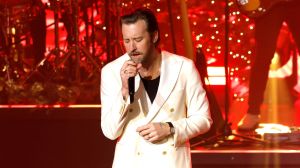
NASHVILLE, TENNESSEE – DECEMBER 21: Charles Kelley of Lady A performs at the Ryman Auditorium on December 21, 2025 in Nashville, Tennessee. (Photo by Jason Kempin/Getty Images) -
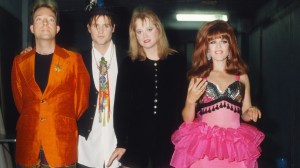
Portrait of The B-52's, Fred Schneider, Keith Strickland, Cindy Wilson, Kate Pierson, Ancienne Belgique (AB), Brussel, Belgium, 23 September 1989. (Photo by Gie Knaeps/Getty Images) -
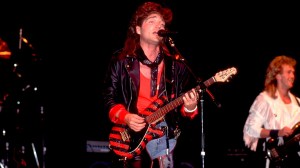
Richard Marx performing onstage at the Poplar Creek Music Theater in Hoffman Estates, Illinois, May 28, 1988. (Photo by Paul Natkin/Getty Images) -
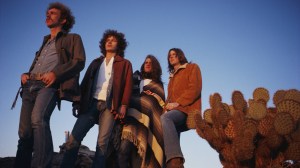
March 1972 — The rock band The Eagles rest in a desert valley. The Eagles were the most popular band of the seventies and their reunion tour in the nineties was also very successful. L-R: Bernie Leadon, Don Henley, Glen Frey, and Randy Meisner. — Image by © Henry Diltz/CORBIS **Henry is NO LONGER with Corbis. Credit should read: © Henry Diltz/Morrison Hotel Gallery** -

LAS VEGAS, NV – NOVEMBER 04: Recording artists Eddie Montgomery (L) and Troy Gentry of music duo Montgomery Gentry perform at Stoney's Rockin Country on November 4, 2016 in Las Vegas, Nevada. (Photo by Mindy Small/FilmMagic) -
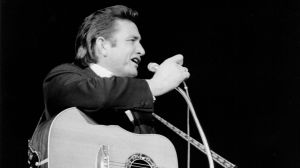
LOS ANGELES – 1968: Country singer/songwriter Johnny Cash performs onstage in 1968 in Los Angeles, California. (Photo by Michael Ochs Archives/Getty Images) -
Photo by Paul Natkin/Getty Images