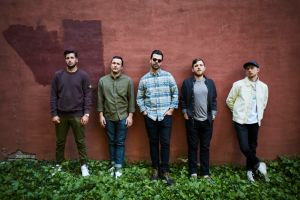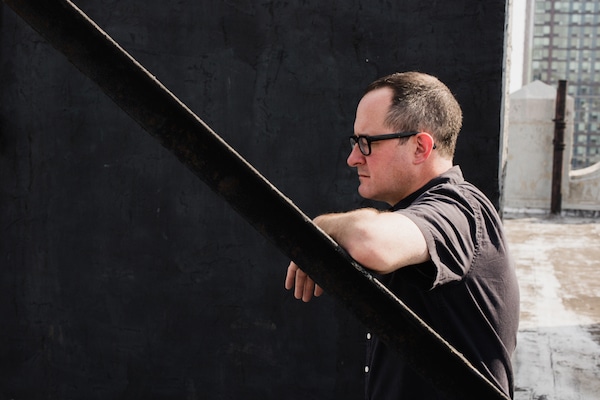
Craig Finn, best known as the frontman for rock and roll band The Hold Steady, will release Faith In The Future, his second solo album, later this week. In this interview with American Songwriter, Finn discusses why it took him so long to write about 9/11, the influence of Catholicism on his work, and which novelists shaped his songwriting.
Most of the characters on this album seem to be struggling and stuck in their lives. With that in mind, why did you call the album Faith In The Future?
I’m always kind of attracted to that. I think you could say the same thing about The Hold Steady record Stay Positive — it’s about this idea of looking forward. I’m attracted to characters that are a little bit desperate. Early on, when I was making this record, I met with the producer, Josh Kaufman, and I said, “I want to make something that’s both elegant and age-appropriate, as well as hopeful.”
A lot of the songs ended up being about people that are persevering, especially after tragedy or change. I was obsessed with the idea [of people] getting up and going to work with the idea that things are going to get better. And I got obsessed with the idea that very few people actually give up.
In the song “Christine,” the character’s life is in tatters but she still has this adolescent dream of moving to the big city that keeps her going.
I think so and I think in some ways in that song I wanted to juxtapose her with the narrator who is almost too careful. She wants to move New York or the city and live the high life and he’s saying, “Maybe we should visit and make sure that we like it.” They’re both kind of stuck. She’s trying to do it by grabbing on to someone who has something and he’s trying to pull everyone down and afraid to make changes. It’s a study in both sides of the coin.
“Maggie, I’ve Been Searching For Our Son” is a powerful song that works on different levels. In pop music, people shy away from writing about anything religious, but you clearly don’t. (Listen to it here.)
It’s partially because it affects my worldview. I wasn’t raised in a super-strict Catholic house. But we spent enough time in church and also going to all the [Sunday school] classes. So that’s kind of how you learn. By turning you over to the church, that’s one way your parents attempt to teach you morality. So it affects a lot of things in the way I think. In this case, I’m obviously playing with the idea of the son being Christ and the son being someone’s actual son. I thought that song was about someone wrapping up their life and trying to get some closure on things.
A lot of this album was written in the time when my mother passed away two years ago. I keep saying that none of the songs directly address that loss, but the first line of the record is, “There’s a darkness in my body” [from “Maggie, I’ve Been Searching For Our Son].” So I was somewhat thinking about mortality there and leaving this Earth on a good place.
And then that third verse sort of conjures up Charles Manson in the desert.
Or Waco, with David Koresh and the ATF and all that. That character is looking back on all these things but he’s kind of been searching his whole life. He’s been moving around and trying things and never quite getting there. He’s trying to throw a Hail Mary, almost at the very end.
I read the story behind “Newmyer’s Roof” that you wrote for NPR. Was this the first time you addressed 9/11 in your songwriting?
Yeah, absolutely. I don’t know why it came up in 2014 for some reason. I think it was reflecting on the past 15 years. I moved to New York when I was 29. I turned 30 on August 22, 2001, two weeks before 9/11 and then there was this big crash, literally and … I think there was a huge hangover in New York after 9/11. The economy got weird and obviously there was more fear. And people started drinking more and going home with each other a little easier. I myself had personal stuff, I got a divorce. So there was this period of hangover and then a few years later I kind of pulled out of it.
I think that’s how in this case 9/11 related to the idea of Faith In The Future. 9/11 was extremely dark, maybe the darkest day. But the idea of drinking beer and watching the towers go down on my friend’s roof …. what I didn’t know was that some of the answer to my problems was getting out of that building and falling in love with someone later which lead to much better things in my personal life.
Right after 9/11, I recall a lot of artists saying they were going to quit music or writing because they said it seemed pointless, as if whatever issues they’d been addressing in their art prior to that no longer mattered. Did you feel any of that?
It’s funny, 9/11 is like a lot of things. When it’s so close to you, it creates a shadow that you can’t see around. You might have needed 14 years of distance to see what you really thought about it and how it really affected you. It was almost too big of an event and it made everything else seem minor. That’s the reason why people started drinking seven nights a week or sleeping with other people so easily, it was like, “Well, none of this matters – I’m just going to get hit by a plane next year or this is the first of many things that’s going to happen.” I don’t think there’s been a ton of art written about the hangover period.
You mentioning that reminded me of William Faulkner’s Nobel Prize speech, where he complained that the atom bomb had become the only worry and there were no longer problems of the spirit being addressed in art.
No, I haven’t read that but that’s exactly the same thing. But I feel like, if you go historical, every generation is wrapping their heads around some event or another, whether it’s the atom bomb or Vietnam. The Scream painting, the [Edvard] Munch painting, that’s about anxiety in the face of incoming technology. But in 1901, what was the technology that freaked you? It’s all relative to the times we live in.
“Going To A Show” is a funny tune for any middle-aged music fan. I’m guessing that came out of personal experience. Are there any new bands you’re really into now that you’ve stumbled upon recently?
I really love the new Titus Andronicus record [The Most Lamentable Tragedy]. I like Wussy from Cincinnati. I like Beach Slang a lot. I always have stuff I’m really excited about and I tend to really pay attention to new music. In the sense of that song “Going To A Show,” some of that idea ties into Faith In The Future. You’re there hoping for something revelatory and when you’re buying new records you’re looking for this thing you get a few times a year where you get something that truly speaks to you.
I feel like the Internet works for and against that idea— people often gravitate to what they know and it’s harder for some people to get introduced to new things — they get stuck in their little niches and Facebook worlds.
It’s kind of like what happens with our news channels these days. And if you’re into something deep like Neil Young or Bob Dylan or Grateful Dead, you can spend all your time there and turn inward if you choose.
What writers have shaped your writing? And they don’t have to be songwriters necessarily.
I’ve never been super-attracted to poets. I love song lyrics but I rarely read poetry on its own. But I read tons of novels — pretty much anything I can get my hands on. It can be whatever looks cool in a used-book store. David Foster Wallace was a big one that I got super-obsessed with for a few years. Joan Didion, I’m reading her biography right now, and I’ve always been into the elliptical thing she does. I’m just trying to figure out how to tell a story, short story things like with Raymond Carver or John Cheever — the idea of learning how to tell stories without giving everything away, and creating a tension with the amount of details you give and the amount you leave out.
More Writer Of The Week
-

Photo by Jesse Spencer -

Photo credit: Sean Brackbill