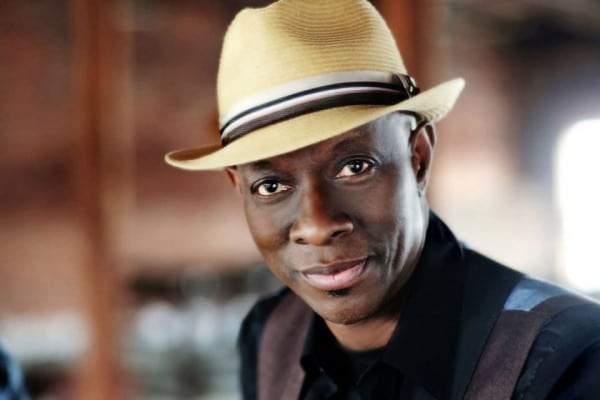
Blues master and multi-instrumentalist Keb’ Mo’ has a song or two under his belt: his twelfth full-length album, BluesAmericana, came out earlier this year. Since launching his career in the early ’70s with the Papa John Creach band, Keb’ Mo’ has worked with artists across the entertainment world like Bonnie Raitt, Vince Gill, Jackson Browne and Martin Scorcese. We talked with Keb’ Mo’ about writing on planes, Webster’s Dictionary and choosing setlists.
Do you have any standards for your songs that you try to adhere by when choosing them for an album?
Yes I do. I think they have to be crafted well, number two, and number one, they have to be real in nature, in terms of something that’s really in my psyche and something I really give my attention to.
What’s your process behind writing a song?
It’s changed over the years. Right now it’s lyrics and subject matter. I tend to write the lyrics first before the music comes.
How long does it usually take you to write a song?
Sometimes they’re an hour, sometimes 30 minutes, sometimes a half a day, sometimes a whole day. It really doesn’t matter to me as long as I get it.
Do you write a lot on tour or do you do most of your writing at home?
Mostly at home, and recently on planes. I love to write on the plane.
How many songs do you think you’ve written?
Enough. I don’t really look at quantity. I look at necessity and quality. I don’t have a whole back catalog of songs that have never been released. I have some songs that I won’t let anybody hear because they just weren’t very good. If I died right now, they wouldn’t be going into the vault for old recordings. They’d be scraping the barrel. I really like to write in the moment. I write to make a record. If I was a writer who was looking to get covers, I would be writing all the time and I would have a big stockpile, but I don’t need to get covers. I know I’m gonna cover them.
When did you start writing songs?
I started really writing songs in the early ‘70s with a band I was in. Then in the Papa John Creach band I started writing again. Later on in the later ‘70s, ’76 or ’77…. ’76 is when I really looked at it and said, “I gotta do this songwriting thing.” I proceeded to write songs and just keep writing. I did that all through the ‘80s and into the early ‘90s. By that time I had pretty much thrown in the towel and decided I was gonna do the blues. So I started to play the blues and needed to form a band. I made sure the songs were simple enough that I could play them just by hollering out a key and telling them where the change was. I kept it really simple so I could work. That’s when my songwriting started getting simpler. I used to write a lot more chords in songs. This way it’s really down to business, and I started to understand the country term of “three chords and the truth”. It’s more about voicing than chords.
Do you ever do any other kinds of writing?
I’m not trying to write a play or trying to write a book or something. I haven’t really tried that. I think I could! You just have to sit down and get your pencil moving.
Do you think it’s easier or harder to write songs, the more you write?
I don’t think it’s easy or hard. I think it gets easier to write and harder to find subject matter. That’s where I really have to pay attention because I want the subject matter to be of a solid nature. Not something that’s gonna be gone tomorrow. I don’t want to write fads. I want to write things about life from my own perspective. I want to be truthful. Writing actually gets easier. Musically, there’s only 11 notes, but there’s this thing called Webster’s Dictionary which is chalk full o’ words. Things change all the time, phrases, words. There’s different ways to say things all the time depending on the culture. Lyrics seem to be infinite wells of creativity.
Are there any words that you love or hate?
I don’t think there’s any words I don’t like. Some words just don’t sing well, like complicated words or intellectual words. Scholarly words don’t always sing well. I try to stay in a simple vernacular, a common man vernacular, and try to get a complex statement out with simple words.
What is a lyric or verse from your album that you’re a fan of?
I like all of them. My favorite one is probably “For Better Or Worse” or “The Worst Is yet to Come”. I like them all, but those kind of pop out to me.
How often do you try to write songs outside of blues?
All the time! Most of the time it’s outside of the blues.
Do you prefer that, or do you like sticking to your blues roots?
I do stay in my musical realm of capability, but I think, for me, it’s not so much about the genre but about whether it’s real. That’s what the blues brought to me. I’ve tried to embrace it. It’s the idea that you’re gonna sing and perform something and be invested in it. When you’re an actor, you have to know your role and invest in it. You can’t just go up there and say lines. You have to know your character’s backstory, you have to know why they’re doing the things they’re doing, why they’re moving, why they’re saying things the way they’re saying them, coming from the experience the audience doesn’t know about that character. For me, it doesn’t matter what genre a song is, it could be classical or jazzy or whatever, if you’ve got that thing and you’re owning it and embracing it, it will read.
What has been your most interesting co-write or collaboration?
My favorite person to write with is my friend John Lewis Parker, who I’ve written a lot of songs with and who I’ve known since the ‘70s and since playing with the Papa John Creach band. I’ve known him for many years, and because we have such a deep history and great understanding of who each other is, we write very easily. He’s great at subjects.
Which song of yours do you feel the most proud of?
The one I feel most proud of probably won’t be the most popular one. I’m proud of all of them, but it’s probably “The Reflection”. I think it’s a very material subject matter. I haven’t heard much commentary about it. People aren’t really requesting it at shows. I take that as a hint that people aren’t really digging it. But even if they aren’t, that doesn’t matter to me. I have an hour and a half to two hours to play the music and entertain my audience, so I tend to play what’s going to give them the most satisfaction, occasionally throwing in things for me that I’d like to do. In terms of the audience, I have to set my ego and what I like aside. When I get in front of the audience, I do cherry pick favorites.
More Interviews
-
Photo by Kevin Mazur/Getty Images for CMA -
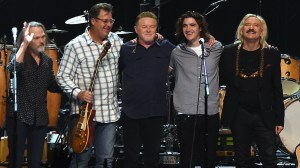
NASHVILLE, TN – OCTOBER 29: Eagles, Timothy B. Schmit, Vince Gill, Don Henley, Decon Frey and Joe Walsh perform during the Eagles in Concert at The Grand Ole Opry on October 29, 2017 in Nashville, Tennessee. (Photo by Rick Diamond/Getty Images) -
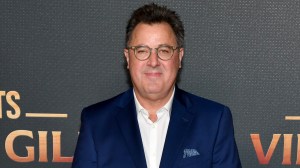
NASHVILLE, TENNESSEE – SEPTEMBER 12: Honoree Vince Gill attends CMT Giants: Vince Gill at The Fisher Center for the Performing Arts on September 12, 2022 in Nashville, Tennessee. (Photo by Jason Davis/Getty Images for CMT) -
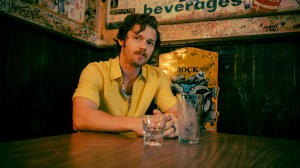
Photo by Ingrid Fortenberry