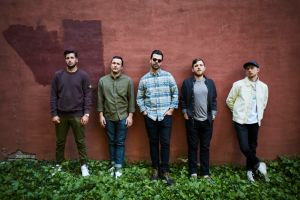
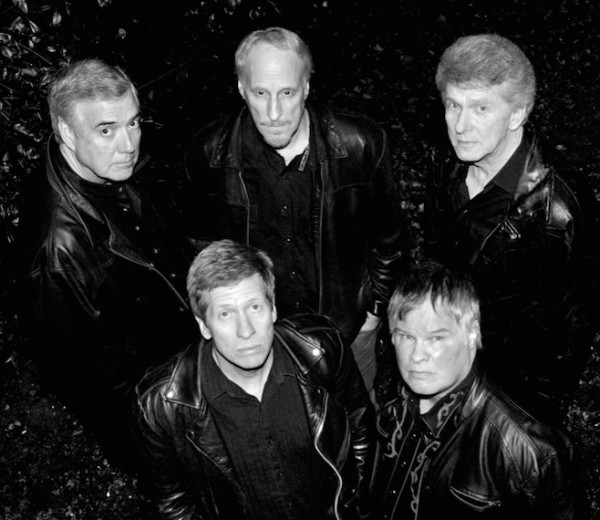
Often cited as one of the first, if not the first punk/grunge band, the Sonics have influenced countless acts since their start in the early 1960s, including Kurt Cobain, Mudhoney, Japandroids and the White Stripes, who once said that the Sonics were “harder than The Kinks, and punk long before punk.” We chat with saxophonist Rob Lind about making a comeback album, constructive criticism and what George Lucas taught him about songwriting.
What influenced your decision to come back and make a new record with the Sonics?
A couple of things. When we started again back in 2007, we were playing a lot. We’ve been doing two tours of Europe every year since then, as well as Japan, New Zealand and Australia. Initially it was a new thing. We’re new at this, we’re new at touring. The 60’s version of the band, we didn’t tour like this, and that’s pretty much all we do now. We had an aversion to being considered an oldies, goodies band or whatever you would call it. We definitely were averse to, “Here we are, the Sonics playing the hits of the 60s!” We didn’t wanna be those guys, so we realized we needed to be seen as new again, in comparison to those first two albums that we did back then, so one thing lead to another and we started working in that direction. We talked about going to the studio and starting a new album and our manager said, “Well, we gotta get Jim Diamond, a producer from Detroit.” We hadn’t heard of him. I didn’t realize he had worked with Jack White and done a bunch of other stuff. We said “Well yeah, okay.” We’d never had a producer before. We produced our first two albums. We sent Jim some of the music we were working up for the album. He discarded the songs he didn’t like and kept the ones he did.
Before we got in the studio, he came up a week early and came to our rehearsal area. We played those songs for him and he took notes and refined them and then directed us when we went in the studio. He and I were staying in the same hotel, so I had beers and dinner with Jim every night, which was good because I learned a lot. He said, “I want this album to be a direct reflection on those first two albums. I want the energy and the fire of those first two albums to come out in this album.” So that’s how it came to be. We didn’t get tricky, we didn’t do five guitar overdubs, we didn’t bring in a strings section and a bunch of girl singers. We just did the Sonics, and so far the feedback we’re getting from radio stations and writers seems to be that Jim was successful, that this album dovetails pretty nicely with the first two.
When did you start writing songs?
Gerry [Roslie] was such a prolific writer back in the ’60s. He wrote tons of songs. He just seemed to barf them out, they seemed to fly out of him. I really wasn’t trying to write back then. I didn’t start writing until after the Sonics was over and I was a military officer. Although I wasn’t a guitar player, I took my acoustic guitar and my Gibson with me on an aircraft carrier that I was on during the Vietnam War. I sat on the edge of my bed and made up songs and messed with songs, just for my own satisfaction. Then I started writing things to try and contribute to the band, and I’m still doing that. Every time you write something, you try to improve a little bit on what you wrote before. Glenn Frey spoke very well on that in that documentary on the history of the Eagles. He said, “I wrote a song, and a producer said it was no good. He said, ‘You know what you do when you write a bad song? Go write another song.’” Those are words to live by if you’re trying to write songs. You have to exercise that muscle.
Do you remember the first song you ever wrote?
I think I ripped off Buddy Holly. I think I ripped off “That’ll Be the Day” and wrote my own lyrics. I think that’s what it was.
Which of your songs was the most difficult for you to write?
Probably “Spend the Night.” It didn’t come out the way I wanted it to. I’ll give you an example. When I came back from the service I went to graduate school at the University of Southern California to study film production and advertising. I had the opportunity to be in a small group of people that met Geroge Lucas, a prolific writer and the creator of Star Wars. One day he said “You know guys, when you do a piece of film, do you get that it never really comes out the way you had imagined it in your mind?” We said “Yeah.” One of us said, “Well George, how much did Star Wars come out differently from the way you had envisioned it in your mind?” He said, “About 65%.” So that particular song just didn’t come out the way I had imagined it. Maybe I didn’t plan it well enough. I wrote a song called “Don’t’ Back Down” that’s not on this album, but I might put it on the next album. I was pretty happy with the words. It was for the guys coming back from Afghanistan and Iraq and says, “I’ve got a quarter / I’ve got a dime / Somebody’s living in the house that used to be mine.” I’m still proud of those lyrics. It may show up on our next album.
Who are your favorite songwriters?
There are so many. For instance, I love the Eagles and the songwriters that work with them. I’m good friends with Nicklas Almqvist and Pelle Almqvist of the Hives. I really like some of the stuff those boys have come up with. I used to love Gram Parsons and Linda Ronstadt and the Eagles, which I still am. And how can you not like Lennon and McCartney? The Rolling Stones do a lot of covers, but they come up with some really good stuff. I really liked their last record, Doom and Gloom. I thought it was really good. Back in the ’60s, we had been playing for a couple of years and then the British Invasion happened. There were all these bands putting out melodic music and we were rock n’ roll guys. Then all of a sudden came the Kinks. We loved them. We loved that gritty guitar sound. When they came to the states we did a tour with them, and it was great hanging out with them and having a few beers because they were our English heroes.
In 2011 Ray Davies invited us to come to London. Once a year in London, an icon in the music industry is selected to do a three-day series of shows called “Meltdown.” In 2011 it was Ray, so he invited us over and said, “Will you blokes come over and close the Meltdown show for us?” We said, “Sure, what an honor!” We had never played in a place like that. It was the Royal Performance Hall down in the Thames right where that big ferris wheel is. The British band Wire was second to last in the show, so they played before us and we were in the wings. We heard “Come on Lads, it’s time to get ready.” So we’re standing in the dark while they were getting the stage set up for us, and somebody tapped us on the shoulder. We turned around and it was Ray Davies, and he said, “Would it be okay if I went out and introduced you?” And we said “Sure!” So he introduced us, which was the honor of all honors. So on this album that’s coming out in a few weeks, we did one of his songs, “The Hard Way,” as a tip of the hat to him as one of our favorite songwriters of all time.
What is the best song ever written?
How can you choose that? I’m a musician and I love rock music because I play it, and you have to love it in order to play it, but I love country music and Cajun music and jazz. My wife is a violinist, and I love lying and daydreaming and listening to her play classical music. I like the Eagles last record. I play it over and over again. I don’t know if it’s possible for me to say which song is best. You can look at the melodic things the Beatles did, like “Norwegian Wood” or “Eleanor Rigby.” They’re poetry set to music. If you wanna ask me as a Sonics guy what the best song ever written is, I’d have to say “Louie Louie.” But that’s a hard thing to do.
Are you ever afraid to show your work to people?
I’ve pretty much conquered that by now. When we get ready to do an album we each come in with our instruments and say, “Here’s something I’ve got. This is how it goes, this is what the words are…” But no, there’s no fear of that anymore. One of the good things about the Sonics is that we’re very supportive of each other. Nobody makes fun of anybody. If somebody comes in and starts playing something, we might sit there and think, “This isn’t working at all, but maybe it’ll work out and see what comes of it.” We all seem to arrive at the same time at “this is gonna work” or “this isn’t gonna work.”
How have you learned to handle criticism when someone doesn’t like your music?
With my background in the film business in between musical careers, I’ve learned to listen. If you don’t like this song, why not? Then I try to be open minded. Maybe they have a point. Sometimes with constructive criticism from guys in the band, you can’t be defensive. If somebody says, “Well, I don’t think that works,” you can’t have the NIH syndrome, which is “Not Invented Here,” which means if “I didn’t think of it, it can’t be any good.” I can take constructive criticism no problem. If you’re going to insult me, you’re not telling me anything. That’s a jerk approach. But another musician saying “I think it would be better if you did this…” I can do that all day long. We haven’t had any bad reviews of any music that we’ve done. That sounds like an overblown statement, “we don’t get bad reviews,” but we’ve been lucky. I guess there’s always a first time, but people have been pretty kind to us. Within the music industry and the family of the Sonics, the five of us, we give each other constructive criticism all the time, but there’s not that note of meanness or sarcasm involved with it.
Which song of yours do your fans react to the most?
There are two songs that get the biggest response from the crowd. One is “Have Love, Will Travel” – that riff is pretty noteworthy. We’ve been playing that since we were 17 and it’s been in countless worldwide commercials and movies. For some reason, it just strikes a chord with people. All Larry has to do is play those first three or four notes and the crowd goes crazy. The other one is closer to the end of the show, and it’s the song “Strychnine.” Jerry plays the spooky organ introduction, and all it takes it the first four notes, before the rest of us even come in. Those first four notes get everyone screaming and jumping upside down. It’s a real fun song to play and the fans are always singing along with us. We played at a festival concert in Finland, and in Finland people don’t speak much English. But here’s a thousand people in front of the stage, all singing the lyrics to “Strychnine” along with Jerry, which was interesting for us because we knew they didn’t know what they meant. They had just memorized them, they knew the way the song went… that was pretty powerful. We were impressed by that.
What is the biggest lesson you’ve learned over the course of your career in songwriting?
I think the creative process is helped along by having the ability to take constructive criticism. Also, for myself, I find that Gerry used to be able to write a song in one sitting. For me personally, if I write something, I don’t look at it for several weeks, then I go back and pull it out of my guitar case and think, “I wonder if anything’s here.” Sometimes on the revisiting I’ll think, “What were you thinking?” And other times I’ll think, “This still stands up.”
More Writer Of The Week
-

Photo by Jesse Spencer -

Photo credit: Sean Brackbill