
There are a multitude of different qualities, opportunities, and reasons that make a musician a successful musician. However, amidst that myriad of things, and the combination of them, resides an arguably objective notion: the combination of ambition and perfectionism usually gets one closer to their goal. Now, you might have a story that rebuts that idea, but there are certainly a plethora of stories that suggest otherwise, and one of those stories is the story of Bruce Springsteen.
We aren’t saying that raging ambition and overly-diligent perfectionsim are good for the soul, but they certainly can’t hurt when one is trying to achieve a certain goal. When a young man, Springsteen was full of spit, vinegar, ambition, and a perfectionistic eye. Consequently, in retrospect, he viewed himself as a “sociopath” during those youthful years. As with most things, it hards to clearly link Springsteen’s ambition and perfectionism with his success, as we simply don’t have all the evidence needed. However, it certainly didn’t hurt Springsteen’s career, but it did make him perceive his younger self in a certain light.
Videos by American Songwriter
Bruce Springsteen Saw His Perfectionism As Sociopathy: “I Was Insane About Every Single Detail That Had Anything To Do With Music”
In an interview on The Tonight Show Starring Jimmy Fallon, Springsteen and Fallon were debunking some myths and rumors about his career and work. One of those myths was the highly contested line in “Thunder Road”, “The screen door slams, Mary’s dress sways.” Many people read and hear the line as is, where others believe “sways” is actually “waves”.
Replying, Springsteen stated, “This record is almost 50 years old. 50 years ago, I was a sociopath.” “I was insane about every single detail that had anything to do with music, my album, my album cover, my lyrics. I went over everything with a fine-tooth comb, so everything would be perfect and completely accurate,” added Springsteen.
In case you were wondering, the original lyric was “waves”, not “sways.” Regardless, it seems Springsteen’s youthful years matched the youthful years of many great and troubled artists. As an upcoming artist, is torturous over-analysis and the feeling of a metaphorically empty stomach inevitable? Is it a rite os passage, or is it something that has been deemed “essential” over the years and integrated into the tortured artist stereotype? Who knows, but Springsteen, and many, many others, might say it is, in fact, essential. Although there are certainly some more composed musicians who might argue otherwise. Above all, what matters most is what works for an individual, and this is what worked for Bruce Springsteen.
Photo by Chris Walter/WireImage
More Features
-
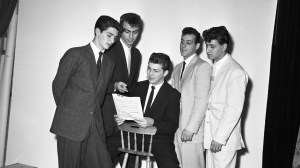
NEW YORK – SEPTEMBER 1958: Pianist Bob Gaudio, drummer Tom Austin, tenor sax Larry Qualiano, singer Dianne Costello and guitarist Billy Dalton of the rock and roll band "The Royal Teens" pose for a portrait in September or October of 1958 at the Brooklyn Paramount in New York, New York. (Photo by PoPsie Randolph/Michael Ochs Archives/Getty Images) -
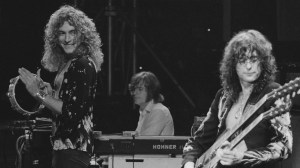
Left to right: Robert Plant, John Paul Jones and Jimmy Page, of British heavy rock group Led Zeppelin, performing at Earl's Court, London, May 1975. The band were initially booked to play three nights at the venue, from 23rd to 25th May, but due to public demand, two more concerts were later added, for 17th and 18th May. Total ticket sales were 85,000. (Photo by Michael Putland/Getty Images) -
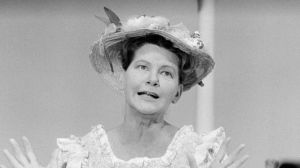
American country comedienne Minnie Pearl (1912 – 1996) performing, circa 1970. (Photo by Silver Screen Collection/Getty Images) -
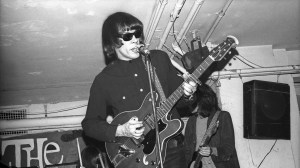
NEW YORK – JUNE 11: Rock and roll band Steppenwolf (L-R Jerry Edmonton, John Kay and Michael Monarch) perform at Steve Paul's The Scene nightclub on June 11, 1968 in New York, New York. (Photo by Don Paulsen/Michael Ochs Archives/Getty Images) -
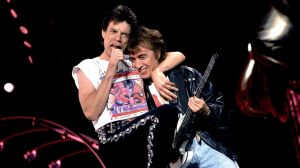
British musicians Mick Jagger (left) and Bill Wyman of the Rolling Stones performs on stage during the band's 'Steel Wheels' tour, late 1989. (Photo by Paul Natkin/Getty Images) -
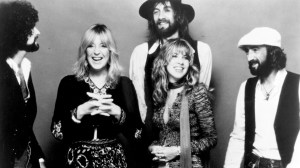
CIRCA 1977: (L-R) Lindsey Buckingham, Christine McVie, Mick Fleetwood, Stevie Nicks and John McVie of the rock group 'Fleetwood Mac' pose for a portrait in circa 1977. (Photo by Michael Ochs Archives/Getty Images) -
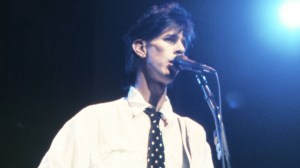
ATURDAY NIGHT LIVE — Episode 19 — Pictured: Singer Ric Ocasek of musical guest The Cars performs on May 12, 1984 — Photo by: NBC/NBCU Photo Bank -
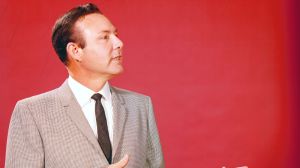
UNSPECIFIED – CIRCA 1970: Photo of Jim Reeves Photo by Michael Ochs Archives/Getty Images