It’s hard to do your job well when you’re not getting along with your co-workers. That is, unless you’re The Beatles. They released a pair of classic albums—The White Album and Abbey Road—during an extended period marked by interpersonal friction. Then again, the same period produced the flawed Let It Be, so even The Beatles weren’t immune to being impacted by internal drama.
Not every band is The Beatles, though. The annals of rock history are filled with stories of bands that were at each other’s throats or merely drifting apart. For every Abbey Road, there is Creedence Clearwater Revival’s Mardi Gras, or Pink Floyd’s The Final Cut, or Aerosmith’s Night in the Ruts, or Emerson, Lake & Palmer’s Love Beach—all albums that were far below the bands’ usual standards. It is far easier to find examples of bands on the verge of disintegration making subpar albums than it is to find cases of such bands being at or near peak form.
Videos by American Songwriter
In each of the following four instances, these bands under duress had their Abbey Road moment. The groups were sufficiently strained that, after completing these albums, they either broke up or had significant personnel changes. Despite the stress and discord, each band produced an album that holds up well with the others in their respective discographies.
The Police, Synchronicity (1983)
Things had been tense among Sting, Andy Summers, and Stewart Copeland for a while by the time they started working on their fifth and final album in late 1982. How about the time that Sting buried the tape with the Summers-penned instrumental “Behind My Camel” in the dirt behind the studio more than two years earlier? Things only got more tense as time went on. In a 2024 interview on Rick Beato’s YouTube channel, Copeland said he knew The Police were done after their fourth album Ghost in the Machine. But they weren’t quite done yet, and they came back one last time with Synchronicity.
Their biggest commercial hit, Synchronicity sold more than 8 million copies and placed three singles (the No. 1 “Every Breath You Take,” “King of Pain,” and “Wrapped Around Your Finger”) in the Top 10 of the Billboard Hot 100, and a fourth (“Synchronicity II”) at No. 16. The album also resonated with critics, and it showed the band’s willingness to explore new soundscapes with tracks like “Walking in Your Footsteps,” “Tea in the Sahara,” and the jazzy bonus track “Murder by Numbers.”
Van Halen, 1984 (1984)
The ever-present “creative differences” were pulling Edward Van Halen and David Lee Roth further apart by the time they were making Van Halen’s sixth album. On 1984, more than on the band’s other albums, Van Halen managed to create the perfect synthesis of their guitarist’s virtuosity and their frontman’s swagger. “Jump,” “Panama,” and “Hot for Teacher” may sound like party tunes—and they definitely work as such—but they all feature inventive solos and great musicianship and chemistry. Actually, that can be said for every track on 1984. Even when they throw in an additional songwriter, in the form of Michael McDonald on “I’ll Wait,” it works.
It’s hard to imagine how Van Halen could reconcile its two personalities any better than they did on 1984. Given Roth’s subsequent departure and the ushering in of the Sammy Hagar era, all fans could do was imagine another Roth-Van Halen collaboration for another 28 years. He would rejoin the band for their final album A Different Kind of Truth, which was released in 2012.
Cream, Wheels of Fire (1968)
Much of Cream’s three-year existence in the ‘60s was tumultuous, largely because of drummer Ginger Baker and bassist/vocalist Jack Bruce not getting along. By the time the trio recorded Wheels of Fire, the band’s situation devolved “into the realms of stupidity,” in the words of Baker. The band decided to break up just weeks before the release of Wheels of Fire, though they would make one more album—Goodbye—and embark on a farewell tour.
In spite of the problems between Baker and Bruce, Cream made a brilliant album with Wheels of Fire. The anthemic “White Room” remains one of their most recognizable songs, and Eric Clapton’s arrangement of Robert Johnson’s “Cross Road Blues” (called “Crossroads” on the album) is another one of the band’s classics. Wheels of Fire is also worth exploring for its deeper cuts, including “Passing the Time,” the mesmerizing “As You Said,” and the energetic “Traintime” from the live portion of the album.
The Tubes, Love Bomb (1985)
The title of The Tubes’ final album until Genius of America (1996) was prescient, because it bombed in almost every way. Critics despised it. It was their lowest-charting album in eight years, stalling at No. 87 on the Billboard 200. It wound up being a difficult album to make, but Love Bomb actually succeeded in being a great, though underappreciated, rock album.
Long-simmering tensions between two factions within The Tubes came to a boil when singer Fee Waybill’s desire to make a third straight album with David Foster as producer was thwarted by other band members who wanted to work with Todd Rundgren. The Tubes made great and commercially successful albums with both producers in the past, but Waybill wanted to continue in the more pop-oriented direction that Foster had taken them in.
Because of the disagreements over the production of Love Bomb, Waybill was minimally involved in the making of the album. The four tracks he sings on—”Piece by Piece,” “Stella,” “Come As You Are,” and “For a Song”—are The Tubes at their power pop best. The songs on the rest of the album, while quirkier, are plenty catchy, too. The “Night People” suite that comprises the back half of Love Bomb (which includes “For a Song”) is thoroughly delightful. Despite being dropped by Capitol Records and losing money on their Love Bomb tour, The Tubes didn’t disband, but they saw several personnel changes in the years after the album’s release.
When you purchase through links on our site, we may earn an affiliate commission.
Photo by Rick Diamond/WireImage
More Features
-
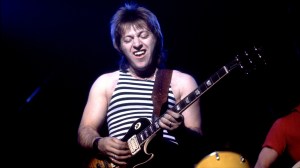
Aldo Nova at the Aragon Ballroom In Chicago, Ilinois, April 9, 1982. (Photo by Paul Natkin/Getty Images) -
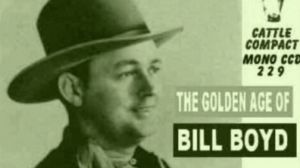
Bill Boyd, September 29, 1910 – December 7, 1977 (Photo courtesy of Fannin County, Texas) -
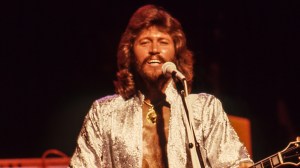
Barry Gibb of the Bee Gees -

Warren Zevon at the Park West in Chicago, Illinois, October 17.1982 (Photo by Paul Natkin/Getty Images) -
DETROIT – NOVEMBER 18: British singer-songwriter and lead vocalist for the rock band Queen, Freddie Mercury (1946-1991), alongside bassist John Deacon, onstage at Cobo Arena, on November 18, 1979, in Detroit, Michigan. (Photo by Ross Marino/Getty Images) -

Photo by Mark Sullivan/Getty Images -
US 3 at the Aragon Ballroom In Chicago, Ilinois, March 18, 1994. (Photo by Paul Natkin/Getty Images)