Before artists could subtweet and vague-post about one another online, there were diss tracks and response songs. Frankly, even now that we have social media as a medium for airing our dirty laundry, these tracks remain a staple across all genres of the music industry.
Sometimes, these pointed songs remain relatively contained to the circles who know the tea, so to speak. But other times, these diss tracks (or responses to them) go on to define entire genres.
Videos by American Songwriter
And we’d have to imagine that there’s something immensely satisfying about your dig—or comeback—becoming so universally popular that it becomes synonymous with a whole style of music.
“Dreams” by Fleetwood Mac
Fleetwood Mac’s interpersonal drama is nearly as well-known as their hits, thanks in no small part to the fact that these elements were often combined. After Lindsey Buckingham wrote “Go Your Own Way” about his ex-girlfriend and bandmate, Stevie Nicks—complete with accusations of “shacking up” being the only thing she wants to do—Nicks responded with a far more mature and empathetic track, “Dreams”. “Women, they will come, and they will go / when the rain washes you clean, you’ll know.”
“It Wasn’t God Who Made Honky Tonk Angels” by Kitty Wells
Kitty Wells opened the door for women to say their two cents after being vilified as the main causes of heartache in most country music. Her 1952 song, “It Wasn’t God Who Made Honky Tonk Angels”, was a direct response to Hank Thompson’s “The Wild Side Of Life”. Whereas Thompson blames an anonymous woman for leaving her man for “the wild side of life,” Wells not-so subtly retorts, “From the start, most every heart that’s ever broken / was because there always was a man to blame.”
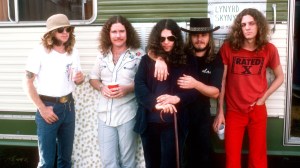
“Sweet Home Alabama” by Lynyrd Skynyrd
While most people assume that Lynyrd Skynyrd’s Southern rock-defining song “Sweet Home Alabama” is about Neil Young’s “Southern Man”, this actually isn’t entirely true. Yes, the Florida-based rock band calls the Canadian singer-songwriter out by name. But that’s in response to a different song Young had put out two years after his After The Gold Rush track, “Alabama” from Harvest. Despite the testy lyrics on either side and an assumed feud, both musical acts maintained respect for one another.
“You’ve Got A Friend” by Carole King
Carole King’s 1971 track, “You’ve Got A Friend”, helped inform the overall sound of early 70s soft-rock. Interestingly, the song was a response to another gene-defining track: James Taylor’s acoustic hit, “Fire And Rain”. In the latter, Taylor sings about seeing “lonely times where I could not find a friend.” In King’s response, she reminds Taylor that he does have a friend he could turn to. “All you’ve got to do is call.”
“Circle Game” by Joni Mitchell
We’ll close out our list of response songs with Joni Mitchell’s “Circle Game”. This is yet another response to Neil Young (perhaps people knew the infamously aloof artist would be likelier to listen more closely to music). Mitchell’s contemplation on the passing of time is a reply to Young’s fear of growing older, which he mulls over “underneath the stairs” in “Sugar Mountain”. Mitchell’s song became a folk standard, having been covered by countless artists in the decades since.
Photo by Bob Riha, Jr./Getty Images
More The List
-
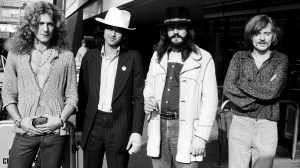
Group portrait of British rock band Led Zeppelin on June 05, 1973. Left to right are singer Robert Plant, guitarist Jimmy Page, drummer John Bonham (1948 – 1980) and bassist John Paul Jones. (Photo by Michael Putland/Getty Images) -
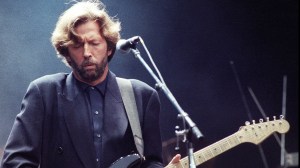
Eric Clapton, performs live on stage at the Feyenoord Stadium 'De Kuip' Rotterdam, Netherlands, 19th June 1992. (Photo by Rob Verhorst/Redferns) -

American actor and singer Kris Kristofferson posed in England at a press call to promote his latest film 'Blume In Love' circa 1973. (Photo by Larry Ellis Collection/Getty Images) -

(MANDATORY CREDIT Koh Hasebe/Shinko Music/Getty Images) Cheap Trick group shot at a hotel, Tokyo, April 1978. (Photo by Koh Hasebe/Shinko Music/Getty Images) -
Photo by Tom Copi/Michael Ochs Archives/Getty Images -

Tommy Heath and Jim Keller of the rock band 'Tommy Tutone' pose for a studio portrait session in 1981 in Los Angeles, California. (Photo by Michael Ochs Archives/Getty Images) -
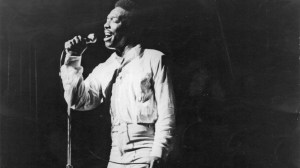
NEW YORK – SEPTEMBER 8: Soul singer Wilson Pickett performs onstage at the Apollo Theater on September 8, 1966 in New York City, New York. (Photo by Michael Ochs Archives/Getty Images)