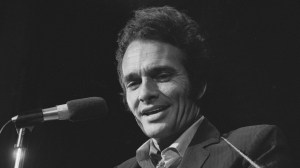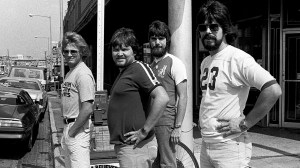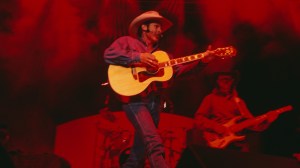
On this day (October 4), Lloyd Lamar Green was born in Leaf, Mississippi. A longtime member of Nashville’s prolific “A-Team” of session musicians, his unmistakable pedal-steel licks have helped 116 craft number-one country music hits, including Tammy Wynette’s “D-I-V-O-R-C-E” (1968), Charlie Rich’s “Behind Closed Doors” (1973), The Oak Ridge Boys’ “Elvira” (1981), and Alan Jackson’s “Remember When” (2004).
Today we’re reflecting on Lloyd Green’s immeasurable legacy in honor of his 89th birthday.
Videos by American Songwriter
Lloyd Green Was a Childhood Prodigy
Although born in Mississippi, Llloyd Green spent much of his childhood in Mobile, Alabama. Taking music lessons from age four, Green was about seven years old when he applied to learn from the Oahu Music Company, a popular music education program that taught students to play the Hawaiian guitar.
Despite not allowing students under age 14, the company gave Green a “test lesson” — during which he performed well enough to earn an exception to the age limit.
“I became the poster child for the course when I was about 10 years old,” he told Vintage Guitar magazine in 2008.
Inspired by the likes of Eddy Arnold sideman Little Roy Wiggins and lap steel guitarist Jerry Byrd, Green was playing pop music in Mobile nightclubs by age 10.
Eventually transitioning to country, he played through high school before attending Mississippi Southern College (now the University of Southern Mississippi). However, in 1956, Green informed his parents that he was putting his education on pause to head to Nashville. He planned to finish his degree after getting music “out of his system” and maybe join the military afterwards.
Suffice it to say, that isn’t how the story played out.
Getting Started in Music City
The same day he arrived in Nashville, Lloyd Green found a job with country singer Faron Young’s band. While touring with Young, he met rising country singer George Jones, whom he joined at RCA Nashville for a March 1957 recording session that yielded Jones’ hit single “Too Much Water Runs Under the Bridge”.
Eventually, Green quit music and took a job as a shoe salesman to make ends meet. One day, Fred Rose’s widow happened to walk into his workplace for a fitting. When she heard that Green was a struggling musician, she paid to have his Union card reinstated and helped him find work on the Grand Ole Opry.
A Highly in-Demand Session Musician
Soon, Lloyd Green had landed a job as singer Roy Drusky’s assistant in the Nashville office of the music licensing company SESAC. This work helped him establish the necessary connections to become a full-time musician.
“Our offices were right in the middle of Music Row, and the first week I was there, Slim Williamson, who owned Chart Records, hired me for a demo and a master session,” Green told Vintage Guitar.
His schedule quickly began filling up, averaging between 400 and 500 sessions per year at his peak. One particularly memorable experience was on The Byrds’ groundbreaking 1968 country-rock album Sweetheart of the Rodeo.
“I said, ‘Where do you want me to fill?’ In unison, they said, ‘Everywhere!’” Green recalled to PBS. “And I said, ‘Hey, my kind of guys!’”
[RELATED: Why the Byrds’ ‘Sweetheart of the Rodeo’ Changed Country-Rock Forever]
In addition to his session work, Green has also recorded several of his own albums, scoring a Top 40 hit with his instrumental version of “I Can See Clearly Now”.
An ear infection forced Green to step back from music in the 1980s. However, he eventually returned to session work.
Featured image by David Redfern/Redferns
-

Gwen Stefani of No Doubt performs at Shoreline Amphitheatre on May 30, 1997 in Mountain View, California. (Photo by Tim Mosenfelder/Getty Images) -

UNITED STATES – NOVEMBER 29: CAPITOL THEATER Photo of POLICE and STING, Sting performing live onstage, playing Hamer 8 string bass (Photo by Ebet Roberts/Redferns) -
CIRCA 1972: Country singer Dolly Parton poses for a portrait in circa 1972. (Photo by Michael Ochs Archives/Getty Images) -
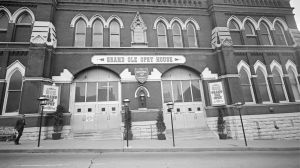
Since 1925, Ryman Auditorium has been the "home" of the Grand Ole Opry and the national headquarters of foot-stomping, tear-jerking country music. By the spring of 1972, the red brick walls and stained glass windows will cease to echo the sounds of western music. At that time, not too far away, will be the new Opry House, surrounded by a series of specialty shops, restaurants, a motel and rides for the kids.