Herb Alpert, the 88-year-old award-winning musician, and former record executive, recently experienced something for the first time. One of his songs, “Ladyfingers,” from his iconic album Whipped Cream & Other Delights, became a hit again in a new way, thanks to the social media platform TikTok. For someone who rose to fame in the 1960s, even outselling the Beatles for a stint, the idea that a fast-paced digital arena like TikTok would be a factor in his life is, admittedly, odd. However, the Alpert song went viral and garnered 100 million streams. Staggering. The album the song is on sold some 14 million copies upon its release in 1965—a number that helped make the trumpet-playing Alpert famous in his heyday. But 100 million streams? That’s almost impossible to imagine, especially for someone who remembers recording music even before one-track tape players were around.
“What a leap!” Alpert tells American Songwriter.
Videos by American Songwriter
But that’s the power of music. It’s also the power of Alpert’s intuition and his sense of feeling. Throughout his astounding career, Alpert has always trusted both his gut and his ear. If a song makes him feel good, that’s what counts. He’ll play it, record it, release it—all because he simply enjoys it. And over the decades of being a professional musician, that sense of inner recognition has almost always paid off, even when it comes to his days as a founder of the label A&M Records, which helped break myriad acts from The Carpenters to grunge musicians. Indeed, Alpert, who continues to tour these days and has stints scheduled in both Canada and England later this spring, always hears from fans at his shows about Whipped Cream.
“Man,” he says. “The power of music. I’m still getting over that.”
For Alpert, he’s not surprised the seminal album, which has since been copied by many but never duplicated, resonated with fans upon its release. But that it still resonates and even lives in major ways on places like TikTok is a boon. He likes his music to be accessible. He enjoys playing familiar songs in fresh ways, offering his style on already beloved compositions. And it’s worked. In 2013, he received the National Medal of Arts Award from former President Barack Obama. That same year, Alpert earned a Grammy for Best Pop Instrumental Album for his LP Steppin’ Out. That industry acknowledgment tickled the artist.
“I liked it,” he says of the Grammy. “I’m still relevant. That’s a good feeling. I feel like—you can’t put me out to pasture yet. I’m still OK.”
Alpert’s most recent release came in 2022 with his album Sunny Side of the Street, which dropped a year after he released the LP Catch the Wind. For Sunny Side, Alpert picked out songs he likes to play, songs that make him feel good. “If it makes me feel good,” he says, “it will likely make someone else feel pretty good, as well.” But while he’s earned plenty of awards and accolades in his long career, Alpert says he doesn’t make music for anyone but himself. He has no “master plan” for the records. He just picks what makes him feel good and he sends those feelings out via the trumpet, his signature instrument.
“I try to be as honest as I can, as a musician,” he says. “That’s what I do. I just always try to make a familiar song a little bit different so that it could be heard in a way that hasn’t been heard before.”
When thinking about his illustrious career, Alpert rarely looks backward. He knows that when fans hear his music, they experience a sense of déjà vu, but whenever he plays his standards, he tries to “bring the moment into it.” It could be easy to phone in a given song or set, but instead, Alpert tries to imbue his feelings at any given second into the songs that come from his horn. The past is the past and the future doesn’t yet exist. So, he puts himself into the sound now. That concept is something that has sustained Alpert throughout his career.
He tells the story of being in trouble in the late ’60s and early ’70s. He was going through a painful divorce at the time, and he couldn’t play his trumpet. Whenever he picked up the instrument, he couldn’t even get the first note out. He was stressed. So, he went to a teacher in New York. This was at the height of his fame, in many ways, yet he sought out someone to help him at his professional darkest time. He’d been playing trumpet since he was 8 years old, but suddenly he couldn’t do it at all. So, he asked the teacher, Carmine “The Troubleshooter” Caruso, someone known today as much as a psychologist as a music instructor, for help. Should he get a new trumpet? A new mouthpiece? What could he do?
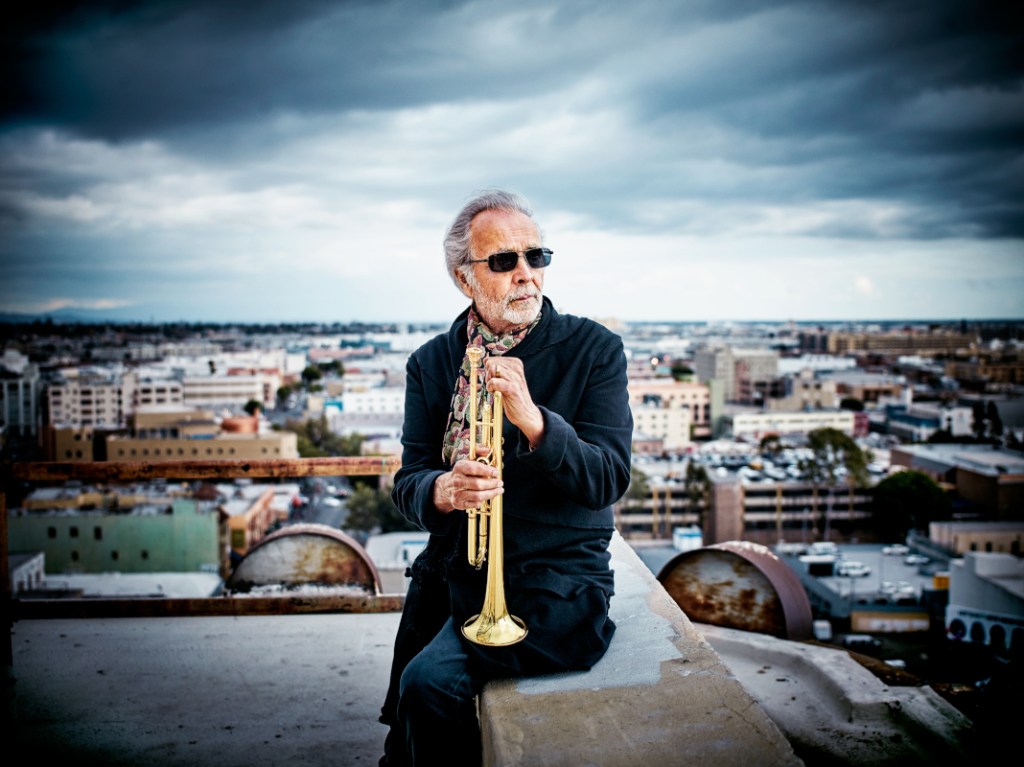
“He says, ‘Look buddy, this trumpet is just a piece of plumbing. You’re the instrument,’” Alpert recalls Caruso’s advice. “‘The sound comes out of you. The trumpet is just a megaphone, an amplifier of your sound.’ That was the big aha for me.”
That’s what all artists are looking for, Alpert explains. To believe in yourself, to know that you are the talent, not your instrument or your medium. Find your own unique skill. It’s the same maxim Alpert used when looking for artists for A&M Records, which he co-founded with Jerry Moss in 1962. Anyone can play the guitar or even the piano, but what are the signature tone and sounds that come from the instrument at the hands of a given artist? That’s the key. “Tap into your uniqueness,” he says. And while it was important for him to hear that from Caruso, it’s also something he’d known in one way or another his whole life.
Growing up, Alpert listened to lots of different kinds of music in his hometown of Los Angeles. He gravitated towards jazz, though, because he liked its sense of freedom. “One man, one vote,” he says. Alpert explains that he received classical training early on, even playing in an established orchestra. He recalls one day in particular, though, while sitting in the back row of the trumpet section. He was listening to the music the orchestra was playing, delighting in it—so much so that he forgot to come in when his section was meant to play. That was another big moment, when he realized he didn’t want to play music other people had written for him.
“That’s when I decided,” he says, “that I wanted to be free. I wanted to be like Louis Armstrong or Miles Davis. Just pick up the horn and play.”
As a kid, Alpert earned praise early on. He was part of a young high school trio just as television was getting off the ground. And his little band would win local on-air talent shows and battles of the bands between other high school groups, once winning eight weeks in a row. As a result, his trio began to play weddings and other parties. Listeners would come up to him and praise the music, saying it was “touching.” Alpert liked that word, that idea. Fast-forward to 1965 and the mixing sessions for Whipped Cream. He liked what he heard on the album, which was recorded after he’d earned success for albums like the 1962 LP The Lonely Bull.
“I was sitting in a chair and listening to that entire album to see if there was anything I wanted to change,” Alpert says of Whipped Cream. “When the album was finished, I thought to myself, ‘Man, this is good! I really like this. It gives me pleasure to listen to it and I think other people might like it, too.’”
Alpert remembers another time in the studio, mixing. That’s when a cleaning lady who was tidying up the place poked her head in the door and asked, “What’s that you’re playing?” Alpert told her. And she said, “Ah, I really like it. It makes me feel good.” It can be funny the things we remember along our journeys, and Alpert remembers that woman, in a way, more than he does any Grammy or platinum plaque. Today, the artist has that same amount of pleasure from recording and making music. It’s an inherent passion.
Problems, though, can arise from being so invested, and so passionate. Many people who have achieved real greatness suffer in other aspects of their lives. Michael Jordan, who is understood to be the best basketball player ever, lost friends and family due to his unceasing drive. While Alpert’s life may not be to that extreme, he does lament the fact that he wasn’t there for his kids while they were growing up as much as he maybe wishes he could have been.
“I think families are beautiful,” he says. “But I must confess that I probably was caught up more in myself and my career at the time. I have some really nice kids, but they might have been neglected a little bit more than they should have been. I was consumed with making music and traveling.”
Such is the plight of a globally famous person who might also be something of a workaholic. Nevertheless, Alpert explains, he’s always been honest with his kids about who he is and what he does, even if sometimes he wasn’t as present as a parent. It’s the result of a life in music, one that began working with people like Sam Cooke. Alpert remembers working with the legendary singer and a lesson that came from those sessions. He recalls seeing a lyric written in one of Cooke’s notebooks that Alpert thought was just corny as heck. But when Cooke sang it, the line turned into something new. Cooke had put his style, his sense of and flare for rhythm and melody into the lyric, and it soared.
“That’s the beautiful thing about art, why I’m so enamored with it,” Alpert says. “You can’t identify why you like something. You can come close, but you can’t put your finger on it. All art, whether acting, poetry, music, sculpting, or painting, is about a feeling.”
While Alpert enjoyed some success as a young person, first with the battle of the bands and then working with artists like Cooke, it wasn’t until he took a trip south of the border to watch some bullfights that the big lightbulb flicked on. In Mexico, he would hear the brass bands play their fanfare songs in between bullfights. Those sounds and rhythms inspired him to write the early hit song, “Spanish Flea.” Today, Alpert finds bullfights to be cruel. But back then, the atmosphere around them led to one of the biggest moments of his career. From there, his Tijuana Brass group was born, and it brought him fame and fortune.
“I was caught up in that feeling,” he says.
Looking ahead, Alpert has various tours and music work on his plate. He’s also an accomplished painter and sculptor, and he’ll be continuing to toil in those mediums as well. Alpert will be heading to London later this year to play Ronnie Scott’s Jazz Club, which he says is a bucket list venue. He was set to play it a few years ago but COVID-19 and the ensuing pandemic lockdown dashed those plans. He’s set to play there for a week; all the dates now have been sold out for years.
Something else Alpert has his eye on is his continuing sense of charity and philanthropy. He’s helped give millions to places like the Harlem School of the Arts and Los Angeles City College. He jokes, saying he could put some priceless painting on his walls, or he could choose to help young people who need it. He’s obviously chosen the latter many times over.
“It just feels like the right thing to do,” he says. “I think kids—at an early age, we tend to knock out their creativity.”
Alpert knows he’s been fortunate in his life—from being introduced to the trumpet in school at 8 years old to earning tens of millions of dollars in his career. And he wants to help provide the tools to young people so that they also might feel fortunate and have a sense of gratitude. Creativity, Alpert says, is the thing that keeps the Earth turning and keeps humanity innovating and pushing forward. So, cities, towns, the globe—everyone should value that and invest in it.
Alpert goes on to tell the story of a little girl who wasn’t doing great at math or reading in school. But she loved to draw. So, one day, she was drawing in the back of the classroom. Her teacher asked what she was drawing, and she said, “God.” “But we don’t know what God looks like,” the teacher said. “You will in a minute,” the girl said.
That’s the beauty of creativity. And that’s what Alpert wants to continue to help foster.
In the end, Alpert, who has been married to his wife, Lani Hall, for 50 years, says that love “is the only answer.” You could be rich and famous, but without love, what does it matter? And when it comes to music, his love for the art form has given him endless comfort in trying times. He quotes Plato who said music gives a soul to the universe. Alpert credits music with opening his life and giving him a chance to be who he is. It’s the lifeforce he’s thrived on during all his years on the planet, from rudimentary recording devices to now TikTok fame.
“I don’t think of myself as a musician that is pitted against all other musicians,” he says. “I just try to be me.”
More Features
-
Photo by Gijsbert Hanekroot/Redferns -

LONDON, UNITED KINGDOM – JUNE 01: Willie Nelson performs on stage at the Hammersmith Odeon in London, England in June 1982. (Photo by David Redfern/Redferns) -
NEW YORK, NY – CIRCA 1985: Roland Orzabal and Curt Smith of Tears For Fears circa 1985 in New York City. (Photo by Robin Platzer/IMAGES/Getty Images) -

UNITED KINGDOM – APRIL 19: ROYAL FESTIVAL HALL Photo of Vashti BUNYAN (Photo by James Emmett/Redferns) -
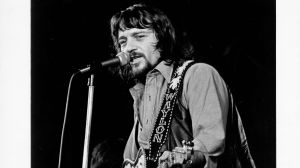
CIRCA 1975: Country musician Waylon Jennings performs onstage in circa 1975. (Photo by Michael Ochs Archives/Getty Images) -

Taylor Swift and Kanye West at the 2009 VMAs -
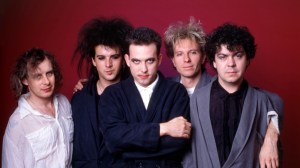
CLARKSTON – JULY 14: Guitarist Porl Thompson, bass player Simon Gallup, musician, songwriter and lead singer Robert Smith, drummer Boris Williams and keyboard player Laurence 'Lol' Tolhurst, all members of the English rock band The Cure, pose for a portrait backstage at the Pine Knob Music Theatre on July 14, 1986, in Clarkston, Michigan. (Photo by Ross Marino/Getty Images)