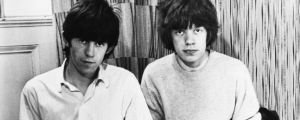
Even before they were the Rolling Stones, Keith Richards and Mick Jagger hinted at the band that would rocket them to international stardom. The musicians first met at Wentworth Primary School before losing contact with one another after Jagger’s family moved, forcing the future Stones frontman to switch schools.
Richards and Jagger would reunite several years later, each having established a deep love of rock ‘n’ roll and rhythm & blues. Both had started dabbling in bands, too, with Jagger performing in Little Boy Blue and the Blue Boys with Dick Taylor, who was a mutual friend of Richards.
Videos by American Songwriter
The guitarist joined Jagger and Taylor’s band, which led to a significant foreshadowing of the band that would define Jagger and Richards’ musical careers.
Keith Richards and Mick Jagger Became Bandmates In The Early 1960s
Keith Richards and Mick Jagger crossed paths again in their first years of college. Mick Jagger attended the London School of Economics, while Keith Richards briefly attended the Dartford Technical College before the school expelled him for truancy. When the musicians reconnected with one another, Jagger was already playing in a band called Little Boy Blue and the Blue Boys. Richards quickly joined the group as a second guitarist in the early 1960s, and from there, the band started undergoing several transformations, each moving the group closer to what would become the Rolling Stones.
Little Boy Blue and the Blue Boys, as their name might suggest, specialized in American blues music. Artists like Muddy Waters, Little Richard, Howlin’ Wolf, and Chuck Berry were massive influences on the band, with much of the Blue Boys’ earliest material coming from these musicians’ catalogues. This deep dive into Chicago blues that Muddy Waters helped define didn’t just inform Richards and Jagger’s future musical endeavors. Waters’ music also served as the inspiration for their future band name.
Shortly after guitarist Brian Jones joined Little Boy Blue and the Blue Boys, he called a local music publication, Jazz News, to see about promoting an upcoming show at the Ealing Club in west London. “‘What do you call yourselves?’” Richards recalled the magazine asking. “We stared at one another. ‘It?’ Then ‘Thing?’ This call is costing. Muddy Waters to the rescue! First track on The Best of Muddy Waters is “Rollin’ Stone.” The cover is on the floor. Desperate, Brian, Mick, and I take the drive. “The Rolling Stones.” Phew!! That saved sixpence.”
The Foundations Of One Of The Most Enduring Rock Bands Of All Time
By 1962, bassist Bill Wyman had joined Mick Jagger, Keith Richards, and Brian Jones in their blues endeavor. By January of the following year, drummer Charlie Watts completed the founding lineup of the Rolling Stones. These early 1960s developments laid the groundwork for what has been an impressive, decades-long tenure as a band. Considering how Richards described playing with his bandmates for the first time, it’s unsurprising that the musicians have stayed at it for so long.
Describing the band’s first gig in July 1962 in his memoir, Life, Richards wrote, “You’re sitting with some guys, and you’re playing, and you go, ‘Ooh, yeah!’ That feeling is worth more than anything. There’s a certain moment when you realize that you’ve actually just left the planet for a bit and that nobody can touch you. You’re elevated because you’re with a bunch of guys that want to do the same thing as you.”
“When it works, baby, you’ve got wings,” he continued. “You know you’ve been somewhere most people will never get. You’ve been to a special place. And then you want to keep going back and keep landing again, and when you land, you get busted. But you always want to go back there. It’s flying without a license.”
Photo by © Hulton-Deutsch Collection/CORBIS/Corbis via Getty Images
More Behind the Band Name
-
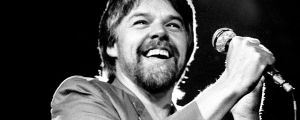
Musician Bob Seger performs at the Pine Knob Music Theater, Clarkson, Michigan, August 26, 1986. (Photo by Paul Natkin/Getty Images)