
Even after The Beatles split up, the public’s perception of each member’s individual personalities remained, which is likely why John Lennon felt like he had a reputation to uphold as rock ‘n’ roll’s intellectual, sharp-tongued bad boy. That was, after all, the mantle he took up during his brief yet massively influential tenure with the Fab Four. And for the most part, Lennon managed to maintain this image in the early days of his solo career, thanks to his scream-therapy-inspired, avant-garde musical collaborations with his second wife, Yoko Ono.
However, there was one track on Lennon’s 1971 album, Imagine, that he felt didn’t align with the image he had worked so hard to create. Ironically, it was about the woman with whom he felt the most creatively connected at the time.
Videos by American Songwriter
John Lennon Was so Bashful, He Refused to Make This Song a Single
The closing track of John Lennon’s second solo album, Imagine, is an unabashed testament to his love for, devotion to, and need of his wife and creative partner, Yoko Ono. Aptly titled “Oh Yoko!”, the song begins, “In the middle of the night / In the middle of the night, I call your name / Oh, Yoko / Oh, Yoko / My love will turn you on.” Lennon continues to list other places where he’s overcome with the desire to call out for his wife, including the bath and “in the middle of a shave.” It’s the kind of hopelessly devoted love song that most people would swoon over. But to Lennon, it was an embarrassing moment of intense vulnerability.
Speaking to David Sheff in 1980, Lennon said that despite the Imagine closer’s popularity, he was “sort of shy and embarrassed. It didn’t sort of represent my image as the tough, hard-biting rock ‘n’ roller with the acid tongue. Everybody wanted it to be a single. The record company, the public, everybody. But I just stopped it from being a single ‘cause of that. Which probably kept it in number two. It never made number one. The Imagine album was number one, but the single wasn’t. The only number one I’ve had since I left The Beatles was “Whatever Gets You Through the Night”, which was more like a novelty record.”
For whatever it’s worth, Lennon’s sole single from Imagine, the idealistic title track, did reach No. 1 in Australia and New Zealand. But in the U.S., “Imagine” only hit No. 3 on the Billboard Hot 100.
The Ex-Beatle’s Thoughts on “Oh Yoko!” Contradicted Previous Statements
It’s always easy to take a hard stance about something when you’re removed from the situation, which is something John Lennon seemed to demonstrate in his final interviews with David Sheff. Although he admitted that the sentimentality of “Oh Yoko!” embarrassed him so much he didn’t want it to be a single, this notion directly contradicted earlier statements he made to Sheff about how his job inherently meant there was no privacy, no “personal life,” and no hiding.
When asked about the love songs he and Yoko Ono wrote for one another, Lennon said, “You write about what you know, at least I do. There is no line between private and public. There is no line. ‘Everybody’s got something to hide except me and my monkey.’ There is nothing to hide, really. We all like to s*** in private, and we have certain little things that we prefer to do privately. But in general, what is there to hide? What’s the big secret?”
“The secret is there is no secret,” he added. And maybe that’s true. But at least by refusing to release “Oh Yoko!” as a standalone single, Lennon was able to keep some of his secrets hidden in plain sight.
Photo by Michael Putland/Getty Images
More Behind The Song
-
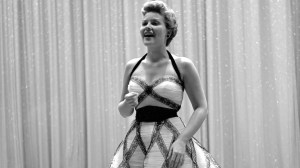
NEW YORK – MAY 30: Singer Patti Page performs on the Ed Sullivan Show on May 30, 1954 in New York City, New York. (Photo by Steve Oroz/Michael Ochs Archives/Getty Images) -
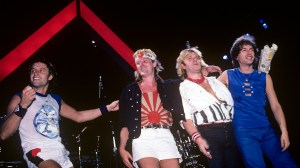
(MANDATORY CREDIT Ebet Roberts/Getty Images) British rock group Asia ready to take a bow after performing at the Brendan Byrne Arena in East Rutherford, New Jersey on August 25, 1983. (L-R) Carl Palmer, Geoff Downes, John Wetton and Steve Howe (Photo by Ebet Roberts/Redferns) -
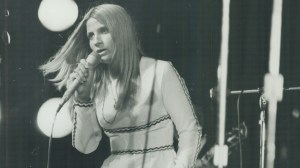
CANADA – SEPTEMBER 03: Country singer Skeeter Davis (Photo by Harold Barkley/Toronto Star via Getty Images) -
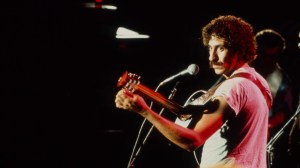
Unspecified – 1973: Jim Croce performing live on 'In Concert'. (Photo by Disney General Entertainment Content via Getty Images) -
British singer-songwriter David Bowie performing at BC Place in Vancouver, during his Serious Moonlight tour, Canada, 9th August 1983. (Photo by Armando Gallo/Getty Images) -
British musician Christine McVie, of the group Fleetwood Mac, performs onstage at the Alpine Valley Music Theater, East Troy, Wisconsin, July 19, 1978. (Photo by Paul Natkin/Getty Images) -
Photo by Lynn Goldsmith/Corbis/VCG via Getty Images -
Photo by Ebet Roberts/Redferns/Getty Images