“The passage of time has always really fucked with me.”
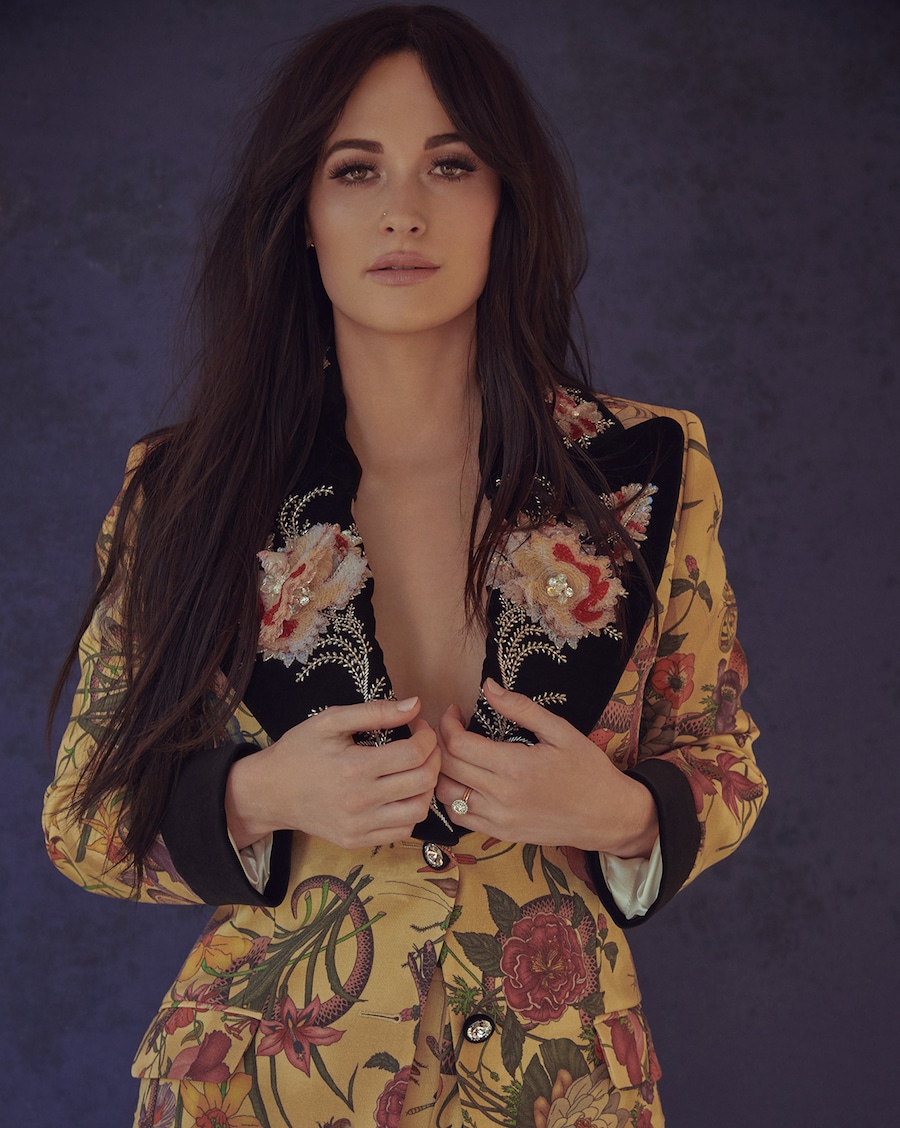
Kacey Musgraves is sitting outside a Nashville coffee shop reflecting on, among headier things, her latest album Golden Hour. Released in late March, it’s been out for approximately a week and a half at the time of our meeting, which Musgraves has slotted in to one of two days off between traveling the country doing promotion. In what little downtime she has, she hopes to do the “little everyday life things,” like laundry and grocery shopping, that we so often “take for granted.” As it was when writing Golden Hour, time is on her mind.
It’s safe to presume that time has flown for Musgraves these past few years. In 2013, she released her debut album Same Trailer Different Park, a critically acclaimed collection that earned the then-burgeoning artist two Grammy Awards, including the trophy for Best Country Album.
Two years later, Musgraves followed with Pageant Material, which retained Same Trailer Different Park’s unflinching observations on small-town life but added a little glitz and a whole lot of countrified kitsch. The wry observations of, say, “Merry Go Round” were still there — on “Good Ol’ Boys Club,” she sings “Another gear in a big machine don’t sound like fun to me/ Don’t wanna be part of a good ol’ boys club” — but rendered in rhinestones and neon, cementing Musgraves’ status to fans and critics alike as one of country’s young saviors.
With that in mind, the sounds on Golden Hour — which, in addition to more traditional genre hallmarks like banjo and pedal steel, include plenty of vocoder — may seem like a sharp left turn to some listeners. But it’s a natural progression for Musgraves, who, in the intervening years, has toured relentlessly, released a holiday album, ended a long-term relationship, gotten married, and done a whole lot of soul-searching. More introspective than her first two albums, listening to Golden Hour is a little like being invited to read a handful of Musgraves’ diary entries, many written, one gets the sense, to preserve the more meaningful moments of those last few years in sonic amber, rendering them impervious to time and its inevitable passage.
“You’re always going to have those people that don’t want you to change,” she says of her expanded sound. “And that’s fine — on one hand, it’s a compliment. But on the other, I just wouldn’t be doing them or myself a favor if I stayed in the same lane or the same box forever. I’m always going to follow whatever feels good, and this is what came out. I think too often there’s this ‘country contest’ within the country realm, or more so the Americana realm, with trying to prove how country you are.”
Not leaving her lane so much as expanding it, Musgraves tapped a new team of collaborators to work with her on Golden Hour. While she co-produced her first two albums with Music Row mainstays Luke Laird and Shane McAnally, this time around she called upon Ian Fitchuk and Daniel Tashian, two friends and fellow Nashville musicians with whom she’d never had the chance to work on a large project.
“I love them so much,” Musgraves says of McAnally and Laird. “We’re still close. But I think we all collectively knew that I couldn’t do the same thing again. They were so understanding and gracious, giving me their blessing to test the waters and look around at working with other songwriters and producers.”
Fitchuk is a songwriter, producer, and multi-instrumentalist known for collaborating with a diverse assortment of artists, including Maren Morris, Kesha, Shania Twain, and Niall Horan, to name a recent handful. He also played a number of instruments on Pageant Material. Tashian, also a triple-threat writer/player/producer, fronts the indie pop band the Silver Seas and has written songs for artists like Josh Turner and Martina McBride.
“I put it in [Musgraves’] ear and put it in her management’s ear for a couple years, just politely saying, ‘Hey, I’d like to do something sometime,’” Fitchuk says, in an early May phone conversation that also included Tashian. “Often those knocks on those doors kind of go unheard, but I was persistent. Playing on her second record Pageant Material was cool, but I still was thinking, ‘Man, if we could get together in a room and create something on our own terms I think it would be pretty awesome.’”
Working on a new set of terms was also a priority for Musgraves, who saw Fitchuk and Tashian as bridging the space between where she’d been and where she wanted to go.
“One thing that I love about Ian and Daniel is that they are far removed from any Music Row formula,” she says. “I think it’s easy for a lot of writers that have found success that way to get stuck in that, because it works and it’s making them money and it’s easy. But easy isn’t always best. They had the energy and they wanted to help explore whatever felt good. They bring something different to the table than I do, and together I think it makes a really fun combination.”
Together, Musgraves, Fitchuk, and Tashian wrote seven of Golden Hour’s 13 songs, including the atmospheric title track. For the album’s other six tracks, Musgraves found co-writers in longtime collaborators like McAnally, Laird, Luke Dick, and Natalie Hemby. As a result, the album is a cohesive step in a new direction, with just enough inspiration from Musgraves’ former incarnations thrown in for good measure.
“Space Cowboy,” one of two tracks released prior to the album’s release, is the perfect synthesis of these new and old influences. Lyrically, it contains more than a few of the clever plays on words for which Musgraves has come to be known; among them, “I know my place and it ain’t with you/ Sunsets fade and love does too.” Sonically, the track nods more to “space” than to “cowboy,” with layered vocal harmonies and gossamer pedal steel building to a sparkling modulation at the song’s bridge.
“Songwriting-wise, it was a conscious effort for me to turn the tables a little bit,” she says. “I’ve cemented myself in being a songwriter that loves wordplay and wit, but I don’t want to beat a dead horse. There are touches of that in these songs, but I got sick of everything being so linear and wrapped up in a lyrical bow every time. I think there’s strength in letting the listeners play with what they think it’s about, and leaving more space in the lyrics.”
There are many instances of untied lyrical bows throughout Golden Hour, each one a subtle reinforcement of two of the album’s prominent themes: Musgraves’ own grappling with uncertainty, and her acceptance that not everything has to be perfect to be complete. One of the more affecting of these couplets comes in “Oh, What A World,” when, in the second verse, she ponders the meaning of life, singing, “Well I wish I knew, but it doesn’t matter/ because you’re here right now, and I know what I feel.”
That was the first song she wrote with Fitchuk and Tashian. The three came together for their first writing session in the fall of 2016 and built the song around Musgraves’ line, “Oh what a world, and then there was you.” “I always thought what a beautiful idea, this bird’s-eye view of everything,” Tashian says. “We can all get sort of microscopic about things and it’s nice to zoom out in a song sometimes, and say, ‘Hey big picture — it’s pretty great that we’re here. I don’t know what it all means, but it doesn’t matter.’ I liked having a song like that.”
With its Daft Punk-esque intro and atmospheric use of the banjo, “Oh, What A World” set an exciting sonic precedent for the rest of the album. In its embrace of the unknown and message of interconnectedness, it also allowed Musgraves both to flex her more abstract songwriting muscles and to work out some of her personal feelings about life, love, and mortality.
“I had this epiphany one night when I was thinking about all of the things that we don’t really stop to think about that are so beautiful in our everyday world,” Musgraves says. “We spend so much time being so distracted by the news and the ugliness of humanity, and I think we forget that there are such magical things as stardust and Northern Lights and glowing jellyfish, and magic plants that can open people’s minds and heal them. Where did we come from? How did we get here? What are souls? And there’s also this human in my life that has shown me the beauty of a relationship. It set the tone for the rest of the album.”
“This human” is Musgraves’ husband Ruston Kelly, a fellow musician whom she married in late 2017. She attributes much of the creative freedom she felt while making Golden Hour to the strength of their partnership.
“When someone truly accepts who you are, even the bad parts, it’s so limitless and freeing, rather than having to walk on eggshells because you feel like somebody’s going to leave you if you do something wrong, or make them mad, or show an ugly part of yourself,” she says. “It really opened me up to being more friendly to other people, to being more friendly to myself and more forgiving.”
Kelly directly inspired “Butterflies,” the track Musgraves released in tandem with “Space Cowboy” before Golden Hour’s release. A love song through and through, “Butterflies” tells of the first flutters of love through chiming piano, a tight, drum-forward rhythm, and some inspired use of the vocoder (check that cool little effect on “chrysalis” at 1:24).
“Since I met my husband, I’ve become a way happier person, and I’ve bloomed in a lot of ways personally,” she says. “The music was naturally very inspired by that. You hear a lot of songwriters that say, ‘Well crap, I don’t think I’m going to be able to fucking write any songs now because I’m happy,’ but I found it to be completely the opposite. As soon as I met him, ‘Butterflies’ was the first thing that came out. I followed it and tried to have an open mind and feel my way through all of this rather than critically think about every single step and overthink everything.”
Where Musgraves’ first two albums were personal in their explorations of her external worlds — her small hometown in Texas, the music industry, her progressive niche of the country community — Golden Hour is a sharp turn inward. “Instead of having a magnifying glass on each line like I usually would have, this time I tried to catch some wind and look at everything from a more aerial view,” she explains.
“Oh, What A World” encapsulates that aerial view, though zooming out also allows for a handful of recurring, interconnected themes to reveal themselves over repeated listens. “Butterflies” and “Wonder Woman” turn an eye on Musgraves’ relationship, respectively offering snippets from both its starry-eyed beginning and the ensuing navigation of settling into something serious. “Lonely Weekend” is a rhythmic meditation on the all-too-real phenomenon of the “fear of missing out,” and “lookin’ at my phone, puttin’ it back down.” Also dissecting that pesky passage of time, it finds its thematic soulmate in “Happy & Sad,” a love song for those of us who can’t enjoy a beautiful moment for the knowledge that it inevitably has to end. The title track marries these concepts through the image of the sun’s golden light shining just before it sets.
Tackling such expansive topics meant, perhaps counter-intuitively, paring back lyrically. To do that, Musgraves and crew looked outside the confines of country for inspiration, finding it in a place that may sound odd on paper: disco.
“[Musgraves] was expressing a desire to pivot a little bit away from more cerebral-driven storytelling into a little bit more of a Bee Gees mindset, almost,” Tashian says. “If you print out the lyrics of some of those Bee Gees songs, like ‘How Deep Is Your Love,’ for instance, if you look at that lyric on the paper, it’s not very sophisticated. But for some reason when they combine it with that music it becomes emotional. So I think she was wanting to do some things like that.”
In keeping with Golden Hour’s lyrical vulnerability, the arrangements on the album, while certainly intricate, allow for plenty of breathing room. In other words, they don’t give Musgraves or her personal revelations much to hide behind. “Space is always very important to me as an element used in producing and putting together songs, because I feel like you can say a lot with space,” she says. “Though this album is super layered and lush, it was really important to not let it get too overloaded. Keeping the balance of all the elements was a fun puzzle, or a fun riddle to play with. I really didn’t want people to hear this record and not be able to find me or my spirit in it.”
Musgraves, Fitchuk, Tashian, and a small handful of players recorded the bulk of the album at Sheryl Crow’s home studio, nestled quietly in the woods just outside of Nashville. Unlike the Pageant Material sessions, recording Golden Hour was relaxing and unhurried, a vibe that noticeably made its way onto the finished product.
“For Pageant Material, she had a nine-person band on the floor for four or five days at RCA Studio A,” Fitchuk says. “That’s one way of making a record. It’s great, and required everyone to be kind of minimal. But it also meant that we were recording three or four songs a day. Being out at Sheryl’s and having a much smaller entourage — it was essentially just five or six of us most of the time — we were able to take our time both there and later on when we finished up. I think we spent three full days on ‘Space Cowboy.’ That was new for her, being able to take her time and explore the nooks and crannies of these songs, not just slam through it and get some takes and call it a day.”
The extra time also allowed for Musgraves to hone in more closely on her singing. In the past, Musgraves had shaped her vocals to fit her lyrics, which made for great narrative compositions but didn’t always showcase her voice as the versatile instrument it really is. On Golden Hour, though, her natural talents for melody and phrasing really get to shine. “Love Is A Wild Thing” illustrates the wonder of love in elongated vowels and a cascading melody. At the end of opener “Slow Burn,” Musgraves jumps an entire octave between “slow” and “burn.” And at the climax of “Happy & Sad,” Musgraves sings, “I know that rain is coming my way” and you’d swear it was Dolly Parton.
“We saw Kacey perform [Parton’s] ‘Here You Go Again’ on TV and it showcased her voice in a way that maybe a lot of people had never heard from her before, because she’d made lyric-driven music,” Fitchuk says. “Daniel pointed out early on that we can create some opportunities for her to show herself as a vocalist.”
“I have always used my voice in the manner that works best for whatever song I’m singing, so more conversational delivery, no crazy acrobatics,” Musgraves says. “And that suits me. That’s the kind of singer I am, and that’s what I’m comfortable doing. But on this project, Daniel specifically was like, ‘I want to come up with some arrangements that really let you soar a little bit more than you usually do.’ All those great classic hits of the ’70s, you know, there were modulations, and you think of Dolly Parton and these wonderful female singers that had all this room to really coast and use their voice as an instrument. I’ve never had that before.”
The album’s most stunning vocal performance is also its shortest track, “Mother.” Clocking in at just under a minute-and-a-half, “Mother” is about Musgraves’ actual mother, visual artist Karen Musgraves. The elder Musgraves texted a photo of her hands while Kacey was in the midst of an LSD trip, and the exchange was so meaningful that she wrote and recorded the song in the same day. Accompanied by spare piano, Musgraves’ vocals ache with love, longing, and homesickness. It’s easily the most vulnerable piece of music she’s ever released.
“I feel that [trying hallucinogens] made me a more compassionate human,” she says. “It made me a better songwriter. It made me appreciate the earth more. It made me feel like a grain of sand in the cosmos, which is good for your ego. It did a lot of positive things for me, and opened my mind up and made me not sweat the small stuff as much. It really gives you this feeling that we’re all — even plants and animals — we’re all just coexisting and we’re lucky to be alive right now. It’s a mind-opener.”
If Musgraves is anything on Golden Hour, it’s open: in sound, in mind, in heart. She’s open to baring her soul in her lyrics and to letting listeners interpret that as they may. She’s kept the door open to her community in country music, while swinging it open a little wider for others to come on in (notably, she’ll hit the road with pop megastar Harry Styles this summer). And, perhaps most importantly to her, she’s open to time passing by and all it will bring, always keeping a curious eye to the future while remaining grateful for whatever she encounters in the present.
When asked what she hopes for over the next few years, she envisions a life that makes room for both a family and for “a badass career,” and speaks fondly of eventually spending more time with her horse, Mismo. After a pause, though, she reflects on her list of wishes and sums it up simply, noting that at the heart of what she hopes for is something she already has:
“Just happiness, really. That’s the goal.”
More Features
-
(Original Caption) Nashville, Tennessee: Close up of singer Brenda Lee arriving for the opening of the movie Nashville. -
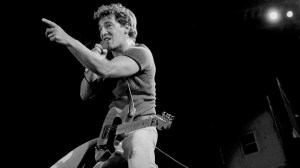
Bruce Springsteen and E Street Band perform in concert during the last show of the Born in the U.S.A. Tour, October 2, 1985 in Los Angeles, California. (Photo by Bob Riha, Jr./Getty Images) -
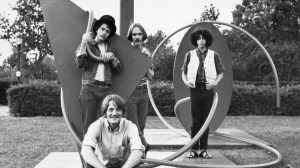
CIRCA 1967: Members of the rock band "Youngbloods" pose for a circa 1967 portrait. Original members include Jesse Colin Young, Lowell "Banana" Levinger, Jerry Corbitt and Joe Bauer. (Photo by Michael Ochs Archives/Getty Images) -
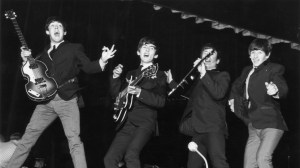
The Beatles, from left to right: Paul McCartney, George Harrison (1943 – 2001), John Lennon (1940 – 1980) and Ringo Starr, jump for joy during a rehearsal for the Royal Command Performance at the Prince of Wales Theatre. (Photo by Fox Photos/Getty Images) -
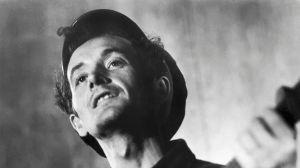
Waist-up photo of American folk singer and composer Woody Guthrie (1912-1967) playing his guitar. Ca. 1960s. (Photo by �� John Springer Collection/CORBIS/Corbis via Getty Images) -
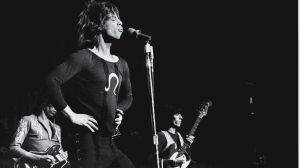
English singers, musicians, and songwriters Mick Jagger (at microphone), Keith Richards and Bill Wyman (far right) of the rock band 'The Rolling Stones,' perform on stage at Madison Square Garden, November 28, 1969. Jagger stands with his hands on his hips, eyes closed, and lips pursed together as he sings. (Photo by David Fenton/Getty Images) -
Roseann Cash on 11/15/87 in Chicago, IL. (Photo by Paul Natkin/WireImage)