
On May 21, 1971, Marvin Gaye took an already impressive musical career and elevated it to new heights with a monumental album that would surpass all his previous work in terms of cultural significance and timelessness. With hits like “I Heard It Through the Grapevine” and “Ain’t No Mountain High Enough” already under his belt, Gaye was no stranger to the top of the charts.
But his eleventh studio album was a remarkable shift in both style and messaging, serving as an incomparable high point of a career that was tragically cut short by his own father just 13 years later.
Videos by American Songwriter
Marvin Gaye Changed His Musical Legacy Forever In 1971
Marvin Gaye had already established his career as an incredibly popular recording artist prior to the release of his eleventh studio album on May 21, 1971. The soul singer landed his first No. 1 hit years earlier with his 1968 single, “I Heard It Through the Grapevine.” Other notable hits included “I’ll Be Doggone” and a series of duets with the late Tammi Terrell, including “Ain’t No Mountain High Enough” and “Your Precious Love.” And while these were great radio hits about love and heartache, they certainly didn’t garner Gaye the reputation of a powerful social and political activist. But in the spring of 1971, that changed forever.
Gaye’s eleventh studio album, What’s Going On, would prove to be the most political record of his entire career. The concept album followed the perspective of a Vietnam veteran who returns to his home country of the United States to find society rife with violence, anger, and injustice. Gaye released the title track as the lead single off the record in January 1971, followed by “Mercy Mercy Me (The Ecology),” “Inner City Blues (Make Me Wanna Holler),” and “Save the Children.” The album was a massive success, peaking at No. 6 on the Billboard Pop Albums chart and No. 1 on the Top Soul Albums chart, where it stayed for five weeks straight.
What’s Going On not only cemented Gaye’s legacy as an artist of writing and recording powerful, politically and socially focused music. But it also set records, turning Gaye into the first male solo artist to achieve three top ten singles from the same album after “Mercy Mercy Me (The Ecology)” and “Inner City Blues (Make Me Wanna Holler)” joined “What’s Going On?” at the top of the charts.
How A Round Of Golf Led To The Monumental Album
What’s Going On is as inextricably tied to Marvin Gaye’s musical legacy as his other far less socially minded hits like “Let’s Get It On” and “That’s the Way Love Is.” But for a brief moment, the singer refused the opportunity to cut the album’s title track. Four Tops singer Renaldo “Obie” Benson wrote “What’s Going On” after witnessing a violent protest at Berkeley’s People’s Park dubbed “Bloody Thursday.” Sometime later, Benson was golfing with Gaye when he offered the song to the “Grapevine” singer. Gaye refused, suggesting a different Motown act who could record it instead. At the insistence of Benson, Gaye decided to cut the track himself.
Although it took some convincing on Benson’s part to get Gaye to track “What’s Going On,” the latter performer was already headed in that direction. In a later interview with Rolling Stone, Gaye said, “In 1969 or 1970, I began to re-evaluate my whole concept of what I wanted my music to say. I was very much affected by letters my brother was sending me from Vietnam, as well as the social situation here at home. I realized that I had to put my own fantasies behind me if I wanted to write songs that would reach the souls of people.” And indeed, What’s Going On did just that.
Photo by Eugene Adebari/Shutterstock
More Behind the Album
-

Photo by Ed Rode/Getty Images -
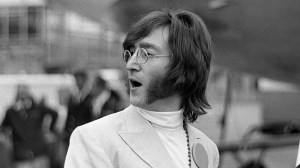
Photo by Murphy/Daily Herald/Mirrorpix via Getty Images -
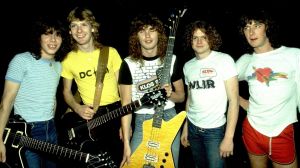
Def Leppard on 8/23/81 in East Troy, Wi. (Photo by Paul Natkin/WireImage) -
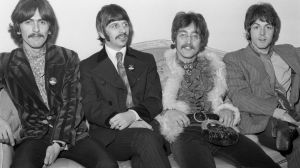
LONDON – MAY 19: (L-R) English musician, singer, songwriter and guitarist George Harrison (1943-2001), English musician, singer and drummer Ringo Starr, English singer, songwriter and guitarist John Lennon (1940-1980), and English singer, songwriter and bassist Paul McCartney of the Beatles attend a press party at the home of manager Brian Epstein supporting the release of Sgt. Pepper's Lonely Hearts Club Band, May 19, 1967 in London, United Kingdom. (Photo by Jeff Hochberg/Getty Images) -
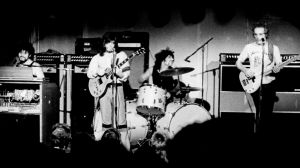
UNITED KINGDOM – JANUARY 01: MARQUEE Photo of VANILLA FUDGE, performing live onstage – L-R: Mark Stein, Vince Martell, Carmine Appice, Tim Bogert (Photo by Estate Of Keith Morris/Redferns) -
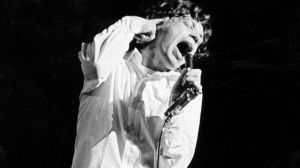
CIRCA 1966: Singer Mick Jagger of the rock and roll band "The Rolling Stones" performs onstage in circa 1966. (Photo by Michael Ochs Archives/Getty Images) -
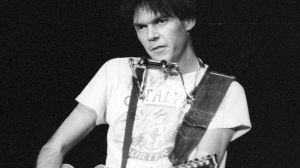
Musician Neil Young performing onstage in 1978 in Los Angeles. (Photo by Michael Ochs Archives/Getty Images) -
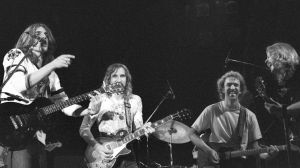
The Eagles perform on stage in Amsterdam, Netherlands, 1975. (L-R) Glenn Frey, Joe Walsh, Bernie Leadon, Don Felder. (Photo by Gijsbert Hanekroot/Redferns)