When you’re organizing a concert for a rock star as big as Paul McCartney, you’ll do just about anything to make sure that performance goes off without a hitch—even if that means shelling out $55,000 for technology that may or may not successfully control the weather. It’s a high-risk bet, sure. But its potential efficacy also makes for a high reward.
And on June 20, 2004, Russian event company SAV Entertainments decided to take that bet, which, fortunately, paid off in sunshine and clear skies.
Videos by American Songwriter
A Momentous Occasion Threatened By Rain
On June 20, 2004, Paul McCartney performed at Dvortsovaya Square, or Palace Square, in St. Petersburg, Russia. The concert was monumental not only because of the fact that McCartney had only ever played in Russia once before. But it also marked the former Beatle’s 3,000th concert in front of 60,000 fans. “I was amazed when people told me,” McCartney said, per the BBC. “That’s an awful lot of late nights. I guess I must just like the live life. As I’ve said before, it’s what I do.”
The concert understandably drew immense national attention. McCartney had celebrated his 62nd birthday the Friday before the Sunday show, and Russian President Vladimir Putin called him personally to send his well wishes. McCartney’s concert sold out, with some tickets costing as high as $500. The Liverpudlian spoke in Russian and English, much to the delight of the crowd. But for a brief, tense moment ahead of the show, event organizers SAV Entertainments got the worst news a team putting on an open-air show could receive: rain.
With so much security detail, people in attendance, and other massive logistical hurdles, having to cancel the concert because of rain would have resulted in tens of thousands of angry fans and even more money lost. Instead of scrambling for tents and parkas, the entertainment company hired three jets to dump dry ice into the sky in a technique called “cloud seeding.”
How Paul McCartney Concert Organizers Circumvented Disaster
Cloud seeding, in theory, can affect rain levels by releasing large quantities of frozen carbon dioxide into the atmosphere. The carbon dioxide bonds to water particles already in the air, helping to increase precipitation in drought-stricken areas. In theory, if enough dry ice enters the atmosphere, the water particles can become so light and cold that they don’t fall at all. For SAV Entertainments’ purposes, they were clearly hoping for the latter. If they pumped the skies with enough frozen carbon dioxide, they hoped that the precipitation would hold off long enough for the Paul McCartney concert to go off without a hitch.
So, does it actually work? Reading University meteorologist Anthony Illingworth told The Guardian, “Some people have made a lot of money out of it. But because it’s so hard to prove it’s worked, we tend to view it with considerable jaundice.”
Considerable jaundice or not, no rain thwarted the McCartney concert that fateful summer day in St. Petersburg, so concert organizers might assume that their technique to control the weather was indeed successful. “It was p***ing down beforehand, and then it became so sunny that Brian Ray, the guitarist, had to get one of his roadies to fetch his shades,” McCartney spokesman Geoff Baker later said.
Photo by Anatoly Maltsev/EPA/Shutterstock
-

The Texas Playboys, backup band for the late Bob Wills pose for a Capitol Records publicity still circa 1975. (Photo by Michael Ochs Archives/Getty Images) -
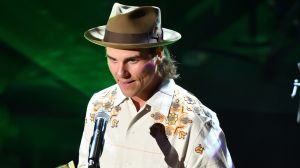
NASHVILLE, TENNESSEE – Ross Copperman accepts Gary Haber Lifting Lives Award at the 14th Annual Academy Of Country Music Honors at Ryman Auditorium on August 25, 2021 in Nashville, Tennessee. (Photo by Jason Davis/Getty Images,,) -
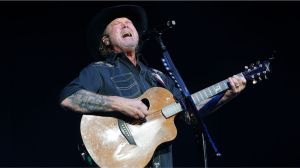
NASHVILLE, TENNESSEE – Tracy Lawrence performs at the Ryman Auditorium on May 18, 2025 in Nashville, Tennessee. (Photo by Jason Kempin/Getty Images)