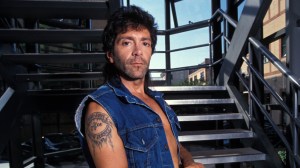
John Fogerty was responsible for some of the most iconic songs of the late 60s and early 70s as the artistic mastermind behind Creedence Clearwater Revival. But his solo career didn’t light the world on fire once that band imploded.
In 1985, when much of the music world had given up on him regaining his relevance, Fogerty shot to the top of the album charts. And he did it, partially, by returning to the sound that first set him apart.
Videos by American Songwriter
A Slow Solo Start
CCR simply couldn’t miss for a few years there. In rapid-fire fashion, the band dished out albums and singles, each one seemingly more successful than the next. All that success helped paper over the growing turmoil in the band.
The other members soon began to resent John Fogerty’s dominance over every aspect of the music that they recorded. Fogerty tried to accommodate their demands for more input. That led to the disappointing Mardi Gras LP in 1972. CCR broke up after one last tour. That left Fogerty ready to embark on a solo career that seemed, based on his success with the band, bound for greatness.
But Fogerty struggled with motivation due to the onerous record contract with CCR’s label hanging over his head. He released just two albums in the 70s, one of which was full of cover songs. Only one Top 40 hit came from this time. After he shelved an album intended for release in 1976, Fogerty essentially walked away from his career for the better part of a decade.
Smashing the Writer’s Block
Writer’s block compounded Fogerty’s problem. So consumed was he by the lack of control he had over both the songs he wrote with CCR and the direction of his solo career that he struggled to find inspiration. Then one day on a fishing trip, the idea for the song “I Saw It On The TV” popped into his head. Suddenly, floodgates started to open.
Warner Brothers picked up Fogerty’s record deal, giving him a new lease on life in that respect. The songs started to come fast and furious. But the artist again struggled, this time with deciding how he wanted the record to sound.
Ultimately, Fogerty decided on a gritty throwback to his CCR sound. That included less of a reliance on synthesizers than most albums of the mid-80s. Fogerty showed his versatility by playing every instrument on the album, titled Centerfield after one of its hit singles. That’s even him playing the gritty, 50s-style saxophone break on “Rock And Roll Girls”, another of the album’s smashes.
Lawsuits and Pop Hits
Alas, Fogerty didn’t quite let go of his past grievances on Centerfield. Nor had the past let go of him. He was put in the bizarre scenario of being accused of plagiarizing himself. Saul Zaentz, who owned rights to the CCR material, felt that “The Old Man Down The Road”, the first single off Centerfield, sounded too much like Creedence’s “Run Through The Jungle”. (Fogerty eventually won the lawsuit.)
Proving he hadn’t exactly let bygones be bygones either, Fogerty dedicated two songs on the album (“Mr. Greed” and “Vanz Kant Danz”) to thinly-veiled attacks on Zaentz’s business practices. Despite all that baggage, Centerfield turned into a massive hit.
Fogerty wasn’t able to follow up the album’s success. Eye Of The Zombie, released in 1986, didn’t do anywhere near the business of Centerfield. Yet even though his long-awaited return to pop dominance was short-lived, it proved as inspiring as it was unlikely.
(Photo by Gijsbert Hanekroot/Redferns)
More Features
-
Photo by Patrick Ford/Redferns -
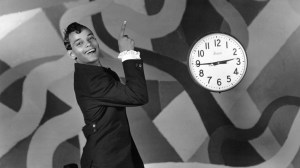
NEW YORK – MAY 1961: Singer Gary (U.S.) Bonds jumps for a portrait with a clock in the backgroung signifying his hit song "Quarter to Three" May 1961 in New York. (Photo by Michael Ochs Archives/Getty Images) -
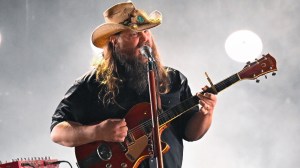
NASHVILLE, TENNESSEE – NOVEMBER 08: EDITORIAL USE ONLY Chris Stapleton performs onstage during the 57th Annual CMA Awards at Bridgestone Arena on November 08, 2023 in Nashville, Tennessee. (Photo by Astrida Valigorsky/WireImage) -

Photo by Michael Ochs Archives/Getty Images -
Photo by Chris Walter/WireImage -

UNSPECIFIED – CIRCA 1977: Photo of Randy Newman (Photo by Michael Ochs Archives/Getty Images) -
American country singer and songwriter Loretta Lynn performs on stage at the Grand Ole Opry, Nashville, Tennessee, early 1960s. (Photo by Graphic House/Getty Images)