Many rock stars have written lullabies aimed at their children. But few have ever pulled off the feat with such disarming honesty and utter beauty as Billy Joel achieved on “Lullabye (Goodnight, My Angel)” in 1993.
The song was inspired by the hard questions his daughter was asking at the time. Joel used his lyrics to give a touching answer about the fine line between ephemerality and eternity.
Videos by American Songwriter
“Angel” Dream
Even in the pre-internet age, the romance and subsequent marriage of pop star Billy Joel and supermodel Christie Brinkley managed to captivate entertainment fans everywhere. And the birth of their first child, Alexa Ray Joel, in November 1985, only heightened the interest level in the family.
Joel and Brinkley’s marriage eventually ran its course, with cracks in the union already forming when he was putting together his 1993 album River Of Dreams. Perhaps inspired by the commotion in the family, Alexa Ray started to ask her father questions around that time about what happens to people when they die.
Joel explained in an interview with 60 Minutes Australia how he crafted “Lullabye (Goodnight, My Angel)” as a way of responding to his daughter’s query:
“Now, every child probably asks their parent this, because it’s a scary thing for children. The best way I could explain it to her was, ‘Well, you go into other people’s hearts.’ She seemed okay with that explanation, but I did it with the song. I thought it was a good way to impart that thought.”
Exploring the Lyrics of “Lullabye (Goodnight, My Angel)”
The narrator of “Lullabye (Goodnight, My Angel)” is tucking his child into bed, perhaps because the complexity of the answer to her question is something that a pre-bedtime conversation can’t quite convey. “And save these questions for another day,” he says. But he reassures her nonetheless: “I promised I would never leave you.”
Still, this parent is troubled by his inability to tell her everything: “And still so many things I want to say.” Recalling their times out on the water (understandable considering Joel’s well-known proclivity for sailing), he fashions a simile to comfort her. “The water’s dark and deep inside this ancient heart,” he sings. “You’ll always be a part of me.”
In the final verse, he implores her to look to the future: “And dream how wonderful your life will be.” He then makes a connection to the time when she’ll be answering the same questions. “Someday your child may cry,” he insists. “And if you sing this lullaby/Then in your heart/There will always be a part of me.”
The song could have ended there, but Joel adds one more refrain to ratchet up the emotion. “Someday we’ll all be gone,” he candidly explains. “But lullabies go on and on/They never die/That’s how you and I will be.” Love’s permanence is our pathway to immortality.
Joel released “Lullabye (Goodnight, My Angel)” on the album River Of Dreams, which would turn out to be his last studio album of original pop music. In other words, he times his message well, a message that still resonates for parents and children everywhere.
(Photo By Rick Diamond/Getty Images)
More Behind The Lyrics
-
IN CONCERT – Airdate: March 1, 1974. (Photo by ABC Photo Archives/Disney General Entertainment Content via Getty Images) LINDA RONSTADT -

0000120354-PC-Vue22A-Korody 001 -
UNITED KINGDOM – JANUARY 01: HAMMERSMITH ODEON Photo of Bill WITHERS, 231-233 (Photo by Fin Costello/Redferns) -
(EXCLUSIVE, Premium Rates Apply) BOSTON – NOVEMBER 19: Bruce Springsteen and Organ/Accordian player Danny Federici perform with The E Street Band during their "Magic" tour on November 19, 2007 in Boston. **Exclusive** (Photo by Kevin Mazur/WireImage) -
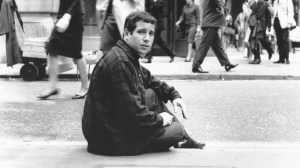
Paul Simon 1965 in London..© Chris Walter.. -
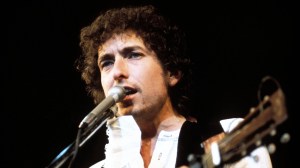
UNITED STATES – MAY 09: Photo of Bob DYLAN; performing live onstage at the benefit for ousted Chileans: Felt Forum, New York (Photo by Steve Morley/Redferns) -
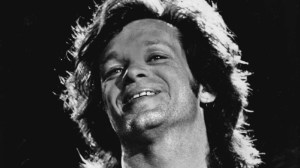
MAY 1 1986, JUN 4 1989, OCT 18 1991, NOV 2 1991, DEC 29 1991 John Cougar Mellencamp opened Denver performance with "Small Town," followed by Jack and Diane." Credit: The Denver Post (Denver Post via Getty Images)