
1. Bob Dylan, “Like a Rolling Stone”
There are probably a hundred Bob Dylan songs that could have made it onto this list, but since the first line of the chorus provided the title for my book, “How Does It Feel?: Elvis Presley, The Beatles, Bob Dylan, and the Philosophy of Rock and Roll,” I thought I should stick with this most obvious of choices, the song perhaps most often declared “The Greatest Song of All Time.” To my mind, that repeatedly wailed line, “How does it feel?” encapsulates the deepest significance of rock and roll, exemplifying the shift that took place in the twentieth century, but especially in the sixties, from the restrictively rational modern premises in which Dylan’s Mr. Jones is eternally trapped to a mode of thought that acknowledges the validity of both critical intellect and intuitive, bodily knowledge.
Videos by American Songwriter
2. Bonnie ‘Prince’ Billy, “Wolf Among Wolves”
This song is about what it means to have an animal body in a civilized human culture, which since approximately the seventeenth century has pervasively taught us to repress attention to felt experience in favor of rationally constructed roles and hierarchies based on partial assumptions about the world. Will Oldham (aka Bonnie ‘Prince’ Billy) seems to be lamenting constricting gender stereotypes and pondering what it means to be a man who feels an overwhelming urge toward freedom in a culture where he must constantly deny those instincts to make a living, to provide his mate with “a sheltered cave that I have never seen,” and to be considered a “man among men,” a role that feels inauthentic to his true nature as a “wolf among wolves.” This is one way of expressing the “mind-body problem,” the fundamental conflict at the heart of modern Western culture between subject and object, psyche and cosmos.
3. Bob Marley and the Wailers, “Running Away”
“Running Away” is one of the stranger songs in Bob Marley’s canon. He seems to be performing the inner dialogue of someone who “must have done something wrong” and who “can’t find the place where you belong,” which, like many of Marley’s lyrics, appears to refer to the disenchanted, materialist assumptions of the late modern West, or “Babylon” as Rastafarians call it. In contrast with this alienated, disaffected way of being, Marley and the I-Threes chant “who feels it knows it, Lord,” which is a reappropriation of the chorus of an early Wailers song (released in 1966, the years after “Like A Rolling Stone”). Although Marley is specifically referring to the insight that “every man thinks that his burden is the heaviest,” the dictum “who feels it knows it” expresses a general understanding that felt knowledge is vitally important for engaging with the world. According to Marley, the man in the song, who has apparently run away from a woman, is really making an unsuccessful attempt at “running away” from himself, and Marley seems to imply that he should stop denying his bodily intuition, a denial which is producing severe cognitive dissonance.
4. Elvis Presley, “Milkcow Blues Boogie”
This is one of the earliest songs Presley recorded at Sun Studio, the future “King” and his band beginning the song in a slow, bluesy arrangement, with Presley singing in a quavering voice that sounds like a mediocre retread of the vocal jazz style still predominant at that moment in 1954. After a few seconds of this, Presley stops the band, intoning: “Hold it, Fellas. That don’t move me. Let’s get real, real gone for a change.” Then Presley lets out an extended “well” that explodes into the energetic, even frantic rhythm of the rock and roll style that these men had just invented a few months before on “That’s All Right,” and the listener is in a different world. This is a primary moment when Presley enacted the transition from the orthodoxy that the jazz age had inevitably become (after embodying a similar revolution to rock and roll earlier in the century), to a new way of constructing experience that focuses on what “moves” you, on getting “real, real gone,” enacting the literal meaning of ecstasy, which is to be “out of the stasis” and in motion. Starting with these recordings, Presley and the other early rock and rollers mediated the emergence into collective awareness of a way of relating to experience that was both radically novel and archaic, recalling the primal, nearly universal form of religious activity referred to as shamanism.
5. The Beatles, “The Word”
This is John Lennon’s initiatory declaration, from 1965’s Rubber Soul, of the philosophy that would come to characterize some of his greatest songs in the following years, from “All You Need is Love” and “Come Together” to “Imagine” and “Mind Games”: that “the word is ‘love.’” But more than this simple assertion, Lennon singing “Now that I know what I feel must be right, I’m here to show everybody the light” indicates that “love,” by which he seems to mean compassion, empathy, and care for others, is the result of a deeply felt epiphany, a kind of conversion experience. That he exhorts the listener to “say the word and you’ll be free” suggests that love for others is the way to free oneself from the limiting confinement of one’s self-centered fears and insecurities. The answer, he seems to assert, is to give one’s life to something greater than one’s individual needs and neuroses.
6. Hank Williams, “Ramblin’ Man”
Freedom from constraint seems to be a common theme among the greatest musical philosophers of the twentieth century, and Hank Williams, the father of country music, is certainly no exception. In “Ramblin’ Man” he sings: “I can settle down and be doin’ just fine, ‘till I hear an train rollin’ down the line,” because “when that open road starts to callin’ me, there’s somethin’ over the hill that I gotta see.” His curiosity and need to explore are driving him to go beyond what he’s encountered before and, perhaps, to overcome himself in the process. Williams’ story is a constant tug-of-war between his love for a woman and his need for ultimate liberation. And although, as he sings, “some folks might say that I’m no good, that I wouldn’t settle down if I could,” these people seem to have been attempting to inhibit the vital impulse toward novelty that impels the greatest human achievements. If Williams had heeded the insults of these doubters, he might have lived a long and prosperous life, but our culture would be a vastly poorer place for not having his music, which was surely driven by this need to see beyond the next horizon. Finally, he says, “I love you, Baby, but you gotta understand, when the Lord made me, he made a ramblin’ man.” His culture didn’t particularly value his urge to transcend his divided condition, which mirrored a schizophrenic modern mentality, but Hank Williams bravely forged on to assert what he felt to be true in his heart and in his body. Although, like many artists before and after, he suffered for it greatly, we are forever in his debt.”
7. Tinariwen, “Amassakoul ‘n’ Tenere”
In 2012, Tinariwen, a group from North Africa, won a Grammy Award for Best World Music Album after collaborations with members of Wilco and TV On The Radio. But make no mistake: this is dangerous rock and roll, or “desert blues” as it is often described. Tinariwen’s Ibrahim Ag Alhabib is his culture’s Bob Dylan or Bob Marley, complete with strikingly gaunt visage and wild halo of hair. The nomadic Tuareg people of the Sahara Desert of Northern Mali consider him something like a prophet, and listening to the music, it’s hard to argue. Although the words are sung in Tuareg, there is a by turns exalted and menacing depth to the music, particularly Ag Alhabib’s lacerating, minimalist guitar playing, and his incantatory vocal phrasing, which give the songs an air of great significance, a sense that is confirmed by the translated words. The title of this song, from their 2004 record, means “The Traveler in the Desert,” and Ag Alhabib sings: “In the desert, flat and empty, where nothing is given, my head is alert, awake,” intimating that the limitations of his ancestral environment, one of the most difficult on the planet, lift him to a kind of heightened awareness. “These worries are my friends,” he sings, “I’m always on familiar terms with them and that gives birth to the stories of my life.” The struggles and hardships of the desert, he seems to say, are gifts that compel him to create something from virtually nothing. As he recognizes, the narratives that we create through our engagement with hard reality are what give meaning to our existence.
8. Bruce Springsteen, “Growin’ Up”
Bruce Springsteen is probably the one artist who, more than any other, carried the flame of rock and roll through the nineteen eighties. “Growin’ Up,” from his first record in 1973, is about being a “cosmic kid in full costume dress” at the end of the sixties, apparently indulging in the sex, drugs, and rock and roll that defined that era, when he “hid in the cloud” and “never once gave thought to landing.” Basically, he was really, really high, “taking month-long vacations in the stratosphere.” However, he tells us, “you know it’s really hard to hold your breath,” which seems to indicate that the deep introspection and self-exploration that psychedelic substances in particular often induce can be extremely challenging. Through this spontaneous therapeutic process that Springsteen underwent along with many in his generation, he sings, “swear I lost everything I’d ever loved to fear,” perhaps suggesting that these transformative chemical compounds forced him to face his fears and overcome his attachment to them. Although his “feet they finally took root in the earth,” which seems to mean that he moved past this exploratory phase, bearing a striking resemblance to shamanic initiation, he held onto “a nice little place in the stars” that he could apparently return to as a transcendent source of inspiration and renewal. Ultimately, he tells us, “I swear I found the key to the universe in the engine of an old parked car,” discovering profound meaning and beauty in the mundane.
9. Elliott Smith, “Ballad of Big Nothing”
This song is Elliott Smith’s articulation of ultimate existential freedom: “You can do what you want to whenever you want to,” though Smith exemplified the potentially tragic side of this liberation characteristic of rock and roll, one of many “creeps” and “losers,” from Kurt Cobain to Thom Yorke to Beck, who made such great music in the nineties. Although Smith seems to have recognized that we create our own reality, like the postmodernism that was perhaps most prevalent during that decade, he took this constructed quality of experience as evidence that “it doesn’t mean a thing.” Others on this list, however, have interpreted this same insight as meaning that “world views create worlds,” as philosopher Richard Tarnas puts it, that we participate in the creation of the world’s meaning. Elliott Smith and Kurt Cobain were primary examples of a stage of development that most of us go through, generally centered around adolescence, but from which most of us eventually emerge. In a sense, they mediated this period of angst-filled rebellion in the culture at large, which cleared away the previous modern assumptions about the nature of reality in order to create space for something new to emerge.
10. The Rolling Stones, “You Can’t Always Get What You Want”
As probably the most realist of the sixties triumvirate that they form with the Beatles and Dylan, the Stones recognize in this song that life is always a negotiation between desire and necessity. When we’re young, many of us have high aspirations, to be a rock star or the President of the United States and, as Mick Jagger seems to recognize, that’s as it should be. However, not all of us are destined to be world-historic icons, though life has a way of slowly and inexorably leading us toward new and unexpected paths through the kinds of daily encounters that Jagger describes in the lyrics, from “the reception” where “she was gonna meet her connection,” to “the Chelsea drugstore” where “Mr. Jimmy” was looking “pretty ill.” But the point Jagger seems to be making in the chorus is that even though “you can’t always get what you want,” this isn’t cause for despair, as Elliott Smith interpreted it. Rather, Jagger seems to say, the realities of life are the constraints we must work within to become what we are meant to become. Keep striving toward your goal, he suggests, and life will give you “what you need” to get where your “final cause” is luring you, as Aristotle first expressed it. This is a mode of thought that reductive materialism finds trivial and naive, but along with highly sophisticated philosophers like William James, Henri Bergson, Alfred North Whitehead, and Thomas Nagel, some of the greatest rock and roll singers have elected to see the world in this way.
THE LIST: The Best Of Townes Van Zandt, The Band, Radiohead, The Rolling Stones and more…
More The List
-
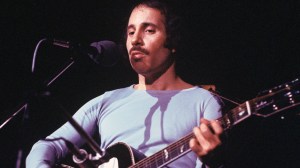
Paul Simon performs on stage in May 1973 in Amsterdam, Netherlands. (Photo by Gijsbert Hanekroot/Redferns) -

Bruce Springsteen -

Studio portrait of Patti Smith wearing a US air force shirt, Amsterdam, Netherlands, 9th October 1976. (Photo by Gijsbert Hanekroot/Redferns) -
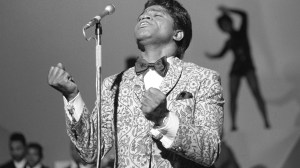
American soul singer James Brown sings on the Ed Sullivan Show, New York, October 30, 1966. (Photo by CBS Photo Archive/Getty Images) -
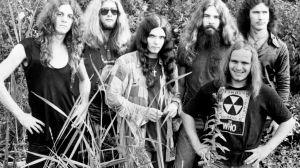
Photo by Michael Ochs Archives/Getty Images -

AMSTERDAM, NETHERLANDS – JULY 18: Eddie Vedder of Pearl Jam performs live on stage at Paradiso on July 18, 1993 in Amsterdam, Netherlands. -
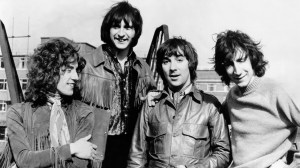
CIRCA 1975: Roger Daltrey, John Entwistle, Keith Moon and Pete Townshend of the rock and roll band "The Who" pose for a portrait in circa 1975. (Photo by Michael Ochs Archives/Getty Images) -
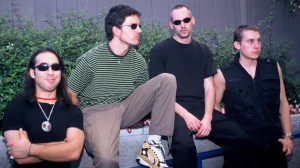
MOUNTAIN VIEW, CA – JUNE 13: Third Eye Blind backstage at Live 105's BFD 1997 at Shoreline Amphitheatre on June 13, 1997 in Mountain View California. (Photo by Tim Mosenfelder/Getty Images)