
11. Johnny Cash, “I Walk the Line”
In “I Walk the Line,” Johnny Cash is keeping “a close watch on this heart of mine,” paying conscious attention to his felt experience. He seems to understand that, in order to stay in a committed relationship, he must “keep the ends out for the tie that binds,” which apparently means that he is freely choosing to live within the bond of marriage. Although he tells his loved one that he finds it “very, very easy to be true,” judging by the rest of the song, this seems to be a little white lie that he tells her in order to prove his commitment. In this way, Cash “walks the line” between his head and his heart, maintaining a balance between rational control and “the fact of feeling,” as William James puts it. Rather than privileging intellect over bodily knowledge, as has often been the case in modernity, Cash finds that “happiness I’ve known proves that I’m right” that a reconciliation of these different ways of knowing, something like the “Middle Path” of Buddhism, is the healthiest, the most productive, and the truest road to walk.
Videos by American Songwriter
12. Peter Tosh, “I Am That I Am”
Peter Tosh will forever be remembered as the second greatest Reggae singer, boyhood friend and bandmate of Bob Marley who, despite his diminutive size, seems to have dominated the tall but more restrained Tosh. Where Marley was determined to conquer the world, Tosh was more focused on his home in Jamaica, his resistance to touring one of the factors that led to the breakup of the first incarnation of the Wailers. However, much like George Harrison in relation to John Lennon, Tosh was as profoundly philosophical as Marley, not only singing great songs about equal rights, justice, and the legalization of cannabis, but also showing a deeply spiritual side grounded in reality. As he sings in “I Am That I Am,” “I’m not in this world to live up to your expectations; neither are you here to live up to mine,” which, like a number of the previous songs, seems to refer to each individual’s responsibility to make their own decisions about how to live. This responsibility comes with the freedom and autonomy fought for so vigorously in the modern era, from the French and American Revolutions, to the American Civil War, to the struggle for Civil Rights, to the current wave of protests and revolutions around the world which, according to one authoritative assessment, makes our current period “the most revolutionary time in history.” Amidst all of this strife, Peter Tosh remains an icon of the universal struggle for self-determination. And, like Lennon, who was also influenced by Christianity, Tosh advises the listener to use that freedom to “learn to love, to love your brother.”
13. MGMT, “Time to Pretend”
This is another song about the tension between the sometimes terrifying freedom of the unknown and the often comforting limitations of consensus reality, between MGMT’s “decision to live fast and die young” and the alternate option, which they describe as to “get jobs in offices and wake up for the morning commute.” This is a choice that all of us must make and, in this song, MGMT is definitively on the side of complete liberation. As they sing, “we’ve had the vision” to which they intend to be true, and that vision is intimately bound up with a feeling of enjoyment, with having “some fun.” Although this might seem like a trivial insight, it actually expresses what appears to be the most fundamental significance of rock and roll, which is that we should pay attention to how our decisions make us feel in addition to the rational justifications that we construct for making those decisions. MGMT has chosen, like Elvis, Dylan, the Beatles, and many others, to follow what Dylan calls “an extreme sense of destiny,” declaring that they are “fated to pretend.” But this “pretending” is not merely childish fantasy, though it expresses the wonder and enchantment of childhood, both of the individual and of premodern human culture. In fact, as James and Whitehead particularly suggest, this archetypal, imaginal mode of thought was the predominant human way of thinking prior to the era of Newton and Descartes, and this mode seems to be in the process of being reembraced by the individuated modern intellect for, as the song says: “Everything must run its course.”
14. George Harrison, “All Things Must Pass”
There was already a song by the Beatles, but it can’t be helped if those young men from Liverpool made exceptionally philosophical music, which seems to have played a large part in their massive appeal. In the title song of his first solo record, Harrison gives us a meditation on the transience of life, singing that “sunrise doesn’t last all morning, a cloudburst doesn’t last all day.” But then he offers consolation, telling us that “it’s not always going to be this grey” and that “daylight is good at arriving at the right time.” If things are bad, they’re bound to get better. Even though this recognition doesn’t take away the pain and suffering that are endemic to life, the knowledge that time keeps flowing on and healing all wounds can make difficulty easier to bear. The one thing we can count on is that things will change, so the purpose of life, Harrison implies, is not to find perfect, unchanging happiness in this life, but to learn to savor each of life’s twists and turns as they come, and not to become attached to any one moment or any one feeling, a lesson he seems to have learned from the various forms of Eastern religion in which he was so interested.
15. Pharrell Williams, “Happy”
This song may not be the hippest choice, coming as it does from an animated children’s movie, but it seems to be the closest thing the currently emerging generation has to an anthem, the answer to Bob Dylan’s era-defining question half a century ago in “Like a Rolling Stone”: “How does it feel?” Pharrell seems to have looked into both his heart and his mind to find an answer, which is that he “feels like happiness is the truth,” and millions upon millions have responded, finding the same truth in themselves. But this is no mere hedonism or New Age positivity. It’s an outlook which acknowledges the many difficulties, the “bad news,” of life, and that working against inevitable constraints toward an ideal is the true kind of happiness. This “tarrying with the negative,” as Hegel expressed it, can be witnessed in the videos that have spontaneously emerged of protesters dancing to the song through the streets of troubled places like Moscow and Tunis. It’s not an artificially induced high founded on empty escapism or money or fame, but a conscious, sustainable life and society built to enhance the lives of the many. We seem to be moving, as a culture, toward an integrative kind of philosophy which recognizes that we should attend to both rational and intuitive considerations in our collective decisions about politics, economics, technology, health, and social identity. And it seems to me no coincidence that the currently predominant generations who are bringing this mode of thought to prominence are the first raised on rock and roll and its implicit philosophy.
THE LIST: The Best Of Paul Simon, The Band, Radiohead, The Rolling Stones and more…
More The List
-

(MANDATORY CREDIT Krasner/Trebitz/Getty Images) UNITED STATES – JANUARY 01: Photo of WARRANT (Photo by Krasner/Trebitz/Redferns) -
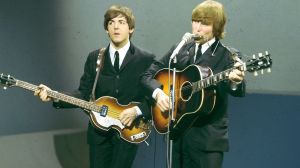
Photo by David Redfern/Redferns -

Meat Puppets (Photo by �� Tim Mosenfelder/CORBIS/Corbis via Getty Images) -
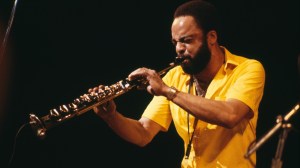
Grover Washington, Jr. (1943-1999), U.S. jazz saxophonist, during a live concert performance, circa 1980. (Photo by David Redfern/Redferns/Getty Images) -
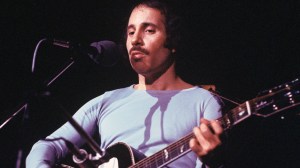
Paul Simon performs on stage in May 1973 in Amsterdam, Netherlands. (Photo by Gijsbert Hanekroot/Redferns) -

Bruce Springsteen -

Studio portrait of Patti Smith wearing a US air force shirt, Amsterdam, Netherlands, 9th October 1976. (Photo by Gijsbert Hanekroot/Redferns) -
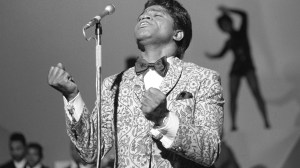
American soul singer James Brown sings on the Ed Sullivan Show, New York, October 30, 1966. (Photo by CBS Photo Archive/Getty Images)