
Fiddle playing often pushes the boundaries of musical genres. Although music fans naturally gravitate to one genre or another, there are some classic, traditional, and contemporary fiddle songs every true music fan should know. See if you know these:
1. “The Devil Went Down to Georgia”
We’d be remiss if we didn’t start with “The Devil Went Down to Georgia” by the Charlie Daniels Band. After all, the country/Southern rock song with bluegrass tones became a classic almost as soon as it was released on Daniels’ 1979 album, Million Mile Reflections. Daniels’ exuberant vocals and fiddle playing made this song—which details a musical battle between fiddle player Johnny and the fiddle-playing devil—an almost instant classic and massive crossover hit. It hit the top spot on the Billboard Hot Country Singles chart and had success on the pop charts.
Videos by American Songwriter
The song was covered by many artists and can be heard in films, TV shows, and even commercials. “The Devil Went Down to Georgia” is loved for its storytelling and Daniels’ enthusiastic playing. Plus, his almost spoken-word commentary throughout the song adds a dash of whimsey to the tune.
2. “Fiddle Medley”
Each of the 11 tracks on The Goat Rodeo Sessions features fiddle, but the “Fiddle Medley” is arguably the fiddle song music lovers should know. As compelling as most find “Fiddle Medley,” music lovers would do well to listen to every song on the 2011 album. Each features a unique blend of classical, bluegrass, jazz, and folk by four virtuoso musicians – Yo-Yo Ma, Edgar Meyer, Chris Thile, and, of course, fiddle player Stuart Duncan.
Duncan’s enthusiastic playing on “Fiddle Medley” sounds as if it’s straight out of Appalachia but he adds dabs of folk and rock flavoring to it. Music lovers will enjoy the straight instrumental song. Lyrics would only muddy up Duncan’s virtuoso playing, which could serve as a master class in strings.
3. “Fisher’s Hornpipe”
You may associate “Fisher’s Hornpipe” with square dancing, but it’s much more than that—it’s one of the most widely known fiddle tunes in the world. The song is a true classic so it’s difficult to pinpoint its origins or date, though some believe it was written in later 18th-century England.
The lively melody played at a medium or fast tempo, will often be heard at dances, jamborees, and other festive events. Different musicians interpret the song in various ways, including adding flourishes and distinctive overtones to the song. It’s also played in a number of styles besides country, including classical and even as a reel in Scotland.
4. “Orange Blossom Special”
“Orange Blossom Special” is another classic song though its history is fairly well known. Florida fiddler Ervin T. Rouse wrote the song in 1938 and recorded it in 1939 with his brother Gordon Rouse. The song is a classic, fast-paced fiddle tune. Musicians often arrange the song, so the fiddle remains the musical centerpiece but is accompanied by guitar, banjo, mandolin, and other instrumentation that enhances its rhythm and mimics a speeding train. That’s no accident. A train that operated in the southeastern U.S., was decorated with orange blossom images.
The song gained new popularity in 1965 when Johnny Cash recorded it. Yes, he played fiddle but he swapped out that instrument for harmonica in his fast-paced, energetic version. Cash is only one of many musicians who have covered the song, generally in bluegrass or country styles. Chubby Wise, Bill Monroe, Boxcar Willie, Lester Flatts and Earl Scruggs, and even Wayne Newton have covered the song.
5. “Cotton-Eyed Joe”
Little is known about the origins of the traditional fiddle tune “Cotton-Eyed Joe,” though it’s believed to have originated in Appalachia sometime in the 1800s before the Civil War. The song is upbeat and often played at dances. Some versions of the song feature singing that tells the story of rural life and love but most renditions are completely instrumental. This is another classic fiddle song that is often played at square dances, line dances, circle dances, weddings, and other celebrations.
Like other traditional fiddle tunes, “Cotton-Eyed Joe” often features guitar, banjo, and other instrumentation. A 1967 instrumental recording is said to have inspired a polka dance. This fiddle tune became something of an international phenomenon in 1995 when Rednex, a Swedish band, released a techno-dance version of the song.
Photo by Scott Legato/Getty Images
More Features
-
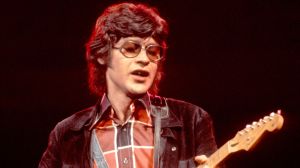
BOSTON, MASSACHUSETTS – Robbie Robertson performs with The Band at the Boston Music Hall on September 2, 1976 in Boston, Massachusetts. (Ron Pownall/Getty Images) -
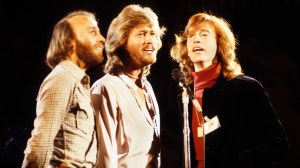
NEW YORK – JANUARY 09: Maurice Gibb, Barry Gibb and Robin Gibb of The Bee Gees harmonise at one microphone while performing on stage at the UNICEF A Gift of Song concert held at the United Nations General Assembly on January 9th 1979 in New York. (Photo by Richard E. Aaron/Redferns) -
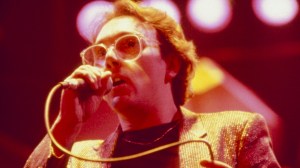
UNSPECIFIED – JANUARY 01: Trevor Horn of Buggles performs on stage circa 1980. (Photo by David Redfern/Redferns) -
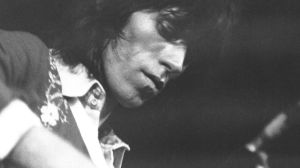
SAN FRANCISCO – 1969: Guitarist Keith Richards of the rock band "the Rolling Stones" performs on stage playing a dobro guitar in 1969 in San Francisco, California. (Photo by Tom Copi/Michael Ochs Archives/Getty Images) -
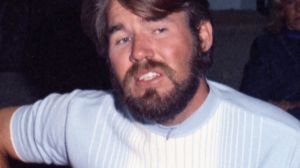
Kenny Rogers of "Kenny Rogers & The First Edition" recording in the studio on July 7, 1968 in Los Angeles. (Photo by Jasper Dailey/Michael Ochs Archives/Getty Images) -
Photo by Murphy/Daily Herald/Mirrorpix via Getty Images -
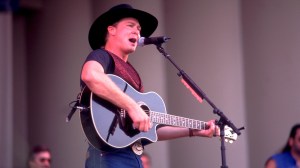
Tracy Lawrence performing at the Petrillo Bandshell in Chicago, Illinois, June 29, 1996. (Photo by Paul Natkin/Getty Images) -
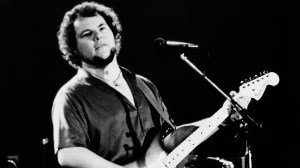
Christopher Cross 1980 (Photo by Chris Walter/WireImage)