
Unless you’re a Beatles aficionado (and/or saw Peter Jackson’s revealing documentary miniseries, The Beatles: Get Back), you would never be able to pick up on the deep tensions between John Lennon and Paul McCartney that were reaching a fever pitch during the Let It Be and Abbey Road sessions, which would make up the two final Beatles albums. On either record, from a surface-level vantage point, the band was as cohesive and creative as ever.
But dig a little deeper, and the fractures breaking the Fab Four apart become more apparent. The band’s reactions and recollections in later interviews shone a light on the dissonance that was slowly increasing in volume as they barrelled toward their final goodbye as one of the world’s most pervasive and influential rock bands.
Videos by American Songwriter
Two songs on Let It Be, the final album the band released despite starting its sessions prior to Abbey Road, highlight the mounting conflict between the band’s primary songwriters.
John Lennon Had Harsh Words For These Beatles Songs Off Their Final Album
Generally speaking, the songwriting partnership of John Lennon and Paul McCartney is what made the Beatles so prolific and unique. When their relationship began faltering, so did everything else. The final recording sessions were full of fights, clashing egos, and the occasional walkout. Even years after Let It Be came out, the musicians could recall with cutting clarity the parts they did and didn’t like about the recording process (and the songs themselves).
For example, in one of his final interviews before his death, Lennon told David Sheff that he never thought the title track to Let It Be sounded like a true Beatles song. Despite the songwriting credit going to Lennon and McCartney, the former Beatle said the song was the latter’s. “What can you say?” Lennon mused to Sheff. “Nothing to do with the Beatles. It could’ve been Wings. I think it was inspired by “Bridge Over Troubled Waters.” That’s my feeling, although I have nothing to go on.”
Lennon had more accusatory assumptions about another song on the album, “Get Back.” Describing it as a “potboiler rewrite” of their previous track, “Lady Madonna,” Lennon suggested there was something—even subconsciously—about his wife, Yoko Ono, in the song. “You know, get back to where you once belonged,” Lennon argued. “Every time he sang the line in the studio, he’d look at Yoko. Maybe he’ll say I’m paranoid. He can say, ‘I’m a normal family man. Those two are freaks.’ That’ll leave him a chance to say that one.”
Paul McCartney Refuted His Song Meanings Multiple Times
John Lennon wasn’t the only one who lobbed cynical hypotheses toward Paul McCartney’s contributions to the Beatles’ final album. While his bandmate might have believed “Let It Be” had “nothing to do with the Beatles,” one could argue it had everything to do with the Fab Four. McCartney wrote the title track during a “very difficult period,” as he explained in Barry Miles’ Many Years From Now. “The breakup of the Beatles was looming, and I was very nervy.”
McCartney said that during this time, when the “drugs, stress, [and] tiredness” of everything was starting to break him down, his late mother, Mary, visited him in a dream. “It was so wonderful for me, and she was very reassuring. In the dream, she said, ‘It’ll be alright.’ I’m not sure if she used the words, ‘let it be.’ But that was the gist of her advice. It was such a sweet dream, I woke up thinking, ‘Oh, it was really great to visit with her again. I felt very blessed.”
Similarly, McCartney’s recounting of “Get Back” refutes Lennon’s assumptions it was about Yoko Ono. The song was originally a satire of British politicians denouncing immigrants. But as can sometimes be the case in satire, the listeners didn’t pick up on the joke and thought McCartney’s lyrics were serious. “The words were not racist at all,” he argued. “They were anti-racist. If there was any group that was not racist, it was the Beatles.”
Photo by ITV/Shutterstock
More Behind The Song
-
THE JOHNNY CASH SHOW – Airdate: July 12, 1969. (Photo by ABC Photo Archives/Disney General Entertainment Content via Getty Images) JEANNIE C. RILEY -
Photo by Don Paulsen/Michael Ochs Archives/Getty Images -
UNSPECIFIED – JANUARY 01: Photo of CHICAGO; Peter Cetera (Photo by Richard E. Aaron/Redferns) -
(MANDATORY CREDIT Ebet Roberts/Getty Images) British rock group Asia ready to take a bow after performing at the Brendan Byrne Arena in East Rutherford, New Jersey on August 25, 1983. (L-R) Carl Palmer, Geoff Downes, John Wetton and Steve Howe (Photo by Ebet Roberts/Redferns) -
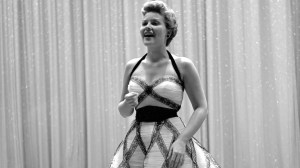
NEW YORK – MAY 30: Singer Patti Page performs on the Ed Sullivan Show on May 30, 1954 in New York City, New York. (Photo by Steve Oroz/Michael Ochs Archives/Getty Images) -
(MANDATORY CREDIT Ebet Roberts/Getty Images) British rock group Asia ready to take a bow after performing at the Brendan Byrne Arena in East Rutherford, New Jersey on August 25, 1983. (L-R) Carl Palmer, Geoff Downes, John Wetton and Steve Howe (Photo by Ebet Roberts/Redferns) -
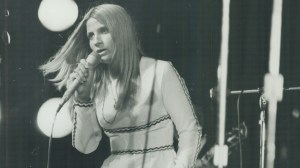
CANADA – SEPTEMBER 03: Country singer Skeeter Davis (Photo by Harold Barkley/Toronto Star via Getty Images) -
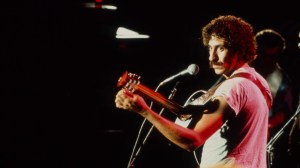
Unspecified – 1973: Jim Croce performing live on 'In Concert'. (Photo by Disney General Entertainment Content via Getty Images)