Four years before John Lennon would sing about his idealized fantasy of “all the people livin’ life in peace,” he and the rest of the Beatles were looking to create just that in the form of an island utopia in Greece. The romantic notion, much like the band itself, ended up dissolving almost as quickly as it appeared.
Although the Beatles’ dream never came to fruition, the National Archives of England documented the Grecian pipedream, which involved the purchase of the island Aegoes and five unnamed offshore islands surrounding it. British journalist Derek Taylor recalled John Lennon’s thoughts on the matter in the multimedia documentary Anthology.
Videos by American Songwriter
“They’ve tried everything else,” Lennon reportedly said. “Wars, nationalism, fascism, communism, capitalism, nastiness, religion — none of it works. So, why not this?” (via Beatles Bible).
The Bandmates Had Mixed Feelings About The Meditteranean Trip
The Beatles’ John Lennon, George Harrison, and Paul McCartney embarked on their island excursion in the summer of 1967. (Drummer Ringo Starr opted to stay in London with his pregnant wife, Maureen Cox.) “It was a great trip,” George Harrison recalled in Anthology. “John and I were on acid all the time, sitting on the front of the ship playing ukuleles. The sun was shining, and we sang ‘Hare Krishna’ for hours and hours” (via Beatles Bible). Paul McCartney remembered things differently.
The bassist admitted to Many Years From Now author Barry Miles, “For me, the pace was a bit wearing. I probably could have done with some straight windows occasionally. I’d have enjoyed it a bit more.” Lennon, meanwhile, seemed to be the strongest advocate for the island compound. Advisors close to the band had already suggested the musicians start investing their wealth. To Lennon, a hippie commune in the Meditteranean seemed like the perfect place to start.
So, the band sent Alistair Taylor, personal assistant to manager Brian Epstein, back to the U.K. to begin the arrangements to purchase the Beatles’ utopia off the coast of Greece. By the time Taylor had waded through the bureaucratic red tape and cleared the deal, the band was no longer interested in buying.
How The Beatles Made A Profit Off Their Greek Island Utopia
In the late 1960s, the British government had international restrictions that required the purchase of export currency to buy, say, a cluster of Grecian islands. The band secured £90,000 worth of this specific currency, but by the time they received it, establishing an island utopia had lost its sun-soaked allure. The Beatles sold the currency back to the government and managed to bag a £11,400 profit thanks to an increase in exchange rate.
As idyllic as a Beatles utopia sounded at the time, McCartney later told Miles he believed they made the right decision by walking away. “It’s a good job we didn’t do it,” the songwriter said. “Anyone who tried those ideas realized eventually there would always be arguments, there would always be who has to do the washing-up and whose turn it is to clean out the latrines. I don’t think any of us were thinking that.”
Indeed, it’s unlikely latrines were on any of the Beatles’ minds as they tripped acid while their luxury yacht’s staff chauffeured them around the Meditteranean. And given the band’s history of fueding in the years that immediately followed, the choice seemed like a blessing in disguise. After all, the only thing worse than falling out with your best mates is being trapped on a remote island with them.
Photo by Keystone/Getty Images
More Did You Know
-
Willie Mae “Big Mama” Thornton performing, Photo by GBH Archives/YouTube -

The Rolling Stones in concert, Tour of Europe '76, Earls Court Arena – Mick Jagger and Keith Richards (Photo by Graham Wiltshire/Shutterstock) -
Rock band: The Rolling Stones: – Mick Jagger, Keith Richards (Photo by Roger Bamber/Shutterstock) -
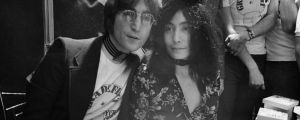
Singer and songwriterJohn Lennon (1940 – 1980) with his wife Yoko Ono, signing copies of her conceptual art book 'Grapefruit' at Selfridges, London, 15th July 1971. (Photo by Jack Kay/Daily Express/Getty Images) -
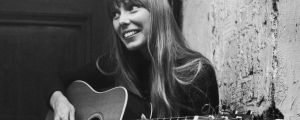
Despite its fantastical origin story of surviving a shrapnel attack in the Vietnamese jungle, the D-28 met its demise on a flight to Hawaii. Not only did the turbulent flight damage the instrument in storage; someone later stole the guitar from the luggage carousel. Mitchell was never able to find her long-lost instrument, something she’s lamented for years. Aside from the sentimental connection guitarists typically have to their first ax, Mitchell was particularly fond of her Martin for functional reasons. After a bout of childhood polio affected Mitchell’s ability to form chord shapes in standard tuning, the singer-songwriter had to adapt with eccentric tunings that allowed her to create rich harmonic structure with limited mobility. Whether open, an octave below, or otherwise, Mitchell’s unique tunings placed stress on the guitar neck that it wasn’t originally made to endure. Moreover, to ensure the dissonance within her tunings was purposeful and not merely off-pitch, Mitchell needed a guitar with pristine intonation—something she frequently lauded the D-28 for having. “I need really good intonation,” she explained to Acoustic Guitar. “One of the signs of really good intonation is how flashy the harmonics are with a light touch. You should be able to get them to bloom like jewels.” While Mitchell has found other guitars that come close in that department, as she put it in her 1996 magazine interview, “I’ve never found an acoustic that could compare with it.” Photo by Central Press/Hulton Archive/Getty Images -
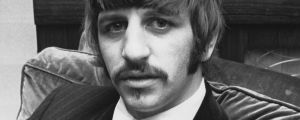
Drummer Ringo Starr of English rock band the Beatles during a reception at the London home of the group's manager Brian Epstein, 20th May 1967. The Beatles' song 'A Day In The Life' had recently been banned by the BBC for its references to drug-taking. (Photo by John Pratt/Keystone/Hulton Archive/Getty Images) -
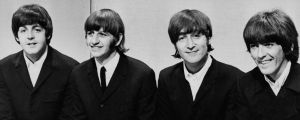
English rock band the Beatles at the BBC television studios in London before leaving for a concert tour of Germany, and afterwards Japan, 16th June 1966. From left to right, they are Paul McCartney, Ringo Starr, John Lennon and George Harrison. (Photo by Central Press/Hulton Archive/Getty Images)