When Paul McCartney realized that he was fully embarking on a solo career in the early 80s, the songs started flowing out of him. So much so, in fact, that he had more than enough material for two albums.
Hence, Pipes Of Peace arrived in 1983, hot on the heels of Tug Of War a year earlier. But the division of material between the two LPs wasn’t quite balanced enough to make the second one as sharp as the first.
Videos by American Songwriter
More of ‘War’
Paul McCartney started making music in 1980 with the intent of getting back together with Wings. Those sessions didn’t produce what he wanted. He then scuttled the band and resigned himself to the full-on advent of his solo career.
McCartney reunited with Beatles’ producer George Martin to make the album Tug Of War, which was released in 1982. He also, for really the first time ever, worked with a variety of seasoned studio pros. They brought extra polish to the songs he’d written. And there were a lot of those songs.
McCartney briefly toyed with the idea of releasing a double album. Instead, he chose to make a killer single record with the best of the songs that he had tracked by that time. Tug Of War proved to be a triumph. McCartney garnered critical acclaim and commercial love aplenty for the record. What would we do with the leftover songs?
‘Peace’ Train
McCartney decided to strike while the iron was hot and hustle out Pipes Of Peace in 1983. In the interim, he’d added several songs to the ones that didn’t get chosen the first time around for Tug Of War. Those included “Say Say Say” and “The Man”, two duets recorded with Michael Jackson.
In addition, McCartney recorded the title track to Pipes Of Peace, a song that he’d take to No. 1 in the UK. Yet he chose not to release it as a single in America. Instead, he selected the falsetto-drenched ballad “So Bad” as the follow-up to the massively successful “Say Say Say”.
Despite the success of the singles, critics were far less enthused about Pipes Of Peace than they were for Tug Of War. Listening to the record now, that lack of praise could be due to the fact that the remaining songs from the earlier sessions just didn’t live up to the promise of the newer stuff.
Diminishing Returns
McCartney put most of the Tug Of War leftovers on the second side of Pipes Of Peace. He even mashed a few of them together in a continuous sequence, à la what he once perfected with The Beatles on Abbey Road.
But it couldn’t disguise the fact that those songs just didn’t hold the same spark of originality as what Pipes Of Peace held on the first side. Record buyers also shied away from the album, at least when compared to Tug Of War.
Pipes Of Peace contains some excellent moments. But McCartney’s decision to try and revive songs that were perhaps best left as B-sides made the album a bit of a momentum-breaker in his career at that point.
(Photo by: Gene Arias/NBCU Photo Bank/NBCUniversal via Getty Images via Getty Images)
More Features
-

NASHVILLE, TN – Musician Jim Ed Norman speaks onstage during the GMA Honors Celebration and Hall of Fame Induction at the Allen Arena at Lipscomb University on April 29, 2014 in Nashville, Tennessee. (Photo by Rick Diamond/Getty Images for GMA) -

Singer-songwriter Carly Simon photographed in June 1971. (Photo by Jack Mitchell/Getty Images) -
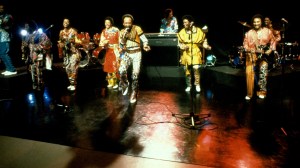
(L-R) Andrew Woolfolk, Verdine White, Johnny Graham, Maurice White, Larry Dunn, Philip Bailey and Al McKay, of the American band Earth, Wind & Fire, perform on stage in Los Angeles, California, circa 1980. (Photo by Lester Cohen/Getty Images) -
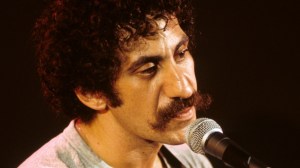
IN CONCERT – Shoot Date: August 17, 1973. (Photo by ABC Photo Archives/ABC via Getty Images) JIM CROCE -

Kurt Cobain of Nirvana (Photo by Kevin Mazur/WireImage) -
Photo by Paul Natkin/Getty Images