Although it’s hard to imagine anyone but Paul McCartney, John Lennon, George Harrison, and Ringo Starr making up the Fab Four, for a brief moment in the early 1960s, the future Beatles adopted cheeky stage names while cutting their teeth in a cover band that was (unwillingly) playing for (mostly) free.
The three original members of the now iconic band, McCartney, Lennon, and Harrison, settled on several names before adopting the Beatles. The trio performed as the Quarrymen for a spell until an audition to be a backing band for a touring musician sent the artists back to the drawing board.
Videos by American Songwriter
Lennon first floated the Crickets as a potential moniker, but McCartney shot it down, arguing that another band had already used that name. Eventually, the band settled on the Silver Beetles. But the Liverpool musicians didn’t stop there.
The Musicians Used Their Professional Digs To Adopt New Stage Names
The audition that prompted the band’s name change was for London-based music promoter Larry Parnes, who was looking for backing bands who could play with various touring singers around the U.K. In a fortunate preview of the success that was to come, the Silver Beetles landed the gig and began performing on the road with a singer and fellow Liverpudlian named Johnny Gentle.
The former Beatle recalled the moment the Silver Beetles (who were never billed as such but rather as “Johnny Gentle and his group”) decided it was time for yet another stage name change in Anthology. “Now we were truly professional. We could do something we had been toying with for a long time, which was to change our names to real showbiz names.” Unsurprisingly, each band member had a different idea for what classified as a “real showbiz name.”
McCartney adopted the name Paul Ramon, which he later said was “suitably exotic.” He particularly liked the French feel of the name Ra-mon—yet another example of McCartney using pseudo-French to impress girls, just like when he wrote the party song-turned-love song “Michelle.”
The Other Bandmates Followed Suit Using Different Inspirations
Whereas McCartney turned to different countries for inspiration, the other future Beatles opted to use their stage names to pay homage to artists who came before them. “Stuart [Sutcliffe, the band’s bassist at the time] became Stuart de Staël after the painter,” McCartney explained. “George became Carl Harrison after Carl Perkins (our big idol, who had written “Blue Suede Shoes”). John was Long John. People have since said, ‘Ah, John didn’t change his name; that was very suave.’ Let me tell you: he was Long John. There was none of us that didn’t change his name.”
McCartney, Lennon, and Harrison spoke not-so-very fondly of their time touring northern Scotland as the Silver Beetles. The pay was as scant as the audience turnout. They took out most of their frustration on Sutcliffe, Lennon would later admit with some remorse. Eventually, both Sutcliffe and the “silver” of their name would fall by the wayside. Laughably, McCartney would later say, “John didn’t wish to be known as ‘Long John Silver’ any longer, and I didn’t wish to be known as Paul Ramon. It was just an exotic moment in my life.”
Photo by Keystone Features/Getty Images
More Did You Know
-
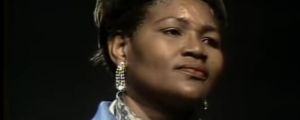
Willie Mae “Big Mama” Thornton performing, Photo by GBH Archives/YouTube -

The Rolling Stones in concert, Tour of Europe '76, Earls Court Arena – Mick Jagger and Keith Richards (Photo by Graham Wiltshire/Shutterstock) -
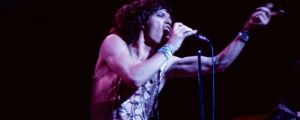
Rock band: The Rolling Stones: – Mick Jagger, Keith Richards (Photo by Roger Bamber/Shutterstock) -
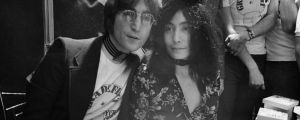
Singer and songwriterJohn Lennon (1940 – 1980) with his wife Yoko Ono, signing copies of her conceptual art book 'Grapefruit' at Selfridges, London, 15th July 1971. (Photo by Jack Kay/Daily Express/Getty Images) -
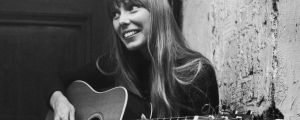
Despite its fantastical origin story of surviving a shrapnel attack in the Vietnamese jungle, the D-28 met its demise on a flight to Hawaii. Not only did the turbulent flight damage the instrument in storage; someone later stole the guitar from the luggage carousel. Mitchell was never able to find her long-lost instrument, something she’s lamented for years. Aside from the sentimental connection guitarists typically have to their first ax, Mitchell was particularly fond of her Martin for functional reasons. After a bout of childhood polio affected Mitchell’s ability to form chord shapes in standard tuning, the singer-songwriter had to adapt with eccentric tunings that allowed her to create rich harmonic structure with limited mobility. Whether open, an octave below, or otherwise, Mitchell’s unique tunings placed stress on the guitar neck that it wasn’t originally made to endure. Moreover, to ensure the dissonance within her tunings was purposeful and not merely off-pitch, Mitchell needed a guitar with pristine intonation—something she frequently lauded the D-28 for having. “I need really good intonation,” she explained to Acoustic Guitar. “One of the signs of really good intonation is how flashy the harmonics are with a light touch. You should be able to get them to bloom like jewels.” While Mitchell has found other guitars that come close in that department, as she put it in her 1996 magazine interview, “I’ve never found an acoustic that could compare with it.” Photo by Central Press/Hulton Archive/Getty Images -
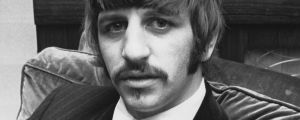
Drummer Ringo Starr of English rock band the Beatles during a reception at the London home of the group's manager Brian Epstein, 20th May 1967. The Beatles' song 'A Day In The Life' had recently been banned by the BBC for its references to drug-taking. (Photo by John Pratt/Keystone/Hulton Archive/Getty Images) -
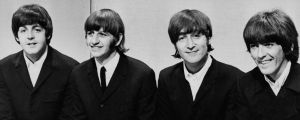
English rock band the Beatles at the BBC television studios in London before leaving for a concert tour of Germany, and afterwards Japan, 16th June 1966. From left to right, they are Paul McCartney, Ringo Starr, John Lennon and George Harrison. (Photo by Central Press/Hulton Archive/Getty Images)