
Months after The Doors’ frontman Jim Morrison left the band in pursuit of a solo career, he died tragically in a Parisian bathtub in July 1971, marking a definitive end to the group’s musical and performative identity. Seven years later, the band resurrected their brooding frontman’s voice from the grave for one final album.
Although the remaining members of The Doors (Ray Manzarek, Robby Krieger, and John Densmore) attempted to keep the band alive after Morrison’s departure, the two albums they released as a trio failed to gain the same popular success.
Videos by American Songwriter
‘An American Prayer’ would be The Doors’ ninth and final album, serving as a farewell not only to the band that had cemented itself in the rock and roll canon but also to their troubled, commanding, and legendary frontman, Jim Morrison.
With ‘Music By The Doors’
After officially breaking up in 1973, the three surviving members of The Doors reunited in 1978 to produce ‘An American Prayer.’ The LP’s billing listed the primary artist as Jim Morrison, with “music by The Doors” credited under the late singer’s name. A significant departure from the band’s usual blues-driven offerings, ‘An American Prayer’ featured Morrison’s spoken poetry set to musical accompaniment.
“We did this album to show the side of Jim which has been underrated all these years,” Manzarek told the Los Angeles Times in 1978, according to Rich Weidman’s “The Doors FAQ” book. “As far as we were concerned, Jim was a poet. But being the Lizard King has overshadowed the fact that he did some incredible poetry.”
The album sold 250,000 copies, garnering it the accolade of the highest-selling spoken-word album of all time. And while public intrigue around the young rocker’s death undoubtedly bolstered sales, the album was also a powerful testament to Morrison’s writing skills.
A Solo Project Left Unfinished
Shortly after Morrison left The Doors, he began working on a solo poetry album with the band’s boutique-turned-behemoth label, Elektra Records. Elektra’s chief engineer, John Haeny, conducted the sessions. Haeny and Morrison collaborated closely on the record, brainstorming Morrison’s ideal recording approach at Haeny’s Coldwater Canyon residence.
The last spoken word session took place on Morrison’s birthday, December 8, 1970. Although not the most productive studio visit in terms of sober performance, Haeny recalls the evening as pleasant and jovial on his personal blog. Morrison moved to Paris shortly after and requested Haeny visit him in France to continue the recordings after Morrison had time to hone his delivery. They never made it back into the studio before Morrison’s death in the summer of ‘71.
The Album’s Highly Divisive Public Reception
Much like Morrison himself, the public’s response to ‘An American Prayer’ was divisive at best. The Doors’ former producer Paul Rothchild shared his feelings in no uncertain terms in a 1981 interview with Blair Jackson, calling Morrison’s posthumous album “a R*** of Jim Morrison [that was] HEAVILY edited.” Rothschild accused the album’s creators of ruining Morrison’s intended meter and delivery, calling the band’s backing accompaniment “irrelevant.”
Other music publications offered more milquetoast takes, safely suggesting the album was meant only for diehard Morrison fans. Regardless of the debates surrounding the album, Haeny stands by The Doors’ creative decisions. “If we didn’t all believe we were on the right path, we would have changed direction simply out of respect for Jim,” he wrote in his 2013 essay.
“Every member of our team dedicated the better part of two years of their lives to craft this album for Jim,” he continued. “I believe Jim would be pleased. Jim would have understood our motivation and appreciated our dedication and heartfelt handling of his work. After a personal career spanning over 50 years, ‘An American Prayer’ remains one of my proudest achievements. For me, and hopefully for Jim, that is enough.”
(Photo by Don Paulsen/Michael Ochs Archives/Getty Images)
More Behind the Album
-
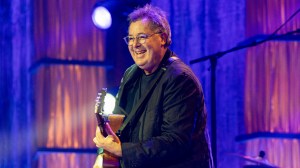
Photo by Ed Rode/Getty Images -
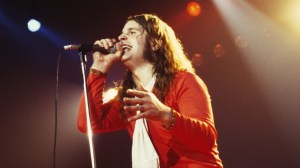
Photo by Chris Walter/WireImage -
Photo by Ed Rode/Getty Images -
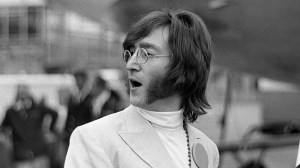
Photo by Murphy/Daily Herald/Mirrorpix via Getty Images -
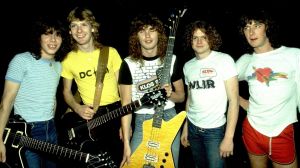
Def Leppard on 8/23/81 in East Troy, Wi. (Photo by Paul Natkin/WireImage) -
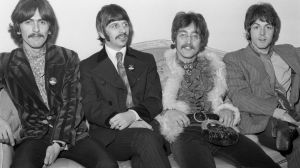
LONDON – MAY 19: (L-R) English musician, singer, songwriter and guitarist George Harrison (1943-2001), English musician, singer and drummer Ringo Starr, English singer, songwriter and guitarist John Lennon (1940-1980), and English singer, songwriter and bassist Paul McCartney of the Beatles attend a press party at the home of manager Brian Epstein supporting the release of Sgt. Pepper's Lonely Hearts Club Band, May 19, 1967 in London, United Kingdom. (Photo by Jeff Hochberg/Getty Images) -
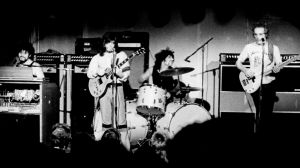
UNITED KINGDOM – JANUARY 01: MARQUEE Photo of VANILLA FUDGE, performing live onstage – L-R: Mark Stein, Vince Martell, Carmine Appice, Tim Bogert (Photo by Estate Of Keith Morris/Redferns) -
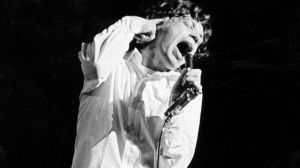
CIRCA 1966: Singer Mick Jagger of the rock and roll band "The Rolling Stones" performs onstage in circa 1966. (Photo by Michael Ochs Archives/Getty Images)