There are delicate ways to respond to being ghosted by someone, and then there’s the Eddie Van Halen way — as in driving a military assault vehicle through Beverly Hills to hold the ghost-in-question at gunpoint. Delicate? Hardly. But did it get the point across? Certainly.
Filmmaker and documentarian Andrew Bennett recounted the tense interaction in his book Eruption in the Canyon: 212 Days & Nights With The Genius of Eddie Van Halen. (Bennett, too, would find himself on the barrel side of Van Halen’s gun before those 212 days were up, but that’s another story for another time.)
Videos by American Songwriter
First, let’s go back to the Playboy Mansion, circa the mid-2000s when Van Halen and Limp Bizkit frontman Fred Durst first agreed to jam together.
How Wes Borland’s Departure Led To A Van Halen-Limp Bizkit Mashup
Shortly after Limp Bizkit guitarist Wes Borland left the band in 2001, Eddie Van Halen and Fred Durst found themselves at the same ritzy Beverly Hills party with Interscope Records exec Jimmy Iovine. Knowing that Durst was in the market for a new guitarist, Iovine half-jokingly suggested that Van Halen go to Durst’s home to try jamming with him. Durst was ecstatic. “That would be hilarious,” he said (via Louder Sound). “The greatest guitar player ever plays with the worst band ever.”
“F*** it, let’s do it,” Durst said. “F*** it, let’s jam,” Van Halen agreed, per Bennett (via Billboard). Van Halen eventually made it to Durst’s home in Beverly Hills but ended up leaving the jam session early after Durst’s crew started smoking marijuana, a drug Van Halen reportedly associated with laziness. Opinions on pot aside, Bennett recalled in his book that the rock legend described his jam session with Limp Bizkit as “being a scholar amongst kindergarteners.” In his haste to leave Durst’s home, Van Halen left his gear behind—and we’re not talking a few 1/4″ cables or picks.
“There is no f***ing way Eddie will plug his guitar into anyone else’s rig,” Bennett told Billboard. “This is a testament to his perfectionism. Eddie brings his own cables, pedals, amps, heads.”
Eddie Van Halen’s Military-Grade Response To Fred Durst’s Ghosting
After realizing he had left his most prized possessions at the Limp Bizkit frontman’s house, Eddie Van Halen tried calling Fred Durst several times to retrieve his equipment. Each time, Durst ignored Van Halen’s calls. Bennett told Billboard that Van Halen felt disrespected by Durst’s ghosting, and as the vocalist quickly learned, Van Halen was not a man you wanted to disrespect.
“Eddie once bought an assault vehicle from a military auction,” Bennett wrote in Eruption in the Canyon (via Louder Sound). “It has a shine gun mount on the back and is not legal. Anywhere. Especially in Beverly Hills. However, nothing is illegal for Eddie Van Halen. Eddie drove that assault vehicle through LA, into Beverly Hills, then parked and left it running on the front lawn of the house Limp Bizkit was rehearsing in. He got out wearing no shirt, his hair in a Samurai bun on top of his head, his jeans held up with a strand of rope and combat boots held together by duct tape. And he had a gun in his hand.”
The Van Halen guitarist told Bennett that when Durst answered the door, he pointed the gun “to that stupid f***ing red hat of his” and asked, “Where’s my s***, motherf***er?” Durst quickly started yelling at an employee to fetch Van Halen’s equipment. Van Halen stood on the lawn, cigarette in one hand and a gun in the other, watching Durst and his crew scramble to load the gear into the military vehicle. How’s that for getting your point across?
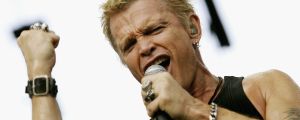
Photo by Jamie McCarthy/Getty Images
More Did You Know
-
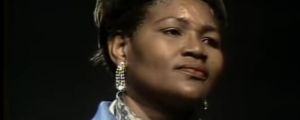
Willie Mae “Big Mama” Thornton performing, Photo by GBH Archives/YouTube -

The Rolling Stones in concert, Tour of Europe '76, Earls Court Arena – Mick Jagger and Keith Richards (Photo by Graham Wiltshire/Shutterstock) -
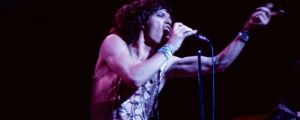
Rock band: The Rolling Stones: – Mick Jagger, Keith Richards (Photo by Roger Bamber/Shutterstock) -
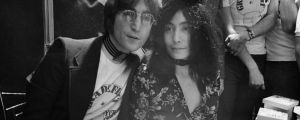
Singer and songwriterJohn Lennon (1940 – 1980) with his wife Yoko Ono, signing copies of her conceptual art book 'Grapefruit' at Selfridges, London, 15th July 1971. (Photo by Jack Kay/Daily Express/Getty Images) -
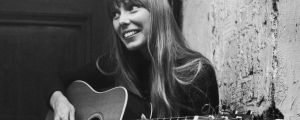
Despite its fantastical origin story of surviving a shrapnel attack in the Vietnamese jungle, the D-28 met its demise on a flight to Hawaii. Not only did the turbulent flight damage the instrument in storage; someone later stole the guitar from the luggage carousel. Mitchell was never able to find her long-lost instrument, something she’s lamented for years. Aside from the sentimental connection guitarists typically have to their first ax, Mitchell was particularly fond of her Martin for functional reasons. After a bout of childhood polio affected Mitchell’s ability to form chord shapes in standard tuning, the singer-songwriter had to adapt with eccentric tunings that allowed her to create rich harmonic structure with limited mobility. Whether open, an octave below, or otherwise, Mitchell’s unique tunings placed stress on the guitar neck that it wasn’t originally made to endure. Moreover, to ensure the dissonance within her tunings was purposeful and not merely off-pitch, Mitchell needed a guitar with pristine intonation—something she frequently lauded the D-28 for having. “I need really good intonation,” she explained to Acoustic Guitar. “One of the signs of really good intonation is how flashy the harmonics are with a light touch. You should be able to get them to bloom like jewels.” While Mitchell has found other guitars that come close in that department, as she put it in her 1996 magazine interview, “I’ve never found an acoustic that could compare with it.” Photo by Central Press/Hulton Archive/Getty Images -
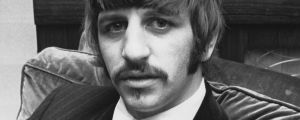
Drummer Ringo Starr of English rock band the Beatles during a reception at the London home of the group's manager Brian Epstein, 20th May 1967. The Beatles' song 'A Day In The Life' had recently been banned by the BBC for its references to drug-taking. (Photo by John Pratt/Keystone/Hulton Archive/Getty Images) -
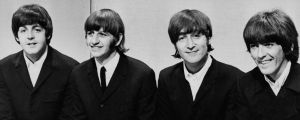
English rock band the Beatles at the BBC television studios in London before leaving for a concert tour of Germany, and afterwards Japan, 16th June 1966. From left to right, they are Paul McCartney, Ringo Starr, John Lennon and George Harrison. (Photo by Central Press/Hulton Archive/Getty Images)