
Record contracts always seem like a good idea when everybody in a band is getting along. When those same band members start fighting with each other, contracts can turn into albatrosses in a hurry.
Eagles found that out when they wanted to break up but still owed one more album to their label. A live album assembled in a somewhat unique fashion solved the problem.
Videos by American Songwriter
After ‘The Long Run’
Eagles hit the absolute pinnacle of the rock world with their 1976 album Hotel California. And then they realized that quickly following up such masterpieces can be an absolute bear. Sessions for The Long Run dragged on for years before the band finally released it in September 1979.
The LP contained several big hits and did excellent box office for the band once again. But the process of making the record had heightened the growing animosity among the band members. Touring immediately following the album’s release essentially threw a lit match into a fireworks factory.
At a benefit show in July 1980, Eagles’ members Glenn Frey and Don Felder threatened physical violence on each other while on stage. That essentially ended their time together. One problem remained, however. They were contractually obligated to churn out one more album for Elektra Records.
Overdub Drama
The easy solution was a live album. Well, easy for a normal band, maybe. Eagles had developed a reputation for perfectionism. They refused to release anything under their name that might sully their reputation. Since live performance, by its nature, tends to be imperfect, they’d need to polish up the tracks.
The band decided to focus on shows from 1976, when Randy Meisner was still a member of the band, and from 1980. To raise these tapes to their standard, Eagles decided to do some studio overdubs to clean them up. But that required everybody being in the same room, which wasn’t about to happen.
While the rest of the band got together in Miami, which is where they’d made the bulk of The Long Run, Glenn Frey stayed in Los Angeles. He wasn’t even speaking to the other members of the group at the time. With producer Bill Szymczyk acting as intermediary, the band finished the process of making Eagles Live.
One More Hit
Relations were so rough between the group members at the time that they refused a hefty monetary offer from Elektra to include a couple of new songs to spice up the album. Instead, they released a live (with overdubs) take on “Seven Bridges Road”, a cover of a Steve Young track, as a single. With demand for the group still at a high, the song shot to the Top 25 in 1980.
Eagles Live seems a bit superfluous to the band’s catalog now. Since they always stayed faithful to the original versions in concert anyway, you’d do just as well to grab the studio albums. The overdubs only strengthen that notion.
Without any announcement about their breakup, the band went their separate ways, at least until their reunion in the 90s. The existence of Eagles Live stands out these days as evidence of their disunity, regardless of the smooth sounds within it.
(Photo by Michael Putland/Getty Images)
More Behind the Album
-
Photo by Ed Rode/Getty Images -
Photo by Murphy/Daily Herald/Mirrorpix via Getty Images -
Def Leppard on 8/23/81 in East Troy, Wi. (Photo by Paul Natkin/WireImage) -
LONDON – MAY 19: (L-R) English musician, singer, songwriter and guitarist George Harrison (1943-2001), English musician, singer and drummer Ringo Starr, English singer, songwriter and guitarist John Lennon (1940-1980), and English singer, songwriter and bassist Paul McCartney of the Beatles attend a press party at the home of manager Brian Epstein supporting the release of Sgt. Pepper's Lonely Hearts Club Band, May 19, 1967 in London, United Kingdom. (Photo by Jeff Hochberg/Getty Images) -
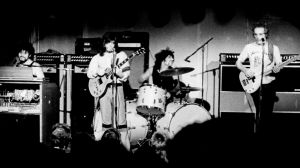
UNITED KINGDOM – JANUARY 01: MARQUEE Photo of VANILLA FUDGE, performing live onstage – L-R: Mark Stein, Vince Martell, Carmine Appice, Tim Bogert (Photo by Estate Of Keith Morris/Redferns) -
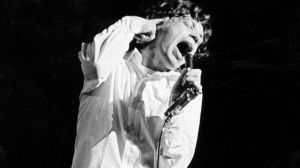
CIRCA 1966: Singer Mick Jagger of the rock and roll band "The Rolling Stones" performs onstage in circa 1966. (Photo by Michael Ochs Archives/Getty Images) -
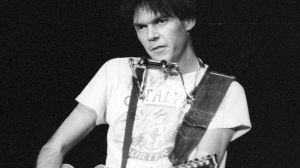
Musician Neil Young performing onstage in 1978 in Los Angeles. (Photo by Michael Ochs Archives/Getty Images) -
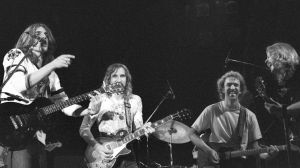
The Eagles perform on stage in Amsterdam, Netherlands, 1975. (L-R) Glenn Frey, Joe Walsh, Bernie Leadon, Don Felder. (Photo by Gijsbert Hanekroot/Redferns)